

Non-Surgical · Injectables

Dermal Fillers in London

Doctor-led dermal filler treatment, performed in stages, designed around your natural anatomy. Refined results — never overfilled.

As seen in

Tatler

Vogue

Harper's Bazaar

The Times

Hello!

Dr Hassan Soueid

Medically reviewed by Dr Hassan SoueidConsultant Cosmetic & Plastic Surgeon

Overview

What are dermal fillers?

Dermal fillers create a refreshed, more youthful appearance by adding volume to specific areas of the face. They can soften fine lines and wrinkles, restore lost volume and refine the shape of facial features.

At Kensington Cosmetic Clinic our dermal filler treatments are doctor-led — designed and performed by clinicians whose primary training is surgical. The result is a more considered approach: anatomical understanding, conservative dosing, and a clear refusal to overfill.

Find out how a considered dermal filler plan can refresh your features — without changing them.

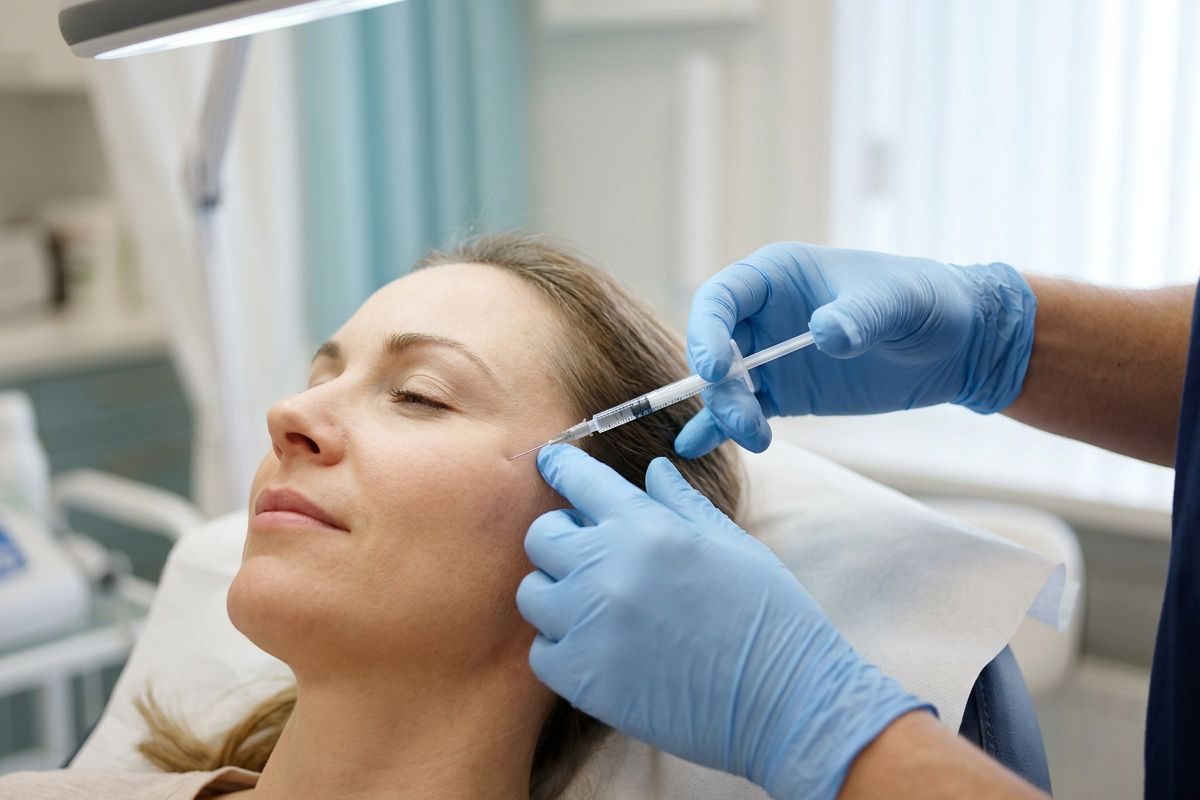
Practitioner injecting dermal filler with a fine needle into the cheek of a patient at Kensington Cosmetic Clinic
Filler is delivered with very fine needles or a blunt cannula — both used at KCC depending on the area.

How it works

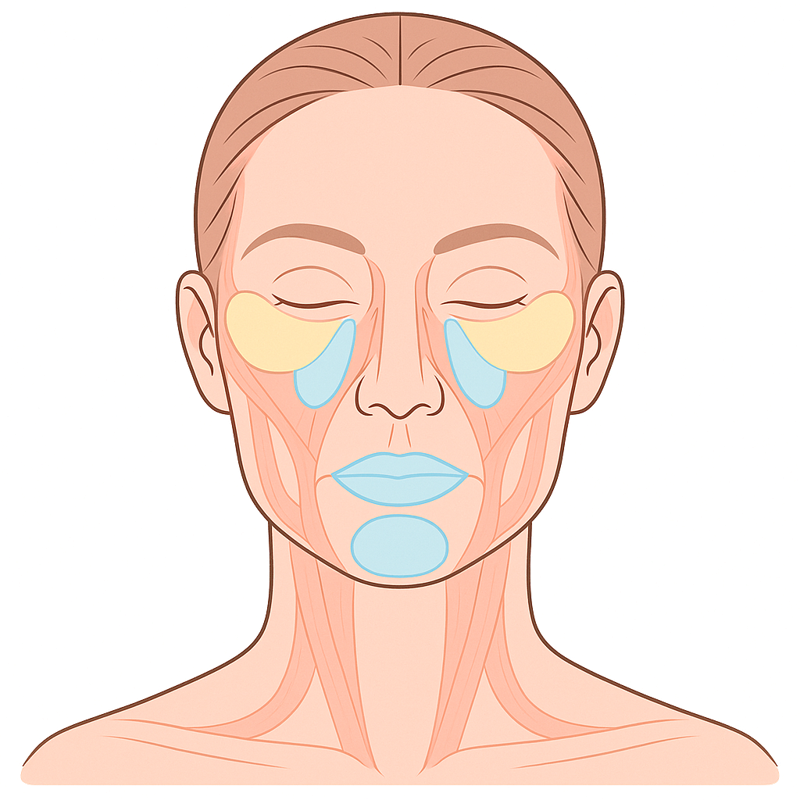
Where fillers are placed

A diagram of the procedure. Hover any pulsing marker to see how each anatomical layer is treated by Dr Hassan.

Where fillers are placed — anatomical illustration

Hover or tap any highlighted region

Illustration is anatomical only — the procedure is tailored individually at consultation.

Treated Areas

Areas dermal fillers can treat

Dermal fillers can address concerns across the upper, mid and lower face — and we are equally clear about the areas where we do not believe filler is the right tool.

Upper Face

Temples

Subtle volume restoration in temple hollowing supports the upper face and lifts the brow indirectly — one of the most impactful single-area treatments.

Tear Trough

Hollowing under the eye. Carefully placed filler restores volume, softens shadow and creates a brighter, more rested eye area.

Glabella Lines

Vertical frown lines between the brows. We do not use dermal fillers in this area due to the increased risk profile — anti-wrinkle injections and skin boosters are preferred.

Midface

Cheeks

Subtle filler placement restores midface projection, supports the lower face and reframes the overall facial profile in a natural, considered way.

Nose (Liquid Rhinoplasty)

A non-surgical refinement using filler to camouflage minor irregularities, smooth dorsal humps or refine the tip — without surgery or downtime.

Nasolabial Folds

Lift is created indirectly via cheek support; the smile lines soften without overfilling the lower face.

Lower Face

Lips

Hydration, definition and gentle volume — designed around the patient's natural lip anatomy. Subtlety and symmetry are the brief; volume is never the goal.

Marionette Lines

Lines from the corner of the mouth to the chin. Filler restores structural support and reduces the downturned appearance of the lower face.

Jawline

Sharper definition, improved facial proportions and subtle masculinisation or feminisation, depending on the treatment plan.

Chin

Projection and balance — small refinements to chin position can transform the side profile without surgery.

Materials

What are dermal fillers made from?

Hyaluronic Acid (HA)

We use this

A naturally occurring molecule in the skin. HA fillers add volume, hydration and structure with an excellent safety profile. They are reversible — fully dissolvable with hyaluronidase if needed. Results typically last 6–24 months.

Calcium Hydroxylapatite (CaHA)

We don't use

A bio-stimulatory filler that supports collagen production with results lasting 12–18 months. Not reversible, which is why we choose hyaluronic acid for our patients.

Poly-L-Lactic Acid (PLLA)

We don't use

Stimulates the skin's own collagen over time. Effective but not reversible — for that reason, we do not use PLLA in our practice.

Polymethylmethacrylate (PMMA)

We don't use

Semi-permanent and not broken down by the body. We do not offer PMMA fillers — the inability to reverse them does not align with our patient-safety standards.

Candidate

Who is dermal filler for?

  • Wishes to reduce the appearance of fine lines, wrinkles or volume loss in the face
  • Would like to refine facial features such as the cheeks, lips, chin or jawline
  • Is in good general health and not pregnant or breastfeeding
  • Has realistic expectations and prefers natural-looking enhancement
  • Has no active skin infection or inflammation in the treatment area

Benefits at KCC

The KCC Clinic difference

  • No incisions, no scarring
  • No general anaesthetic and no associated risks
  • Treatment usually performed on the same day as consultation
  • Natural-looking enhancement — never overfilled
  • Minimal downtime — most patients return to normal activity the same day
  • Discreet Kensington location, with private parking and concierge support

Investment

Pricing on consultation

Every patient is different — the area, technique and number of stages shape the plan. We share full pricing during your private consultation, after Dr Hassan or your treating clinician has reviewed your goals in person.

Before

How to prepare

  • Avoid alcohol and ibuprofen for 48 hours prior to your appointment to reduce the risk of bruising
  • Eat well and stay hydrated on the day of treatment
  • Arrive without makeup in the treatment area where possible
  • Allow two clear weeks before any major social event or photography for full settling

Case Study

Two techniques, one goal

Dermal filler can be delivered with either a sharp needle or a blunt cannula. Both are used at KCC — the right choice depends on the area, the volume required and the patient's anatomy.

Technique 1

Needle technique

Multiple precise injections placed across the treatment area — ideal for fine, surface-level work where exact deposit location matters: lips, tear trough margins, marionette lines.

  • ·Greater precision in small, defined zones
  • ·Multiple entry points across the area
  • ·More common bruising; resolves within days

Technique 2

Cannula technique

A single small entry point allows a blunt-tipped cannula to glide through the tissue and deliver filler across a large area — ideal for cheeks, jawline, temples and full midface restoration.

  • ·One entry point covers a wide territory
  • ·Lower risk of vascular events and bruising
  • ·Faster recovery, more comfortable session

Dr Hassan selects the technique on a per-area basis — sometimes both are used in a single appointment.

The Treatment

Procedure overview

Consultation

A private, unhurried conversation. We review your medical history, examine the treatment area and listen to what you would like to change. If filler is appropriate, we present a staged plan and explain what you can realistically expect.

Treatment

Topical anaesthetic is applied first. The treatment itself takes between fifteen and forty-five minutes, depending on the area and technique. We use only hyaluronic acid fillers — selected for their reversibility and safety profile.

  • Linear threading a smooth deposit of filler along a single track for definition.
  • Serial puncture small, precise deposits across an area for fine control.
  • Fanning a technique that distributes filler in multiple directions from one entry point.
  • Cannula technique a blunt-tipped delivery system that reduces bruising and the number of injection sites.

Step by Step

Your patient journey

Doctor-led dermal filler is performed in stages — never rushed, always reviewed.

  1. 01 · The Consultation

    A bespoke filler plan

    An unhurried examination of the face at rest and during animation. Photographs are taken in standardised lighting. We discuss what you want to change, what we recommend changing first, and the areas where filler is not the right tool.

  2. 02 · Preparation

    Reducing bruising risk

    Forty-eight hours alcohol-free, ibuprofen-free where safe. Two clear weeks before any major social event. Arrive with clean skin in the treatment area. Topical anaesthetic is applied for thirty minutes before the procedure.

  3. 03 · The Procedure

    Reversible, considered, conservative

    Hyaluronic-acid filler delivered by needle or blunt cannula — selected per area. Total session 15 to 45 minutes. We dose conservatively at the first treatment, then review at two weeks rather than chasing immediate maximum effect.

  4. 04 · Review & Aftercare

    The two-week settle

    Mild swelling and the occasional bruise are normal in the first few days. The two-week review confirms the result has settled and allows any small refinement. Filler longevity ranges from six months at the lips to two years in deeper structural areas.

After

Recovery & aftercare

Downtime is usually minimal. Mild swelling and the occasional bruise are normal — most patients return to daily activity immediately.

  • No touching or makeup application for 24 hours to reduce infection risk
  • Avoid exercise, sauna, steam rooms and excessive heat for 48 hours
  • Sleep on your back where possible for the first night
  • Avoid alcohol for 24 hours and continue gentle hydration
  • Attend any review appointments arranged at the time of treatment

Results

How long do results last?

Result longevity depends on the area treated, the filler used and individual metabolism.

  • Lip filler — 6 to 9 months
  • Cheek, jawline, nose, chin filler — 12 to 24 months
  • Nasolabial and tear trough filler — 6 to 12 months

Questions

Dermal Fillers in London FAQs

Do dermal fillers hurt?+

Most patients describe the sensation as a quick pinch. A topical numbing cream is applied prior to treatment, and most modern fillers also contain a local anaesthetic for comfort.

Will dermal fillers drastically change my appearance?+

No. Our brief is always natural enhancement — restoring or refining what is already yours, not replacing it. Subtle results, performed in stages, are the signature of our practice.

Are there risks associated with dermal filler?+

All medical procedures carry some risk. The most common are bruising, swelling and asymmetry — almost always temporary. Rare but serious complications are minimised by using only reversible fillers, performed by appropriately qualified clinicians.

How many treatments will I need?+

Most patients see the desired result in a single session, though some treatment plans (particularly liquid rhinoplasty or full-face refinement) are best staged across two or more visits for the most natural outcome.

Can I have permanent dermal fillers?+

We do not offer permanent fillers. Reversibility is fundamental to our standard of patient safety — we use only fillers that can be dissolved if needed.

Private enquiry

We'll call you back

Leave your details and we will reply within one working day.

From precision to natural restraint — your transformation begins with a consultation.