Non-Surgical · Skin

Skin Resurfacing in London

Tailored resurfacing plans that combine laser, chemical peel and microneedling to improve texture, tone and fine lines, chosen for your skin type and the downtime you can take.

Registered & regulated

Dr Hassan Soueid

Medically reviewed by Dr Hassan SoueidGMC-registered doctor · 6107783

Overview

What is skin resurfacing?

Skin resurfacing is a group of treatments that create a controlled injury to the skin so that it repairs itself, renewing the surface and stimulating collagen beneath. At Kensington Cosmetic Clinic it is not one machine or one product. It is a plan built from three families of treatment: laser, chemical peels and microneedling, each with its own strengths, depths and recovery times.

The right plan depends on what you want to change and on your skin. Acne scarring, sun damage, fine lines, enlarged pores and uneven tone respond differently to each modality. Skin type matters just as much: some treatments carry a higher risk of pigment change in darker skin, so the plan is chosen with safety first.

Recovery varies by modality, typically from one to seven days, and is longer for full ablative CO2 laser. We plan around your diary as well as your skin, and we will recommend a gentler, staged approach if that is the safer route to the result you want.

The right resurfacing plan is the one matched to your skin, not the strongest treatment on the menu.


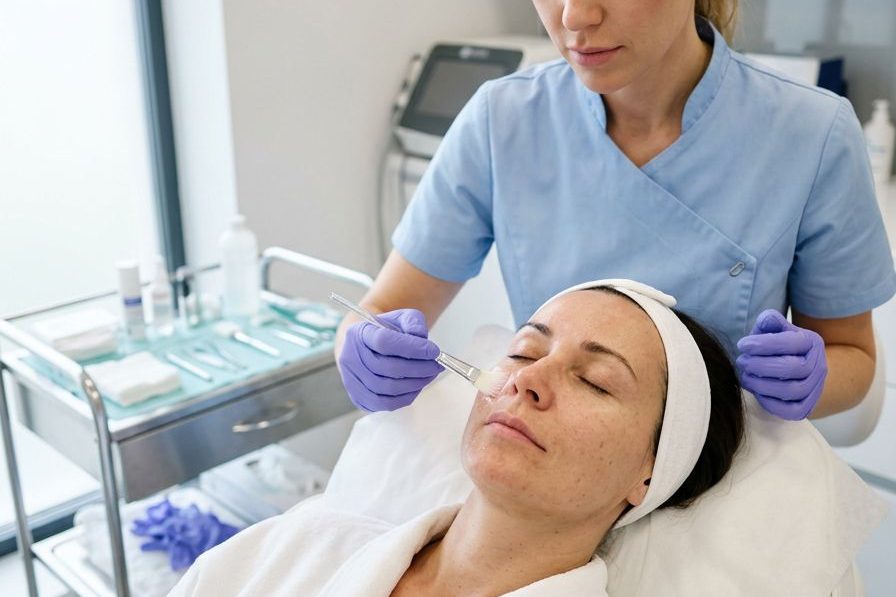
Practitioner applying a chemical peel with a brush to a patient's face, one of the modalities used in skin resurfacing
Peel, laser or microneedling, each modality is chosen for the depth your skin concern needs.

How it works

Inside skin resurfacing

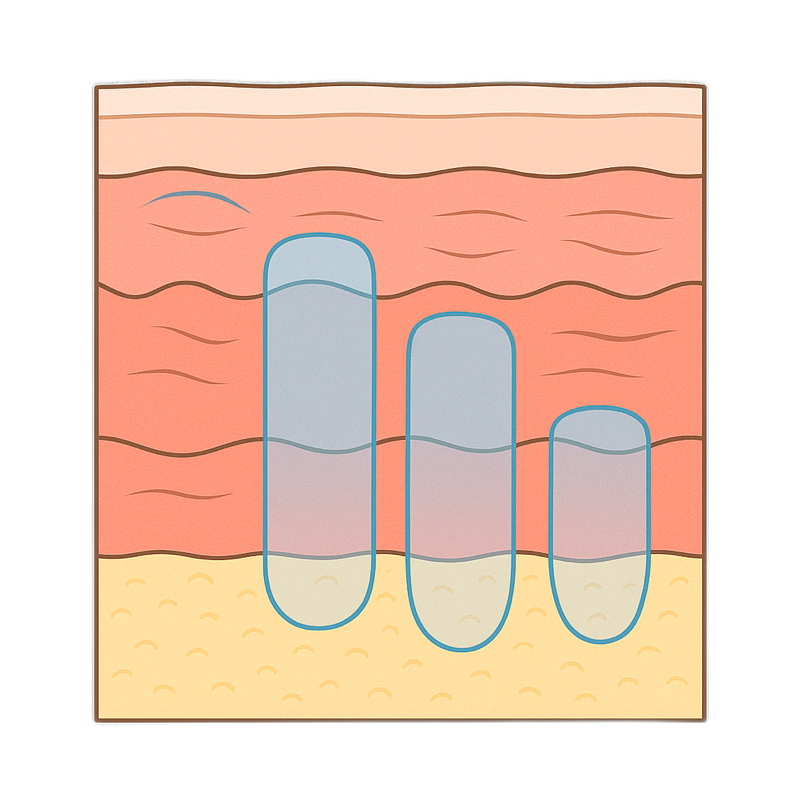
A diagram of the skin. Hover any pulsing marker to see how different modalities reach different depths.

Inside skin resurfacing, anatomical illustration of treatment depths in the skin

Hover or tap any highlighted region

Illustration is anatomical only, the treatment is tailored individually at consultation.

Treated Areas

The resurfacing modalities we use

Most plans use one or two of the following, sometimes in sequence. Each has its own page with more detail.

Laser

CO2 laser

Ablative fractional laser for established lines, acne scarring and sun damage. The most change per session, with the most downtime; generally better suited to lighter skin types.

Clear Lift

Non-ablative fractional Q-switched laser that treats beneath the surface. Gradual improvement over a course, typically with no downtime, and considered across a wider range of skin types.

Combined laser plans

Sometimes a gentler laser course comes first, with a stronger treatment later, or the reverse. The sequence is planned at consultation.

Chemical Peels

Superficial peels

Refresh the outer layer for dullness, mild uneven tone and texture. Little downtime, usually given as a course.

Medium-depth peels

Reach further for sun damage, pigmentation and fine lines, with several days of peeling.

Pigment-focused plans

For uneven tone and some types of pigmentation, often combined with skincare and strict sun protection.

Microneedling

Medical microneedling

Controlled micro-channels stimulate collagen for acne scarring, texture and pores. Suitable for many skin types, given as a series.

Microneedling with PRP

Your own platelet-rich plasma applied after microneedling, used in selected scarring and rejuvenation plans.

LED after treatment

A supportive step that may help settle redness after microneedling or peels.

Candidate

Who is skin resurfacing for?

  • Has concerns with texture, tone, fine lines, acne scarring or sun damage
  • Is in good general health, not pregnant or breastfeeding
  • Has no active acne, eczema, cold sore flare or skin infection in the treatment area
  • Can avoid sun exposure before and after treatment
  • Has realistic expectations and can plan around the recovery time of the chosen modality

Benefits at KCC

The KCC Clinic difference

  • Doctor-led clinic, every plan starts with a medical skin assessment
  • Laser, peels and microneedling under one roof, so the plan is chosen for you, not for a device
  • Skin type and pigmentation risk assessed before any treatment is offered
  • Downtime planned honestly around your work and social diary
  • Photography at review for an accurate record of progress
  • Discreet clinic at 49 Marloes Road, Kensington, W8 6LA

Investment

Pricing on consultation

Every patient is different, the area, technique and number of stages shape the plan. We share full pricing during your private consultation, after Dr Hassan or your treating clinician has reviewed your goals in person.

Before

How to prepare

Preparation depends on the modality chosen. These steps apply to most resurfacing plans; you will receive specific instructions at consultation.

  • Avoid sun exposure, sunbeds and self-tan for at least 2 weeks before treatment
  • Stop retinol and exfoliating acids for about a week before, as advised
  • Skin priming may be recommended for some skin types to reduce the risk of pigment change
  • Tell us about cold sores, preventive treatment may be advised for some treatments
  • Tell us about all medicines, including any recent oral isotretinoin
  • Plan your recovery time around the modality chosen, from little or none to a week or more

Suitability

Who skin resurfacing isn't for

Resurfacing creates a controlled injury to the skin. In some situations that is unsafe, or the timing is wrong.

We would not treat

Not suitable

In these situations we would not offer resurfacing, or would recommend a different approach entirely.

  • ·Suspicious or changing moles or lesions, until assessed by a doctor
  • ·A history of poor wound healing or keloid scarring, for deeper treatments
  • ·Concerns that need surgery, such as significant skin laxity
  • ·Expectations that cannot realistically be met by a non-surgical treatment

We would delay or adapt

Postpone or adjust

These situations call for waiting, a gentler modality or extra preparation.

  • ·Pregnancy or breastfeeding
  • ·A recent tan, sunburn or upcoming holiday in the sun
  • ·Active acne, eczema, infection or a cold sore flare
  • ·Recent oral isotretinoin, or medicines that increase light sensitivity
  • ·Melasma or a tendency to post-inflammatory pigmentation

Dr Hassan Soueid and the clinical team will explain plainly if resurfacing is not right for you, and what may suit you instead.

The Treatment

What happens on the day

Consultation & plan

Your skin is assessed, including skin type, pigmentation risk and medical history. The modality, depth and number of sessions are agreed, along with the recovery time you can expect.

Treatment

The skin is cleansed and, for laser and microneedling, a numbing cream is usually applied first. The chosen treatment is then carried out; the length of the appointment depends on the modality and area.

  • Laser - a warm, prickling sensation; eye protection is worn throughout.
  • Peels - tingling or stinging while the solution is on the skin, which settles once it is neutralised or removed.
  • Microneedling - pressure and a scratching sensation, eased by numbing cream.

Risks and side effects

All resurfacing treatments carry risks, which increase with depth. We go through the specific risks of your plan before you consent.

  • redness, swelling and peeling or flaking, lasting from a day to over a week depending on modality
  • temporary darkening or lightening of the skin, more likely in darker skin types or on tanned skin
  • acne flare or small spots as the skin recovers
  • cold sore reactivation in people with a history of cold sores
  • rarely, infection or scarring, particularly with deeper treatments

Step by Step

Your patient journey

Skin resurfacing is a plan rather than a single appointment. Here is how it usually runs.

  1. 01 · The Consultation

    Choosing the right modality

    Skin type and concerns assessed, pigmentation risk weighed, and an honest discussion of downtime. Laser, peel, microneedling or a combination is recommended, with the reasons explained.

  2. 02 · Preparation

    Getting the skin ready

    No sun or tanning for two weeks. Retinol and exfoliating acids paused. Skin priming for some skin types. Preventive cold sore treatment where advised.

  3. 03 · The Treatment

    Controlled, tailored depth

    Numbing where needed, then the chosen treatment at the depth agreed. Aftercare products and written instructions are provided before you leave.

  4. 04 · Recovery & Schedule

    Recovery, review, repeat

    Recovery from little or no downtime to a week or more, depending on modality. SPF 50 daily. Further sessions spaced to allow full healing, with progress reviewed before each one.

After

Recovery & aftercare

  • Use only the gentle cleanser and recovery products recommended for the first few days
  • Avoid makeup for at least 24 hours, longer after deeper treatments
  • Do not pick or peel flaking skin, let it shed naturally
  • Avoid saunas, steam rooms, swimming and intense exercise until the skin has settled
  • Apply broad-spectrum SPF 50 daily and avoid direct sun for several weeks
  • Restart retinol and active skincare only when advised
  • Contact the clinic if you notice increasing pain, crusting, blistering or signs of infection

Results

When will I see the result?

Timing depends on the modality, and results vary between people.

  • First days, redness, then peeling or flaking for some treatments
  • 1–2 weeks, the skin settles and often looks fresher
  • 4–6 weeks, collagen-driven improvement in texture begins to show
  • After a course, more noticeable change in texture and tone
  • Ongoing, the skin continues to age; maintenance is discussed

Questions

Skin Resurfacing in London FAQs

Which resurfacing treatment is right for me?+

It depends on your concern, your skin type and how much downtime you can take. Acne scarring, sun damage, fine lines and pigmentation each respond differently to laser, peels and microneedling. We recommend a plan only after assessing your skin in person.

How much downtime should I expect?+

From little or none for gentle treatments such as Clear Lift or superficial peels, to several days of peeling for medium peels, and around 7–10 days for full ablative CO2 laser. We agree the downtime before booking so it fits your diary.

Is resurfacing safe for darker skin?+

Many resurfacing options can be used safely in darker skin, but the risk of pigment change is higher with some treatments. We assess this carefully and usually favour gentler modalities, skin priming or a test area in skin prone to pigmentation.

Does it hurt?+

Most treatments are uncomfortable rather than painful. Numbing cream is used for laser and microneedling where needed, and peels cause tingling that settles once the solution is removed. Your practitioner checks your comfort throughout.

How many sessions will I need?+

Gentler modalities are usually given as a course, while deeper treatments may need fewer sessions. The number depends on your skin and goals, and we review progress before booking further treatment.

Private enquiry

We'll call you back

Leave your details and we will reply within one working day.

A resurfacing plan built around your skin. Begin with a private skin consultation.