
Non-Surgical · Regenerative
Doctor-led regenerative therapy using your own blood. Skin rejuvenation, hair restoration and post-procedure healing, natural growth factors, no synthetics.
As seen in
Tatler
Vogue
Harper's Bazaar
The Times
Hello!

Medically reviewed by Dr Hassan SoueidConsultant Cosmetic & Plastic Surgeon
Overview
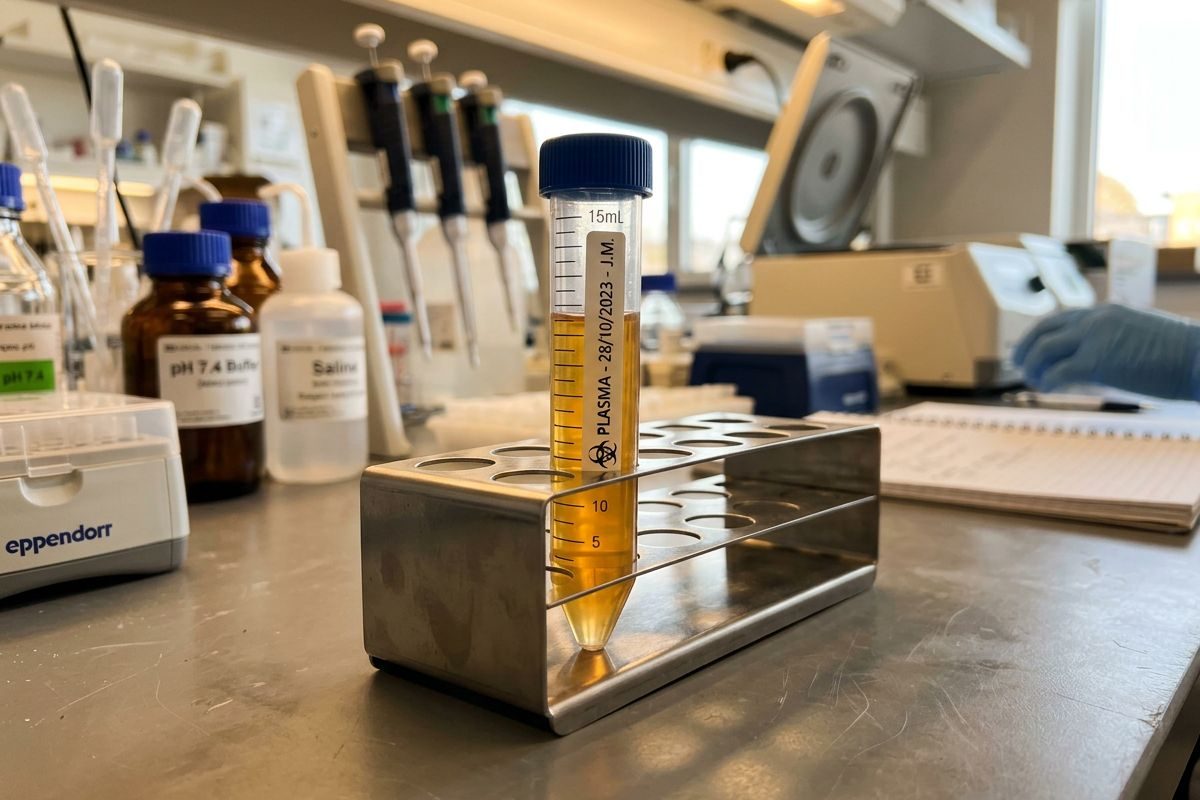
Platelet-Rich Plasma (PRP) is a concentrated solution of growth factors prepared from a small sample of your own blood. The blood is drawn, spun in a centrifuge to separate the platelet-rich layer, and re-injected or applied topically with microneedling. The growth factors stimulate skin and follicle regeneration without any synthetic additive.
At Kensington Cosmetic Clinic PRP is performed by medical practitioners using closed-system centrifuge kits, the only configuration that produces clinically meaningful platelet concentration. We do not use the simpler open-system 'lite' kits that under-concentrate.
PRP is most often used for facial rejuvenation, hair density, and scarring, and is increasingly used to accelerate healing after surgical procedures. Discussed at consultation alongside other options.
PRP is biology, not a product. Your own growth factors, concentrated and returned to where you need them.
How it works
A diagram of the procedure. Hover any pulsing marker to see how each anatomical layer is treated by Dr Hassan.
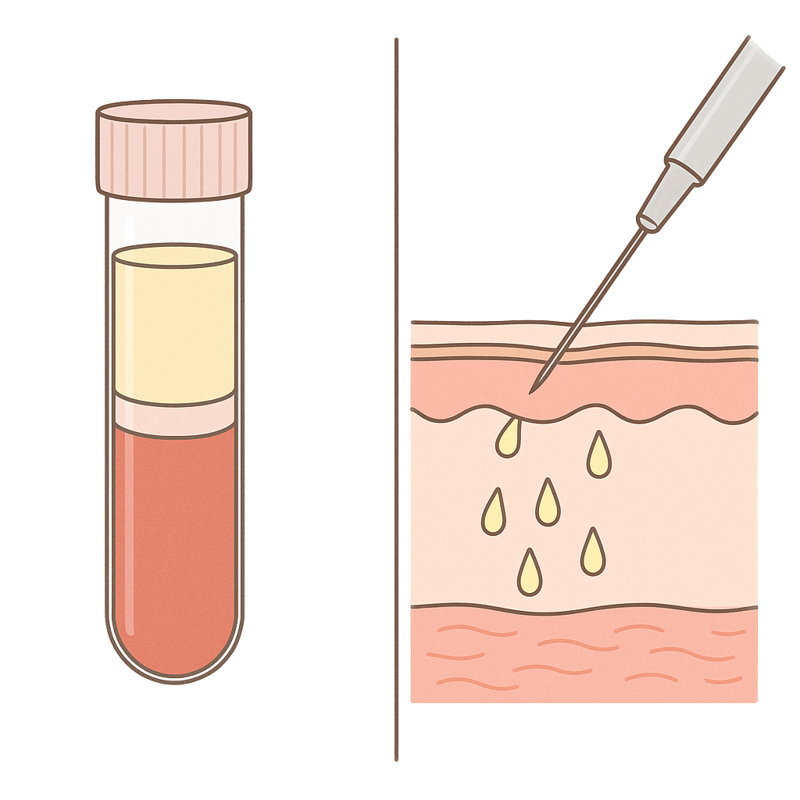
Hover or tap any highlighted region
Illustration is anatomical only, the procedure is tailored individually at consultation.
Treated Areas
PRP works best where natural healing capacity is the limiting factor, skin texture, follicle activity, slow-healing tissue. Three main indications:
Facial PRP (vampire facial)
PRP applied immediately after microneedling channels are created. Improves texture, scarring, fine lines and overall skin quality. Best results with 3 sessions over 3 months.
Tear trough rejuvenation
PRP injection into the under-eye area for thin, crepey skin and dark circles. A natural alternative to filler in patients who prefer biology over hyaluronic acid.
Neck and décolletage
PRP combined with microneedling on the often-neglected neck and chest. Improves crepiness and pigmentation over 3–4 sessions.
Male pattern hair loss
PRP slows progression and can produce visible thickening of miniaturised hairs. Most effective in early-stage thinning rather than full pattern loss. Best results with 4 monthly sessions, then quarterly maintenance.
Female pattern hair loss
Particularly effective in female pattern thinning, often combined with topical minoxidil or oral therapy. Detailed scalp assessment and bloods first.
Post-transplant hair density
PRP after hair transplant accelerates graft survival, reduces shock loss, and improves graft hair calibre. Often included as part of our post-transplant care.
Post-surgical healing
PRP injected at the time of (or shortly after) surgery accelerates healing and may reduce scarring. Used by us in selected facelift, breast and body cases.
Acne scar improvement
PRP combined with microneedling is one of the most effective non-surgical treatments for rolling and boxcar acne scars. Series of 4–6 sessions.
Stretch marks
PRP combined with microneedling on stretch marks, particularly effective on newer red marks; older white marks are slower to respond.
Candidate
Benefits at KCC
Investment
Every patient is different, the area, technique and number of stages shape the plan. We share full pricing during your private consultation, after Dr Hassan or your treating clinician has reviewed your goals in person.
Before
The Treatment
10–60 ml of blood is drawn (volume depends on the indication). The sample is processed in a closed-system centrifuge to separate the platelet-rich plasma, typically takes 15 minutes.
PRP is delivered by injection (face, scalp, body) or applied topically with microneedling. Total in-clinic time including processing is 60–90 minutes.
Step by Step
PRP uses your own biology, drawn fresh on the day. Here is the path through the procedure.
01 · The Consultation
Indication confirmed, facial rejuvenation, hair density, scarring. Bloodwork ordered if hair-restoration case. Honest discussion: PRP thickens miniaturised hairs but cannot regrow follicles that have closed.
02 · Preparation
Hydrate well in the 48 hours before. Avoid alcohol for 24 hours, ibuprofen and aspirin for five days (they reduce platelet function). Eat a light meal two hours before to avoid faintness during the blood draw.
03 · The Treatment
10–60 ml blood drawn (volume depends on indication). Closed-system centrifuge spins out the platelet-rich plasma. PRP injected via fine needle (face, scalp) or applied topically with microneedling. 60–90 minutes total in clinic.
04 · Recovery & Schedule
Mild redness for 24 hours. No washing for 24 hours. First visible regenerative changes at week four to six. Meaningful results after three sessions; near-maximal after six. Annual maintenance for skin; quarterly for hair.
After
Results
Questions
PRP uses your own blood, there is no risk of allergic reaction or rejection. The procedure carries the standard small risks of injection (bruising, mild swelling). Closed-system processing minimises infection risk. PRP is not suitable for patients with active blood-borne infection, certain blood disorders, or those on blood-thinners that cannot be paused.
Skin: 3 sessions over 3 months, then annual maintenance. Hair: 4 monthly sessions, then quarterly maintenance. Scarring: 4–6 sessions over 6–12 months. We discuss the right number for your indication at consultation.
Facial PRP combined with microneedling is comfortable with topical numbing. Scalp injections are quick and well-tolerated without numbing, a series of small pinches lasting under 10 minutes total. The blood draw itself is the same as any standard blood test.
Filler adds volume immediately using hyaluronic acid. PRP stimulates your own tissue to regenerate over weeks. They are different tools. Filler gives instant results that fade; PRP gives gradual results that come from your own biology and can be maintained with periodic top-ups.
PRP can thicken miniaturised hairs (the 'on-its-way-out' hair) but cannot regrow follicles that have completely closed. It is most effective in early-stage thinning. For complete pattern loss, hair transplant is the answer, and PRP after transplant improves graft survival.
Private enquiry
Leave your details and we will reply within one working day.
