
Non-Surgical · Skin
Doctor-led pigmentation correction, IPL, laser, peels and medical-grade topicals. Calibrated to your skin type, layered for stable, lasting results.
As seen in
Tatler
Vogue
Harper's Bazaar
The Times
Hello!

Medically reviewed by Dr Hassan SoueidConsultant Cosmetic & Plastic Surgeon
Overview
Pigmentation refers to dark patches, sun spots, melasma or uneven tone, typically caused by sun damage, hormonal changes, post-inflammatory response or genetics. Treatment requires understanding the type of pigmentation, the skin type, and using the right modality at the right depth.
At Kensington Cosmetic Clinic pigmentation is treated by medical practitioners using a layered approach, IPL or pigment-targeting laser for surface pigmentation, peels for diffuse tone, microneedling for post-inflammatory marks, and a comprehensive home-care protocol that does most of the long-term work.
We are deliberate about diagnosis. The same dark patch can be melasma (responds to certain treatments and is worsened by others), post-inflammatory hyperpigmentation, sun damage or a benign mole, each needs different treatment. Misdiagnosis is the most common reason patients fail elsewhere.
Pigmentation treatment is a long game. The right diagnosis and the right protocol matter more than the strongest device.
How it works
A diagram of the procedure. Hover any pulsing marker to see how each anatomical layer is treated by Dr Hassan.
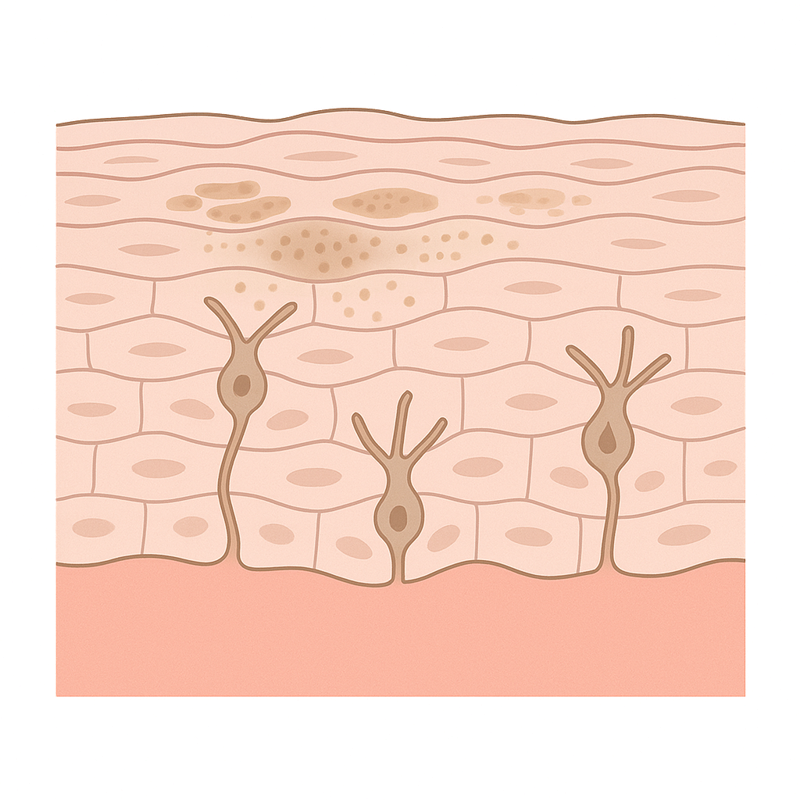
Hover or tap any highlighted region
Illustration is anatomical only, the procedure is tailored individually at consultation.
Treated Areas
Diagnosis comes first, different types of pigmentation respond to different treatments. Three broad categories:
Sun spots / lentigines
Discrete brown spots from accumulated UV exposure. Highly responsive to IPL or Q-switched laser, often clear in 1–3 sessions.
Diffuse photoageing
Generalised uneven tone, redness and texture from cumulative sun exposure. Combination IPL plus peels gives best results.
Actinic keratoses
Pre-cancerous sun-damaged patches, managed medically (cryotherapy, PDT) rather than cosmetically. We refer to dermatology where indicated.
Melasma (chloasma, mask of pregnancy)
Hormonally-driven pigmentation, often on the cheeks, forehead and upper lip. Worsened by aggressive treatment, requires specialist protocols. Cosmelan/Dermamelan programmes are usually first-line; lasers are used cautiously and only with sun-protection commitment.
Post-pregnancy pigmentation
Often resolves partially after delivery; residual treatment with topical brighteners and gentle peels.
Hormonal pigmentation
Driven by oral contraceptive, HRT or other hormonal triggers. Treatment paired with discussion of the hormonal cause.
Post-acne marks (PIH)
Brown or grey marks left after acne pustules heal. Microneedling, mandelic acid peels and topical tyrosinase inhibitors are first-line.
Post-inflammatory hyperpigmentation in darker skin
Common in Fitzpatrick IV–VI skin types. Strict sun protection, gentle treatments and tyrosinase-inhibitor topicals are essential, aggressive lasers worsen this.
Hyperpigmented scars
Pigment retained in surgical or trauma scars. Treated alongside scar texture work.
Candidate
Benefits at KCC
Investment
Every patient is different, the area, technique and number of stages shape the plan. We share full pricing during your private consultation, after Dr Hassan or your treating clinician has reviewed your goals in person.
Before
The Treatment
Skin examined under standardised light and (where indicated) Wood's lamp. Treatment modality confirmed; sometimes a diagnostic test patch is performed at the first visit.
Depending on the modality, IPL handpiece, laser handpiece, peel application or microneedling. Treatment time 15–45 minutes depending on indication.
Step by Step
Pigmentation treatment is a long game. Diagnosis matters more than device choice; sun protection matters more than either.
01 · Diagnosis
Wood's lamp examination where indicated. Sun spots, post-inflammatory marks, melasma and hormonal pigmentation each respond to different treatments. Misdiagnosis is the most common reason patients fail elsewhere.
02 · Preparation
Avoid sun for four weeks before treatment. Stop retinol one week prior. Tyrosinase-inhibitor priming for four weeks if Fitzpatrick III+. Have any suspicious moles or lesions checked first, pigment devices should not be used on undiagnosed skin.
03 · The Treatment
IPL for sun spots, Q-switched laser for stubborn pigment, peels for diffuse tone, microneedling + topicals for post-inflammatory pigment. Cosmelan / Dermamelan programmes for melasma. Calibrated to skin type, never one-size-fits-all.
04 · Maintenance
Treated spots darken, then flake off over 7–14 days. Meaningful improvement after 3–4 sessions. Without daily SPF 50, pigmentation returns within 6–12 months. Annual top-up plus consistent home-care for lasting results.
After
Results
Before & After
A selection of pigmentation cases treated at Kensington Cosmetic Clinic with medical-grade home-care and in-clinic protocols.
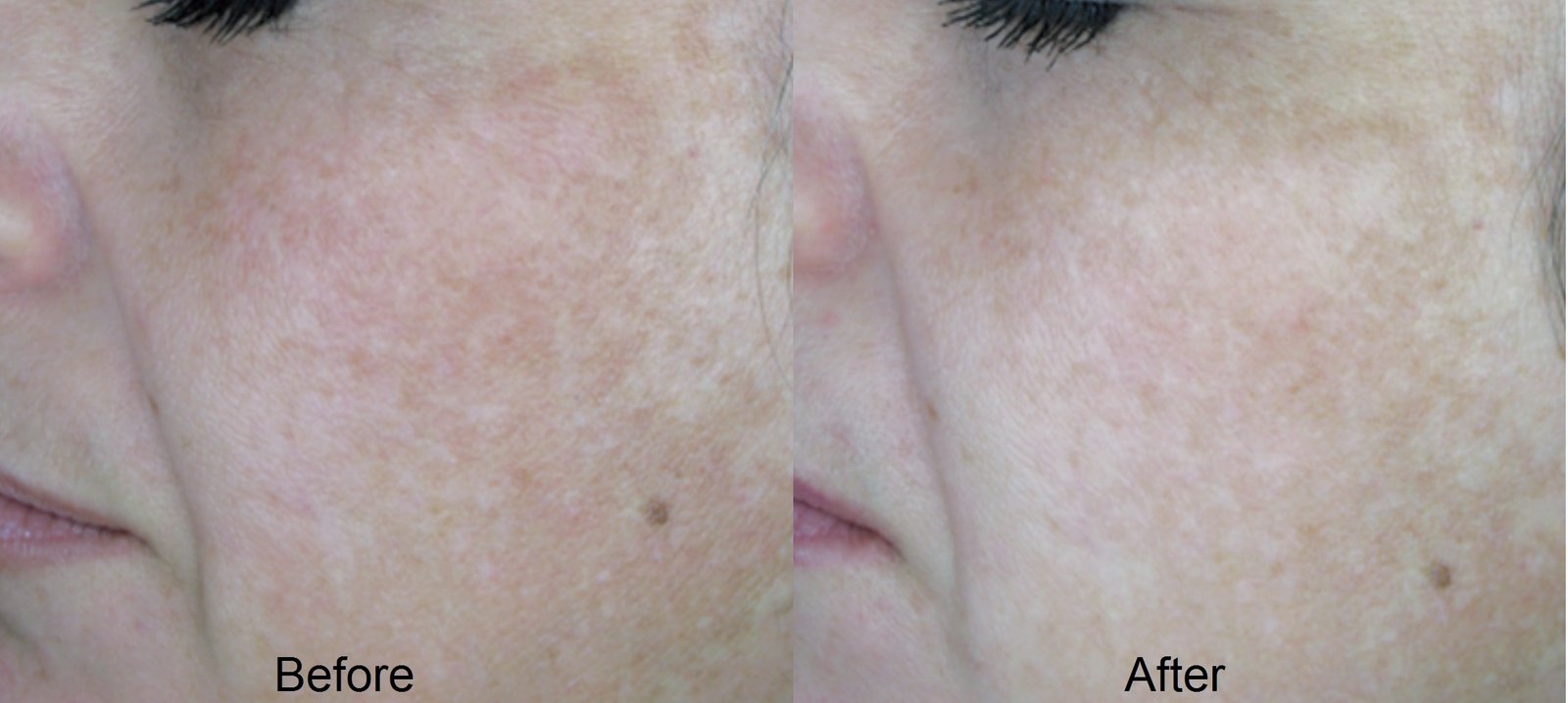
Cheek melasma, sixty-day medical lightening protocol.
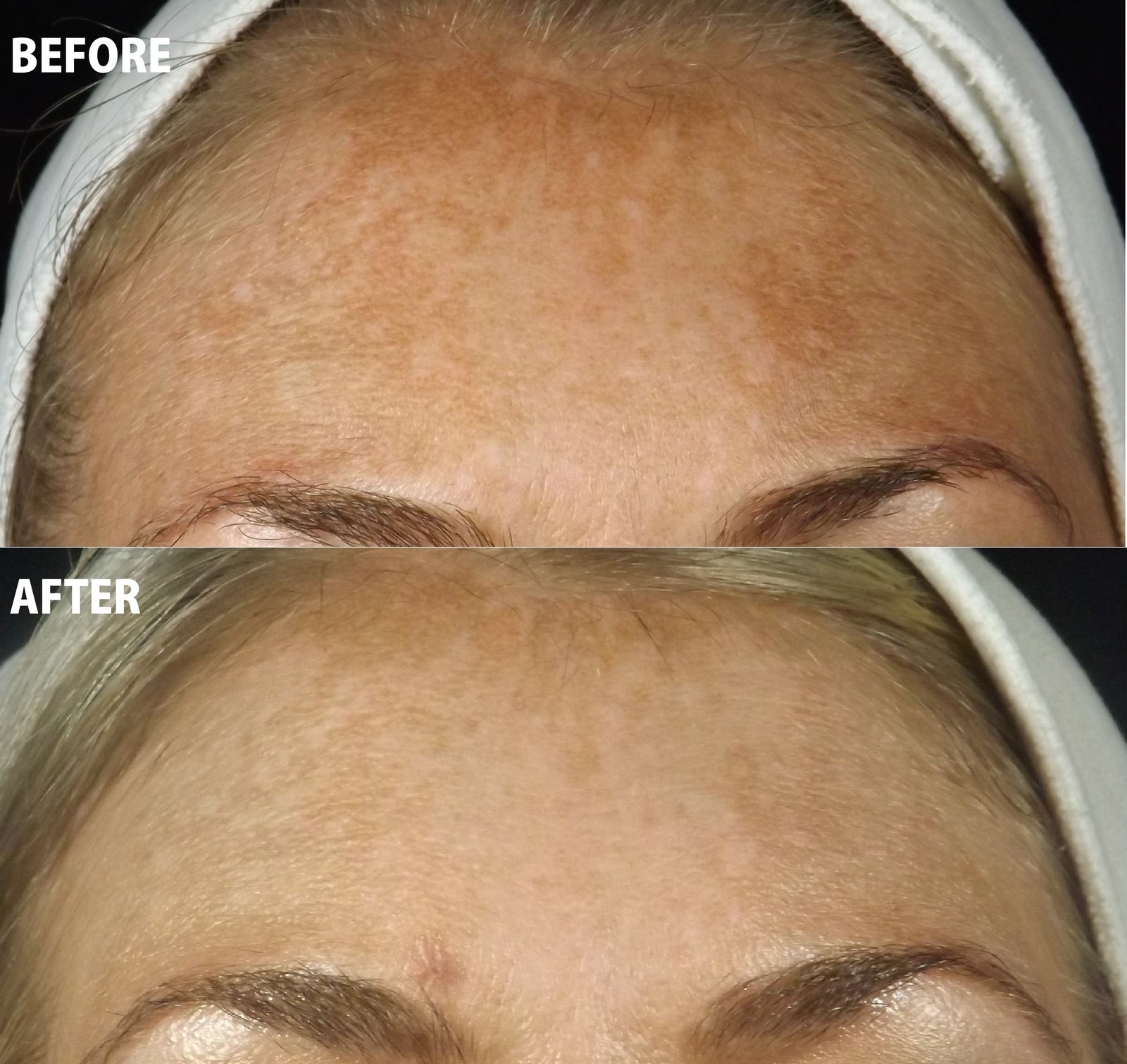
Forehead pigmentation, Enerpeel JR targeted peel series.
All photographs are real Kensington Cosmetic Clinic patients, taken with written consent. Individual results vary; outcomes depend on indication, skin type and treatment plan.
Questions
Pigmentation recurrence almost always reflects ongoing UV exposure or hormonal triggers. Treatment without daily SPF 50 is wasted spend, even brief exposure during commutes or near windows will reactivate pigment cells. Patients who maintain strict sun protection see lasting results; those who do not see partial relapse within 6–12 months.
It depends on the device and the protocol. IPL and aggressive Q-switched lasers carry meaningful risk of pigmentation worsening in Fitzpatrick V–VI skin types, we typically prefer chemical peels (mandelic, salicylic), microneedling and topical regimens for darker skin. Where laser is needed, low-fluence Q-switched protocols are used cautiously. We are explicit at consultation about what we recommend and why.
Melasma is a different beast. Aggressive treatment (heavy lasers, deep peels) often worsens melasma rather than helps. Cosmelan or Dermamelan medical-grade programmes are usually first-line, an in-clinic mask plus 4–6 month structured home-care protocol. Strict sun avoidance is critical. We discuss melasma management honestly, it is a long-term condition, not a one-off cure.
Salon photofacials use lower-energy IPL devices, often without medical diagnosis of the pigmentation type. The result is sometimes underwhelming, sometimes harmful (e.g. IPL on undiagnosed melasma can worsen it significantly). Medical-grade treatment with proper diagnosis is more effective and safer.
Private enquiry
Leave your details and we will reply within one working day.
