

Skin · 10 min read
Jawline Slimming with Botox for Masseter Hypertrophy
By Dr Hassan Soueid · MD, FRCS · Lead Surgeon, Kensington Cosmetic Clinic
Published 6 July 2026
TL;DR. Botulinum toxin injected into enlarged masseter muscles can gradually slim a square jawline over several weeks, but it requires repeat treatments to maintain, carries real risks if placed incorrectly, and is simply not the right option for everyone.
What is masseter hypertrophy and why does it matter?
The masseter is one of the primary muscles responsible for chewing. It sits at the angle of the jaw, and in most people it remains relatively unobtrusive. In some individuals, however, the muscle becomes significantly enlarged, a condition known as masseter hypertrophy. This can produce a wide, square or heavily set lower face that some patients find aesthetically uncomfortable, particularly those who feel it makes their face look disproportionately broad or heavy relative to their upper facial features.
Masseter hypertrophy can develop for a number of reasons. Habitual teeth grinding, known clinically as bruxism, is one of the most common causes, because the repeated clenching action over months and years builds the muscle in the same way that lifting weights builds a bicep. Excessive gum chewing, stress-related jaw clenching, and in some cases simple genetics can all contribute. Occasionally the enlargement is asymmetric, meaning one side of the jaw looks noticeably larger than the other, which can make the face appear uneven.
It is worth noting that a strong jawline is not universally considered a problem, and many patients who present with masseter hypertrophy are not seeking a dramatic change. Some simply want a modest softening. Others have genuine functional discomfort, including jaw pain, headaches and worn teeth, and the aesthetic improvement is almost secondary to the relief of those symptoms. Understanding your own motivation clearly before any treatment is an important part of the consultation process.
How does botulinum toxin slim the jaw?
Botulinum toxin, commonly referred to by the brand name Botox, works by temporarily blocking the nerve signals that cause a muscle to contract. When injected into the masseter, it does not destroy the muscle or remove tissue. Instead, it reduces the frequency and force of muscle contraction. Over the following weeks, the muscle gradually reduces in bulk through a process called disuse atrophy, in the same way that any muscle will reduce in size if it is used less strenuously.
The result is a gradual, progressive softening of the lower facial contour. Most patients begin to notice a visible change somewhere between four and eight weeks after their injections, with the full effect typically apparent by around three months. This is a slower transformation than many patients expect, and it is important to be patient rather than assuming the treatment has not worked if you do not see an immediate difference in the mirror the following week.
The effect is not permanent. Botulinum toxin is metabolised by the body over time, and the nerve signals to the masseter gradually recover. Without repeat treatment, the muscle will slowly return to its original size, particularly if the underlying cause, such as bruxism, is still present. Most patients require maintenance injections roughly every six to nine months to sustain their results, though this varies considerably between individuals.
For a broader understanding of how botulinum toxin is used across the face, you can read more on our Botox and fillers treatment page.
Who is a good candidate, and who is not?
Masseter botulinum toxin works best when the jawline width is genuinely caused by muscle bulk rather than by bone structure or fat distribution. A thorough clinical assessment is essential before any treatment, because injecting into a masseter that is not actually hypertrophied will produce minimal visible change and will represent both a financial and physical waste for the patient.
Patients who tend to respond well include those with a documented history of bruxism, those who can feel a firm, prominent muscle when they clench their teeth, and those whose jawline width is clearly muscular in origin. Younger patients with good skin elasticity also tend to see cleaner results, as the overlying skin adapts more readily as the muscle reduces.
There are, however, several groups for whom this treatment is not appropriate or requires careful consideration. Patients whose broad jawline is primarily skeletal, meaning it is the bone itself that is wide rather than the muscle, will see very limited benefit from this approach. In those cases, a surgical option or a different aesthetic strategy altogether may be more relevant, and an honest clinician will tell you so rather than proceed with an injection that is unlikely to deliver meaningful change.
Pregnant or breastfeeding patients should not receive botulinum toxin. Patients with certain neuromuscular conditions, including myasthenia gravis, are contraindicated. Those taking aminoglycoside antibiotics or certain other medications that affect neuromuscular transmission should also disclose this during their consultation. Patients with very thin faces or significant facial volume loss may find that reducing the masseter further accentuates hollowness in the mid-face, which can produce an aged or gaunt appearance rather than the refined look they were hoping for. In those cases, a combined approach involving volume restoration with dermal fillers alongside masseter reduction may be more appropriate, or the treatment may simply not be advisable at all.
What does the treatment involve in practice?
At our Kensington clinic, masseter botulinum toxin is performed exclusively by our medical team. The consultation comes first and is not a formality. It involves a detailed discussion of your concerns, a physical assessment of your masseter size and jaw anatomy, a review of your medical history and medications, and an honest conversation about what the treatment can and cannot achieve for your specific face.
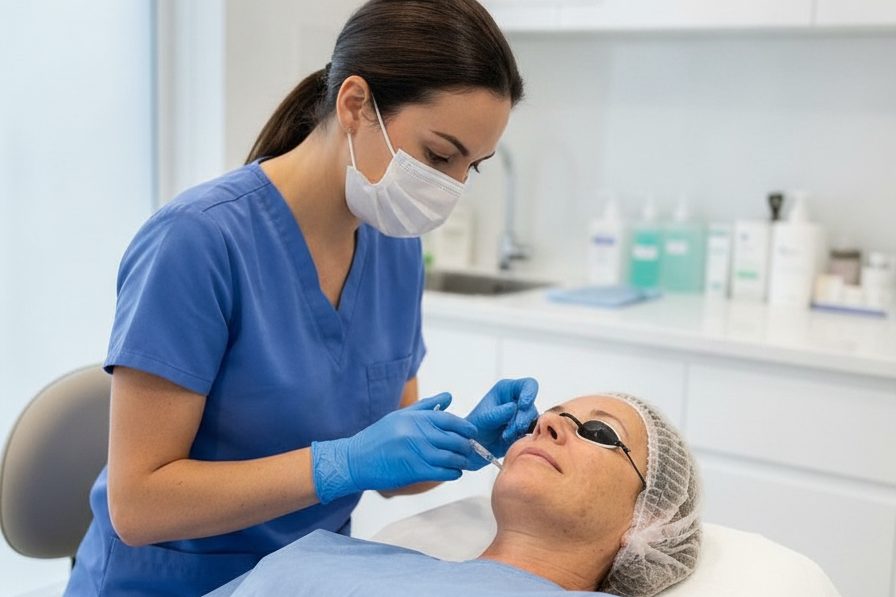
The injections themselves are relatively straightforward. The masseter is a large, easily identifiable muscle and the injection sites are well established. A fine needle is used, and most patients describe the sensation as a brief sharp sting at each injection point. There is no requirement for topical anaesthetic, though it can be applied if a patient is particularly anxious. The procedure typically takes no more than fifteen to twenty minutes once the assessment is complete.
The number of units used varies between patients depending on the size and density of the muscle. This is one reason why it is not appropriate to compare dosages between friends or to base expectations on what someone else received. Your clinician will determine the appropriate dose based on clinical assessment, not on a one-size-fits-all protocol.
Recovery, side effects and realistic risks
Recovery from masseter botulinum toxin is generally straightforward. There is no significant downtime, and most patients return to their normal activities the same day. Some mild swelling, tenderness or bruising at the injection sites is possible in the first day or two, and patients are typically advised to avoid vigorous exercise, alcohol and lying flat for the first few hours after treatment.
That said, it would be misleading to present this as a completely risk-free procedure. Botulinum toxin injections in the lower face carry specific risks that are worth understanding clearly before you proceed.
Asymmetry is one of the more common concerns. If the two masseters are not perfectly matched in terms of dose or placement, the jaw can appear uneven during the transition period. Experienced injectors work to minimise this, but anatomy varies between individuals and perfect symmetry is not always achievable in a single treatment cycle. Minor asymmetry can often be addressed at a review appointment.
Smile changes are a more significant potential complication. The masseter sits close to the risorius and zygomaticus muscles that contribute to smiling. If botulinum toxin diffuses into these adjacent muscles, it can temporarily weaken the smile, producing an uneven or reduced expression. This is why precise placement and appropriate dosing matter enormously, and why this treatment should only be performed by a clinician with detailed knowledge of facial anatomy.
Chewing difficulty is another possibility, particularly if the dose is higher than optimal. The masseter is a functional muscle, not merely an aesthetic one, and temporarily reducing its strength can make chewing tough foods uncomfortable. This is usually transient and resolves as the effect begins to wear off, but it is worth knowing in advance.
Paradoxical bulging, where the muscle appears to enlarge rather than reduce, is rare but documented. It is thought to occur when the toxin partially weakens the muscle but the patient compensates by clenching harder, effectively working the remaining muscle fibres more intensely. Addressing bruxism through a dental night guard alongside the injections can help reduce this risk.
Managing bruxism alongside jawline slimming
If teeth grinding or jaw clenching is the underlying cause of your masseter hypertrophy, addressing the habit itself is important for two reasons. First, it will make your botulinum toxin results last longer and look better, because the muscle is not being constantly restimulated. Second, bruxism causes genuine dental damage over time, including worn enamel, cracked teeth and temporomandibular joint problems, and these are worth addressing in their own right.
We recommend that patients with known bruxism consult their dentist about a custom-fitted occlusal splint or night guard before or alongside their masseter injections. This is not something we prescribe at KCC, but it is a straightforward dental intervention that can make a meaningful difference to both the longevity of your aesthetic results and your overall jaw health. Stress management strategies, including mindfulness and physiotherapy for jaw tension, can also be valuable adjuncts.
It is also worth noting that botulinum toxin injected into the masseter for bruxism-related pain and headaches has a reasonable evidence base behind it, separate from any aesthetic benefit. Some patients find that the functional relief, including reduced jaw pain, fewer tension headaches and better sleep, is actually more valuable to them than the cosmetic slimming effect.
How masseter Botox fits into a broader facial aesthetic plan
Jawline slimming with botulinum toxin does not exist in isolation. The lower face is part of a whole, and changes to one area inevitably affect how others are perceived. Reducing masseter bulk can sometimes make the chin appear more prominent, which may be a positive or a negative depending on your facial proportions. It can also affect how the neck and jowl area looks, particularly in patients who are older or who have some degree of skin laxity.
For patients who are also concerned about skin quality, texture or laxity in the lower face and neck, treatments such as Endolift laser lifting may be worth exploring as a complementary option. For those with broader concerns about facial ageing, a consultation that takes the whole face into account, rather than focusing narrowly on one muscle, will almost always produce a more harmonious outcome.
At our Kensington clinic, we take a whole-face approach to aesthetic consultations. We are not in the business of treating one area in isolation if doing so would create an imbalance elsewhere. Our clinicians will be honest with you if they feel that masseter reduction alone will not achieve what you are hoping for, or if a different treatment would serve you better.
London patients often come to us having already had treatment elsewhere, sometimes with results they are not happy with. Correcting poorly placed or overdosed masseter injections is possible in many cases, but prevention through careful initial assessment is always preferable.
Booking your consultation
If you are considering jawline slimming with botulinum toxin in London and want an honest, medically led assessment of whether it is right for you, the first step is a proper consultation rather than a rushed appointment where a decision is made in minutes. At our Kensington clinic, consultations are conducted by our medical team and are designed to give you the information you need to make a genuinely informed decision, including a frank conversation about what we think will and will not work for your face.
You can learn more about our approach and clinical team by visiting our meet the doctor page, and when you are ready to take the next step, you can book your consultation online. There is no obligation to proceed with any treatment following a consultation, and we would rather you leave with honest information than commit to something that is not right for you.
Frequently asked
Questions we get asked about EnerPeel®
- How long does it take to see results from masseter Botox?
- Most patients begin to notice a visible reduction in jaw width between four and eight weeks after their injections, with the full effect typically apparent at around the three-month mark. The change is gradual because it depends on the muscle slowly reducing in bulk through disuse, rather than an immediate physical change. Patients who expect instant results are often disappointed in the first few weeks, so patience is important.
- How long do masseter Botox results last?
- Results typically last between six and nine months, though this varies between individuals. Patients who grind their teeth or clench their jaw habitually tend to metabolise the toxin more quickly and may find their results are shorter-lived. Addressing the underlying cause of masseter hypertrophy, such as wearing a dental night guard for bruxism, can help extend the duration of results.
- Will masseter Botox affect my ability to chew?
- Some patients notice a mild reduction in chewing strength, particularly with tough or chewy foods, in the weeks following treatment. This is usually temporary and resolves as the body adapts. It is rarely severe enough to cause significant disruption to daily eating, but it is worth being aware of, particularly if your diet includes a lot of hard or fibrous foods.
- Is masseter Botox suitable if my jaw is wide due to bone structure rather than muscle?
- No. Botulinum toxin acts on muscle tissue only and will not alter bone structure. If your broad jawline is primarily skeletal in origin, masseter injections are unlikely to produce a meaningful change in your appearance. A thorough clinical assessment is essential to determine the cause of your jaw width before any treatment is recommended. An honest clinician will tell you if this treatment is unlikely to help you.
- Can masseter Botox be combined with other facial treatments?
- Yes, in many cases it can be combined with other treatments as part of a broader facial aesthetic plan. For example, some patients benefit from combining masseter reduction with chin or jawline definition using dermal fillers, or with skin quality treatments such as microneedling or laser resurfacing. However, the appropriateness of combining treatments depends on your individual anatomy and goals, and should be discussed in detail during a consultation rather than assumed.