

Skin · 11 min read
PRP for Hair Loss in London: How It Works and Who It Suits
By Dr Hassan Soueid · GMC 6107783 · Medical Director, Kensington Cosmetic Clinic
Published 15 November 2026
TL;DR. PRP may help some people with early pattern thinning once the cause has been properly diagnosed, but the evidence is mixed, it is not a licensed treatment for hair loss, and it works best as one part of a plan rather than a replacement for medication or surgery.
If you are looking into PRP hair loss treatment in London, you will find plenty of clinics offering it, and many pages describe it in glowing terms. This guide takes a different approach. At Kensington Cosmetic Clinic, our view is that platelet-rich plasma can have a sensible place in hair restoration for the right person, but only after the cause of the hair loss has been identified, and only with a clear understanding of what the research does and does not support. Below we explain how PRP treatment is prepared, why diagnosis comes first, who it may suit, who should avoid it, and how it sits alongside medication and hair transplant surgery.
What PRP is and how the sample is prepared
Platelet-rich plasma is a concentrate made from a small sample of your own blood. Platelets are best known for their role in clotting, but they also carry proteins often described as growth factors. In laboratory and early clinical work, these proteins have been linked with signalling that may influence blood supply around the follicle and the length of the hair growth phase. The theory behind PRP for hair loss is that delivering a concentrated dose of these factors to thinning areas could support follicles that are miniaturising but still alive.
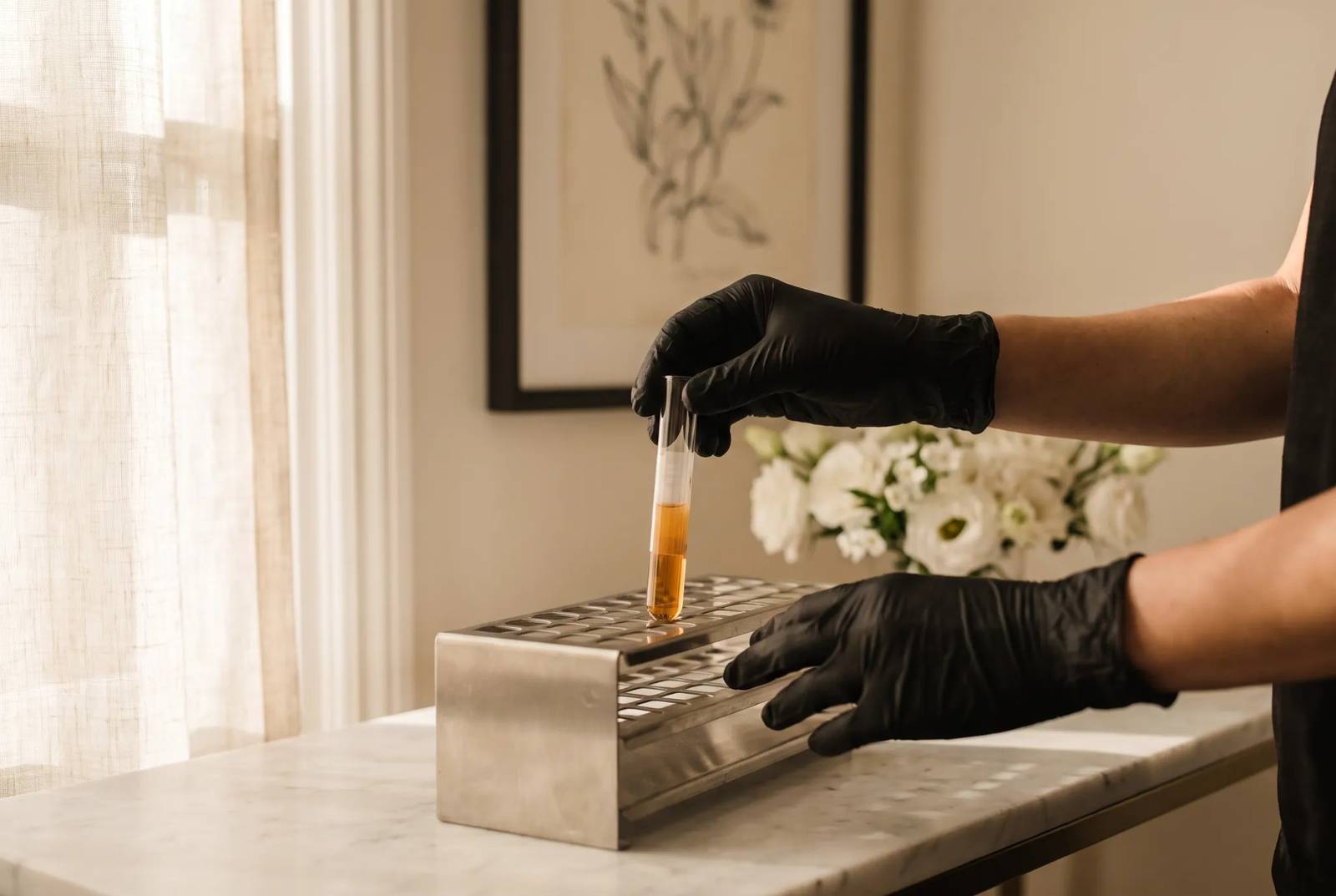
The process itself is straightforward. A clinician draws blood from a vein in your arm, much like a routine blood test. The tubes are placed in a centrifuge, which spins them so the blood separates into layers: red cells at the bottom, a thin layer of white cells, and plasma at the top. The portion of plasma richest in platelets is then drawn off. Some systems use a single spin and others a double spin, and some protocols add an activating agent while others do not. These details change the platelet concentration in the final product, which is one reason results in studies vary so much.
The prepared plasma is then injected into the scalp with a fine needle, usually as a series of small injections spaced across the areas of thinning. Some clinicians combine this with microneedling of the scalp. The appointment, including the blood draw, preparation and injections, typically takes around an hour, although your first visit will be longer because it includes a full assessment.
Because PRP uses your own blood, an allergic reaction to the plasma itself is not expected. That does not mean it carries no risk, and it does not mean that more concentrated or more frequent PRP is automatically better. We have also written about PRP for the face, which uses a similar preparation but has a different purpose and evidence base.
Diagnosis before treatment: finding the cause of hair loss
Hair loss is a symptom, not a diagnosis. The essential first step, before anyone picks up a needle, is working out why your hair is thinning. Different causes behave differently, and a treatment that is reasonable for one can be pointless or even inappropriate for another.
The common patterns we see in clinic include:
- Androgenetic alopecia (male or female pattern hair loss), a gradual, genetically influenced thinning, typically at the temples and crown in men and along the parting in women. This is the condition most PRP research has looked at.
- Telogen effluvium, a diffuse shedding that often follows a trigger such as illness, childbirth, significant weight loss, surgery, stress or a change in medication. It frequently settles by itself once the trigger is addressed.
- Alopecia areata, an autoimmune condition causing patches of hair loss, which is usually managed along different lines and may need dermatology input.
- Traction alopecia, caused by repeated tension from tight hairstyles, extensions or braids.
- Scarring (cicatricial) alopecias, such as lichen planopilaris or frontal fibrosing alopecia, where inflammation destroys follicles permanently. These need dermatology assessment, often including a biopsy.
A proper assessment starts with a detailed history: when the thinning began, whether it was gradual or sudden, family history, recent illness or stress, diet, medications and supplements, and in women, menstrual history and any hormonal symptoms. Examination of the scalp follows, often including trichoscopy, a magnified view of the scalp and hair shafts that can reveal miniaturisation, broken hairs, redness or signs of scarring.
Blood tests are frequently part of the work-up. Depending on your history, these might include a full blood count, ferritin (iron stores), thyroid function, vitamin D, vitamin B12 and folate, and in some women hormone tests if there are signs such as irregular periods or acne. Low iron stores and thyroid problems are well-recognised contributors to shedding, and correcting them is a basic step that no injection can replace. A full blood count also tells us about your platelet levels, which is directly relevant to whether PRP is sensible at all.
Sometimes the honest outcome of a consultation is that you do not need PRP. You may need iron replacement, a conversation with your GP about thyroid function, a referral to a dermatologist, or simply time for a telogen effluvium to settle. We would rather tell you that than sell you a course of treatment.

What the evidence does and does not show
This is where many clinic websites become vague, so we will be direct. PRP is not a licensed medicine for hair loss. The kits used to prepare it are regulated as medical devices, but that is not the same as a treatment being approved for a specific condition after large-scale trials. There is also no single agreed protocol: studies differ in how the plasma is prepared, how much is injected, how often, and how outcomes are measured.
What the research does suggest is that, in androgenetic alopecia, PRP may produce modest improvements in hair density or thickness for some people over the study period. Several systematic reviews have reached cautiously positive conclusions. However, those same reviews consistently highlight the limitations: many trials are small, some are not properly blinded or placebo-controlled, follow-up is often short, and variation in technique makes studies hard to compare. Some well-designed studies have found little or no difference compared with placebo. The overall quality of evidence is generally described as low to moderate.
What the evidence does not show is that PRP regrows hair on areas that are already bald and smooth, that it helps scarring alopecia, that it stops pattern hair loss progressing, or that any benefit lasts without maintenance. Evidence for telogen effluvium and alopecia areata is limited, and in those conditions other approaches usually come first.
In practical terms, PRP is best thought of as an option that may help some people with early to moderate pattern thinning, used alongside established treatments, with a clear plan to review whether it is doing anything. We would not present it as a stand-alone answer, and you should be cautious of anyone who does.
PRP hair loss treatment in London: who it may suit and who it is not for
The people for whom PRP is most reasonably discussed share a few features. They usually have a confirmed diagnosis of androgenetic alopecia at an early or moderate stage, with thinning hair rather than bare scalp. They have had relevant blood tests and any correctable causes addressed. They understand the evidence is mixed, accept that any change may be subtle or absent, and are prepared to commit to a course and a review. Some have tried medication and want to add something, some cannot tolerate medication, and some want to discuss PRP as part of a wider plan that may later include surgery.
PRP is not appropriate, or needs very careful consideration, in these situations:
- Scarring alopecia. Where follicles have been destroyed there is nothing for PRP to act on, and injecting an inflamed scalp could be unhelpful. The priority is dermatology assessment and control of the underlying condition.
- Active scalp infection or inflammation. This includes fungal infection, folliculitis, open wounds and flares of conditions such as psoriasis in the treatment area. These should be treated first.
- Blood and platelet disorders. Low platelet counts, platelet dysfunction and some clotting disorders can make PRP ineffective or increase the risk of bleeding and bruising.
- Anticoagulant and antiplatelet medication. If you take blood thinners, you must never stop them for a cosmetic treatment. In most cases this simply means PRP is not the right choice. Over-the-counter anti-inflammatory painkillers can also affect platelet function, and we will advise on timing.
- Advanced hair loss. Where large areas are smooth and shiny, follicles are likely gone and PRP is very unlikely to make a meaningful difference. Surgery or other approaches may be more realistic conversations.
- Active cancer, particularly blood cancers, or ongoing chemotherapy. These are reasons to defer and involve your treating team.
- Pregnancy and breastfeeding. We generally defer elective scalp treatment during this time, and postpartum shedding often improves on its own.
- Being acutely unwell, or a history of fainting during blood tests, which we would discuss openly before going ahead.
Expectations matter too. If you are hoping PRP will restore a full head of hair or remove the need for any other treatment, it is unlikely to meet those hopes, and we will say so at consultation.
How PRP fits with medication, PRF and hair transplant
For androgenetic alopecia, the treatments with the strongest evidence remain medical. Minoxidil applied to the scalp is licensed for pattern hair loss and is widely used by men and women. Finasteride, a prescription-only tablet, is licensed for male pattern hair loss and works by reducing the hormone that drives follicle miniaturisation. Both have potential side effects, and both need to be continued to maintain any benefit. Some prescribers also use other medicines off-label, which requires individual assessment.
PRP does not replace these treatments. Where it is used, it is usually alongside them, and some studies have looked specifically at combinations with minoxidil. If you already use medication, there is usually no reason to stop because you are having PRP, and stopping can trigger shedding that is easily mistaken for treatment failure. Decisions about starting or stopping prescription medicines should always be made with the prescribing doctor.
You may also come across PRF, platelet-rich fibrin. It is prepared with a slower spin and without an anticoagulant in the tube, forming a fibrin-rich preparation sometimes described as releasing growth factors more gradually. It is often marketed as an upgrade on PRP. At present the evidence for PRF in hair loss is even more limited than for PRP, and there is no robust evidence that it is better. We are happy to discuss it, but would not recommend it on the strength of marketing claims.
Hair transplantation is a different kind of treatment altogether. It moves follicles from a donor area, usually the back and sides of the scalp, into thinning or bald areas. A transplant can address areas PRP cannot, but it does not stop the surrounding native hair from continuing to thin, which is why medication is often still advised afterwards. The quality of the donor area is crucial, and we cover this in our guide to hair transplant candidacy and the donor area. Some clinicians use PRP around the time of a transplant, though evidence for routine use is limited. At KCC, hair transplant procedures are performed by Dr Hassan Soueid or one of our qualified surgeons, and whether surgery, medication, PRP or a combination makes sense is decided through a doctor-led consultation.
Our hair restoration service is doctor-led and headed by Dr Mahmoud Elkhouly, a GP, so that your medical history, blood results and diagnosis sit at the centre of every plan.
Sessions, spacing and knowing when to stop
There is no universally agreed schedule, but published protocols commonly describe an initial course of around three to four sessions spaced roughly four weeks apart, followed by a review and, if there has been a worthwhile response, maintenance sessions every few months. Your own plan may differ depending on your diagnosis, your medication and how you respond.
Hair grows slowly and in cycles, so any change takes time to appear. It is not realistic to judge PRP after one or two sessions. Equally, it is not reasonable to continue indefinitely without any sign that it is helping. We agree a review point at the outset, usually a few months after the initial course, and compare against a baseline recorded at your first appointment, using scalp examination, trichoscopy and your own observations about shedding and density.
Reasons to stop or rethink include:
- No discernible change after a full initial course and an adequate wait.
- Continued progression of thinning despite treatment, which may mean revisiting the diagnosis or medication.
- Side effects or discomfort that outweigh any benefit you perceive.
- A change in your health or medication that makes PRP unsuitable.
- A shift in your goals, for example deciding to focus on medication or explore surgery instead.
Stopping PRP is not a failure. It is useful information. Many people find that what they actually need is a well-managed medical plan, and some will be better suited to a transplant discussion. If PRP is helping, any benefit is likely to fade over time without maintenance, because the underlying pattern hair loss is still active.
Side effects and aftercare
PRP is generally well tolerated, but it is a medical procedure involving a blood draw and multiple scalp injections, and you should know what to expect.
Common, usually short-lived effects include:
- Tenderness, aching or a tight feeling in the scalp for a day or two.
- Pinpoint bleeding at injection sites and occasional small bruises.
- Mild swelling, which can sometimes track down to the forehead or around the eyes for a few days.
- Headache.
- Bruising or soreness where the blood was drawn.
- Feeling light-headed or faint during the blood draw or injections, which is why we ask you to eat and drink beforehand.
On discomfort, scalp injections can be uncomfortable, and people vary in how they find it. Options such as local anaesthetic, cooling or vibration devices can be discussed. Less common risks include infection at injection sites, temporary changes in scalp sensation, and a period of increased shedding that some people notice after treatment. Rarely, a reaction to local anaesthetic or to substances used in preparation can occur, and as with any injection there is a very small risk of injury to a blood vessel or nerve. These are discussed at consultation and form part of your written consent.
Aftercare advice typically includes not washing your hair for the rest of the day, avoiding hair dye, chemical treatments, saunas, swimming and strenuous exercise for a day or two, and using simple painkillers if needed, following our advice on which to choose. Contact the clinic if you notice increasing redness, warmth, pus, fever or pain that is getting worse rather than better. You will be given written aftercare and a way to reach the team.
Booking your consultation
A hair loss consultation at our Kensington clinic begins with listening and assessment rather than a treatment menu. We will take a full history, examine your scalp, arrange or review blood tests where needed, and explain your likely diagnosis in plain language. If PRP is a reasonable option, we will talk through the evidence, the number of sessions, side effects and the review point. If it is not, we will explain why and discuss alternatives, which may include medication, referral to your GP or a dermatologist, or a conversation about surgery.
Kensington Cosmetic Clinic is registered with the Care Quality Commission, and our clinical approach is overseen by our Founder and Medical Director, Dr Hassan Soueid, a GMC-registered doctor. We are introducing HonestFace, our own iPad app for digital consultation forms, consent signing and secure patient records, to make paperwork simpler for patients across London.
There is no obligation to proceed after a consultation, and we encourage you to take time to think, ask questions and seek other opinions if you wish. Many people travelling from across London and beyond find it helpful to bring a list of current medications, any recent blood results and notes on when their hair loss began. When you are ready, you can book a consultation at our Kensington clinic.
Frequently asked
Questions we get asked
- Does PRP for hair loss work for everyone?
- No. The research suggests PRP may produce modest improvements for some people with early to moderate androgenetic alopecia, but results vary, some studies show little difference compared with placebo, and it is not a licensed treatment for hair loss. It is unlikely to help scarring alopecia or areas that are already bald, which is why diagnosis comes first.
- How many PRP sessions are usually recommended?
- There is no single agreed protocol. Published approaches commonly describe an initial course of around three to four sessions roughly four weeks apart, followed by a review and, if there has been a worthwhile response, maintenance every few months. We agree a review point in advance so you can decide whether to continue or stop.
- Is PRP for hair painful?
- Most people find the scalp injections uncomfortable rather than very painful, but experiences vary. Options such as local anaesthetic, cooling or vibration can be discussed. Tenderness, mild swelling or a headache for a day or two afterwards is common.
- Can I use minoxidil or finasteride alongside PRP?
- Usually yes. These medicines have the strongest evidence for pattern hair loss, and PRP is generally used alongside them rather than instead of them. Stopping medication can cause shedding, so any change to prescription medicines should be discussed with the doctor who prescribes them.
- Who should not have PRP for hair loss?
- PRP is generally not suitable for people with scarring alopecia, an active scalp infection or inflammation, blood or platelet disorders, those taking anticoagulant or antiplatelet medication, people with advanced hair loss, those with active cancer or on chemotherapy, and during pregnancy or breastfeeding. A doctor-led assessment will confirm whether it is appropriate for you.