


Surgical · 11 min read
Breast Implants or Fat Transfer to the Breasts: Comparing Options in London
By Dr Hassan Soueid · GMC 6107783 · Medical Director, Kensington Cosmetic Clinic
Published 1 November 2026
TL;DR. Breast implants usually offer a larger and more predictable change in size, while fat transfer offers a softer, more modest increase using your own tissue, and the right choice depends on your anatomy, health, goals and attitude to future surgery rather than on which option sounds more natural.
Two very different ways to add volume
When people in London start researching breast enlargement, they quickly come across two main surgical routes: silicone breast implants, or fat transfer to the breasts (sometimes called fat grafting or autologous fat transfer). The two are often presented as rivals, with implants described as the 'big' option and fat transfer as the 'natural' one. That framing is understandable, but it is not especially helpful when you are trying to make a decision about your own body.
The reality is that these are different operations with different strengths, different limits and different long-term considerations. An implant is a manufactured medical device placed in a pocket either in front of or behind the chest muscle. Fat transfer involves liposuction from one area of your body, processing that fat, and then injecting it in small amounts into the breast. One adds a defined volume in a single step. The other relies on how much transferred fat your body keeps alive, which varies from person to person and cannot be known in advance.
Neither is a minor procedure, and neither is right for everyone. Both carry risks, both involve recovery, and both deserve a proper medical consultation before any decision is made. Both options are discussed as part of our breast surgery consultations, and you can read about the technique behind grafting on our fat transfer page. This guide sets out how the two compare in practical terms, who each may suit, and who may be better served by a different approach, including no surgery at all. If you have already settled on implants and are weighing up the details, our guide to choosing implant size, shape and profile goes into those questions in more depth.
How breast implants work, and what they do well
Breast implants used in the UK today are typically silicone shells filled with a cohesive silicone gel. They come in a range of volumes, widths, projections and shapes, which allows a surgeon to plan a change in size with a reasonable degree of precision. The implant is inserted through an incision, most commonly in the crease beneath the breast, and placed either behind the breast tissue or partly or fully behind the pectoral muscle.
The main strength of implants is predictability of volume. If you want a noticeable increase in size, particularly more than a modest one, implants are usually the more reliable route. The volume agreed at consultation is the volume that is placed, although how it settles and looks on your frame still depends on your skin, breast tissue and chest wall. Implants can also add fullness to the upper part of the breast, the curve above the nipple, which fat transfer generally struggles to create.
Implants also suit people who do not have much spare fat. Very slim patients, or those with little fat on the abdomen, flanks or thighs, often do not have enough donor tissue for meaningful fat transfer. For them, an implant may be the only surgical way to add volume.
The trade off is that an implant is a foreign body, and it is not a lifetime device. Many people with implants will need further surgery at some point, whether to manage a complication, replace an implant or address changes in the breast over time. Nobody can tell you exactly when that will be. Implants can sometimes be felt, particularly in slimmer patients with thin tissue coverage, and visible rippling at the edges is possible. In England, implant operations are recorded on the national Breast and Cosmetic Implant Registry, with your consent, so that patients can be traced if a safety issue with a particular device ever arises.
How fat transfer to the breasts works, and its honest limits
Fat transfer is a two-stage process carried out in a single operation. First, fat is harvested using liposuction from an area such as the abdomen, flanks or thighs. That fat is then processed to separate usable fat cells from fluid, blood and oil. Finally, it is injected into the breast in many small parcels, spread through different layers of tissue so that each tiny deposit has the best chance of picking up a blood supply.
The appeal is clear. There is no implant and no device to monitor, and the added volume is your own tissue, so it usually feels soft and moves like the rest of the breast. Some patients also value the change at the donor site, although we would caution against choosing fat transfer mainly for the liposuction, since the donor area is a means to an end rather than the goal.
The honest limits matter just as much. Not all transferred fat survives. A proportion is reabsorbed by the body over the first few months, and how much is retained varies between individuals and cannot be predicted. This is why surgeons usually wait several months before judging the outcome. The increase in size from a single session is usually modest, and people hoping for a large change are often disappointed by fat transfer alone. Some patients choose a second session to build volume gradually, which means a second operation and a second recovery.
There is also a ceiling on how much fat can safely be placed at one time. Overfilling the breast does not create a bigger result. It tends to reduce the blood supply available to each graft, which can increase the risk of fat necrosis, where areas of fat die and form firm lumps. Fat transfer also cannot lift a drooping breast or create a sharply defined upper curve, and recovery involves healing at both the breasts and the donor areas.
Finally, transferred fat behaves like fat elsewhere in your body. If your weight changes significantly afterwards, your breasts may change too, which is why a stable weight before and after surgery is important.
Risks and long-term considerations side by side
Every surgical procedure carries general risks, including bleeding, infection, poor wound healing, scarring, blood clots and reactions to anaesthetic. Beyond those, each option has its own particular profile, and it is worth understanding both before deciding which set of trade offs you are more comfortable with.
Implant specific risks include capsular contracture, where the scar tissue that naturally forms around an implant tightens and can make the breast feel firm, look distorted or become uncomfortable. Implants can rupture or leak, which may cause no symptoms and may need imaging to detect. They can move from their intended position, and asymmetry, rippling and changes in nipple sensation are possible. There is a rare type of lymphoma, breast implant associated anaplastic large cell lymphoma (BIA-ALCL), that has been linked mainly to textured implants. Some people also report a range of symptoms they attribute to their implants, often described as breast implant illness. This is not yet well understood, and we think it is right to discuss it openly rather than dismiss it. The MHRA publishes safety information on breast implants, and your doctor should talk you through it.
Fat transfer specific risks include fat necrosis, oil cysts and calcification, which can show up as lumps you or your doctor can feel. These are usually benign, but any new breast lump should always be assessed, and sometimes further imaging or a biopsy is recommended to be certain. There are also the risks of liposuction at the donor site, such as uneven contour, prolonged swelling, numbness and, rarely, more serious complications. Unpredictable volume retention is less a complication than a built-in feature of the technique, but it is the most common source of dissatisfaction.
Breast screening and imaging deserve a specific mention. Both implants and fat transfer can affect how breast imaging is performed and interpreted. With implants, mammography is still possible, but you should always tell the radiographer, as different views are often used. After fat transfer, changes such as calcification can sometimes need extra investigation to distinguish them from other causes. Neither option should stop you attending screening, and you should always tell those caring for you what surgery you have had.
Future surgery is the other major long-term difference. With implants, further operations over the years are a realistic expectation rather than a remote possibility. With fat transfer, there is no device to replace, but additional sessions may be needed to reach the size you want, and your breasts will continue to change with age, weight and hormones, just as untreated breasts do.
Who each option may suit, and who it is not for
Suitability is decided at consultation, after an examination and a proper conversation about your health and goals. As a general guide, though, some patterns are common.
Implants may suit people who want a clearly noticeable increase in size, who would like more fullness in the upper part of the breast, who have little spare fat elsewhere, and who accept that an implant is a device that may need further surgery in future. Fat transfer may suit people who want a modest, gradual change, who have enough donor fat in suitable areas, whose weight has been stable for some time, and who are comfortable with some uncertainty about the final outcome. It is also sometimes used to help with mild asymmetry between the breasts.
Equally important is who either option is not right for. We would usually advise against surgery, or suggest waiting, if you:
- are under 18, or feel pressured by a partner, friend or social media to have surgery
- are pregnant, breastfeeding, or planning a pregnancy in the near future, as breasts often change significantly afterwards
- smoke or use nicotine and are not willing to stop well before and after surgery, since nicotine reduces blood supply and increases healing problems and fat graft loss
- have a weight that is still changing, or are planning significant weight loss
- have medical conditions that make anaesthesia or surgery higher risk, until these have been properly assessed
- are hoping that surgery will resolve deeper feelings about your appearance or relationships
We also take body image concerns seriously. If the way you think about your appearance is causing significant distress or taking up a large part of your day, surgery is unlikely to help, and we may suggest speaking to your GP first. Saying no, or not yet, is a legitimate outcome of a consultation.
Fat transfer is specifically not suitable for very slim patients without enough donor fat, or for anyone expecting a large size increase from a single session. Implants may be less suitable for people who feel strongly that they do not want a manufactured device in their body, or who are not prepared for the possibility of future operations.
Hybrid approaches, and when a lift matters more than volume
The choice is not always one or the other. A combined approach, sometimes called composite or hybrid augmentation, uses an implant to provide the main volume and fat transfer to soften the edges, improve coverage over the implant or refine the cleavage area. This can be helpful for slimmer patients who want the predictability of an implant but are concerned about implant edges being visible or easy to feel. Fat transfer is also sometimes used later to help with rippling in people who already have implants. A combined procedure is a longer operation that carries the risks of both techniques, so it is not automatically the better choice.
For many people, the real concern is not size but shape. After pregnancy, breastfeeding, weight loss or simply with age, breasts can lose fullness and sit lower on the chest. Adding volume alone, whether with an implant or with fat, does not lift a breast that has descended significantly, and in some cases it can make the drooping look more noticeable. A breast lift, on its own or combined with augmentation, may be the more appropriate conversation. Our guide to breast lift candidacy explains how this is assessed.
What happens at a doctor-led consultation in Kensington
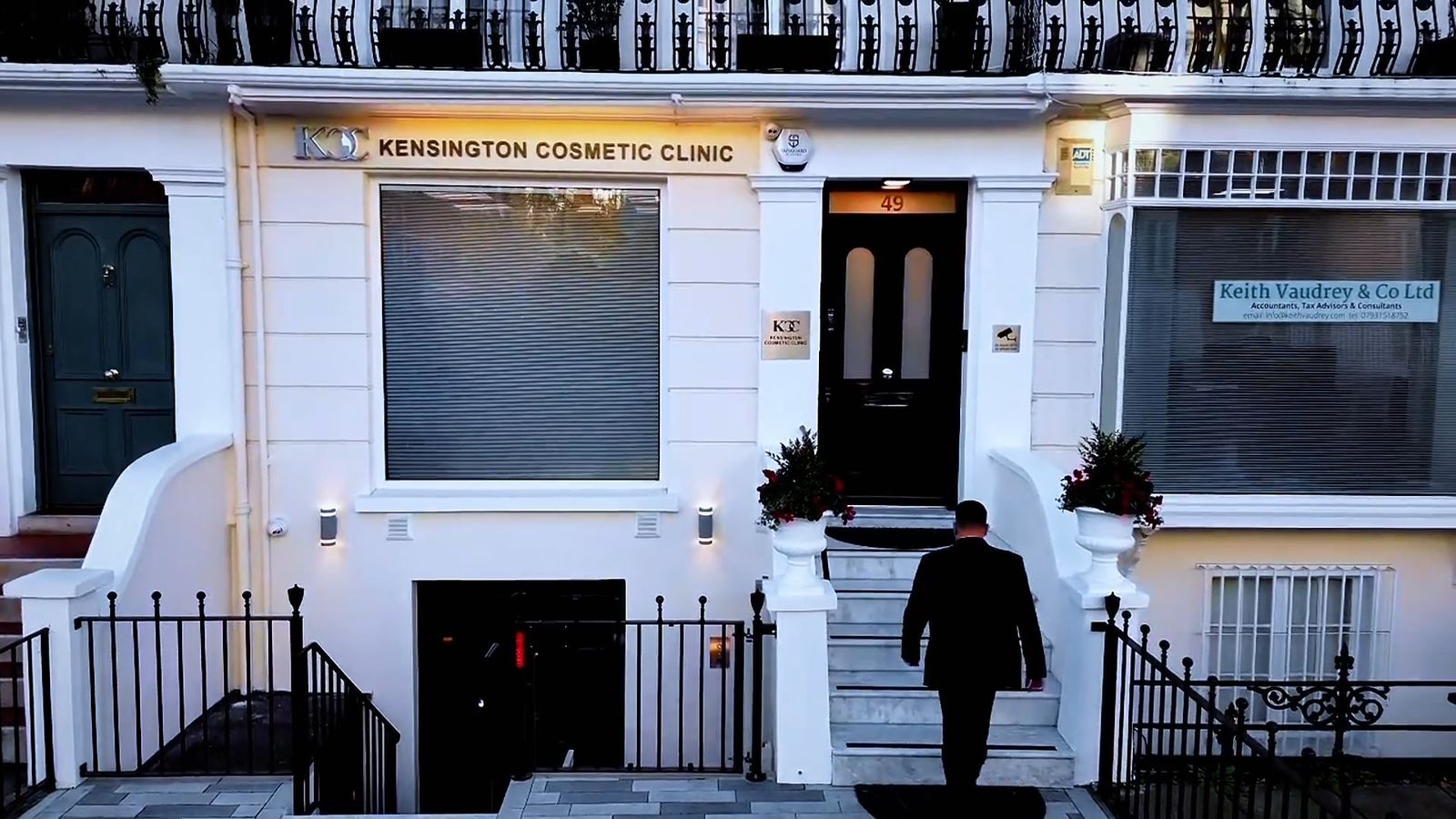
At our clinic in Kensington, consultations are doctor-led, and breast operations are performed by Dr Hassan Soueid or one of our qualified surgeons. The aim of the first appointment is not to sell you a procedure, but to understand what you want to change and why, assess your anatomy, and give you an honest view of what each option can and cannot do for you.
You can expect to be asked about your medical history, previous surgery, medications, smoking, pregnancy plans, family history of breast cancer and your breast screening history. The examination usually includes measurements of the breast and chest, an assessment of skin quality and tissue thickness, the position of the nipple and the breast crease, and any asymmetry. If fat transfer is being considered, the doctor will also assess potential donor areas to judge whether there is enough suitable fat.
We will talk through the risks described above as they apply to you, the expected recovery, and what further surgery might be needed in future. Useful questions to bring include: How much change is realistic for my frame? What happens if I am unhappy with the size? Which signs of a complication should I look out for? How will follow-up be arranged? Write down anything that matters to you, and bring someone with you if that helps.
In line with UK professional guidance for cosmetic procedures, we build in time for reflection between consultation and any decision. You will not be asked to commit on the day, and you are encouraged to take written information away, think it over and come back with questions. A second consultation before surgery is common and welcome. We are also introducing HonestFace, our own iPad app for digital consultation forms, consent signing and secure patient records, so that paperwork can be completed clearly and stored securely as part of this process. The clinic is registered with the Care Quality Commission, and aftercare arrangements will be explained before any operation is booked.
Booking your consultation
If you are weighing up breast implants against fat transfer, the most useful next step is a consultation where your own anatomy, health and goals can be assessed properly. Patients come to our Kensington clinic from across London and beyond, and some find it helpful to attend more than one appointment before deciding. There is no obligation to proceed, and an honest consultation may conclude that the option you came in asking about is not the right one for you, or that now is not the right time.
Before your appointment, it can help to think about what you would like to change, what matters most to you, and how you feel about the possibility of future surgery. Bring a list of your medications and any relevant medical letters. You can book a consultation online, and our team will explain what to expect and how to prepare.
Frequently asked
Questions we get asked
- Which option gives a bigger increase in breast size?
- Implants usually allow a larger and more predictable change in size, because a defined volume is placed in a single operation. Fat transfer typically gives a modest increase, as a proportion of the transferred fat is reabsorbed and the amount that can be safely placed in one session is limited. Your doctor can explain what may be realistic for your frame at consultation.
- How long does fat transfer to the breasts last?
- Fat that survives the first few months generally behaves like the rest of your body fat. That means it can change if your weight goes up or down, and your breasts will continue to change with age and hormones. How much fat survives varies between individuals and cannot be predicted in advance.
- Will I need more surgery in the future?
- Breast implants are not lifetime devices, and many people with implants will need further surgery at some point, for example to manage a complication or replace an implant. With fat transfer there is no device to replace, but some people choose additional sessions to build volume. Both possibilities should be discussed before you decide.
- Do implants or fat transfer affect breast screening?
- Both can affect how breast imaging is carried out or interpreted. With implants you should always tell the radiographer, as different mammogram views are often used. After fat transfer, changes such as calcification occasionally need further investigation. Neither should stop you attending screening, and you should always tell your healthcare team what surgery you have had.
- Can implants and fat transfer be combined?
- Yes, a combined approach uses an implant for the main volume and fat transfer to soften edges or improve coverage, which some slimmer patients find helpful. It is a longer operation that carries the risks of both techniques, so it is not automatically the better choice. Suitability is assessed at a doctor-led consultation.