

Surgical · 11 min read
Mini Tummy Tuck or Full Tummy Tuck: Which Is Right for You in London
By Dr Hassan Soueid · GMC 6107783 · Medical Director, Kensington Cosmetic Clinic
Published 5 November 2026
TL;DR. A mini tummy tuck treats a limited area of loose skin below the belly button with a shorter scar and often a quicker recovery, while a full tummy tuck addresses the whole abdomen, including muscle separation above the navel, at the cost of a longer scar and a bigger recovery, and the right choice depends on your anatomy rather than on a preference for the smaller operation.
"Mini" is an appealing word. A shorter scar, a shorter operation and a shorter recovery all sound like sensible things to want, and it is entirely understandable that many people who contact our Kensington clinic ask specifically about a mini tummy tuck. The honest position is that a mini tummy tuck suits a fairly narrow group of people. Chosen for the wrong abdomen, it can leave behind exactly the looseness or bulge that prompted the enquiry in the first place. Equally, a full tummy tuck is a substantial operation, and nobody should have one if a smaller procedure, or no surgery at all, would serve them just as well.
This guide sets out the practical differences between the two operations, how a doctor works out which one fits your body, and the real trade-offs in scarring, recovery and risk. It is written for people in London and further afield who are weighing up abdominoplasty and would like a straight answer rather than a sales pitch. If you are not yet sure whether you need skin removed at all, our guide to liposuction versus tummy tuck deals with that earlier question.
What actually differs between a mini and a full tummy tuck
Both operations are forms of abdominoplasty, which means surgery to remove excess skin and some fat from the abdomen and, where needed, to tighten the abdominal wall. The difference is how much of the abdomen is treated, and therefore how much can realistically be changed.
In a mini tummy tuck, the incision is made low on the abdomen, usually within the area covered by underwear, and it is shorter than the incision for a full procedure. Skin is removed only from below the belly button. The belly button itself normally stays where it is, so there is no scar around it. If the muscles below the navel have loosened, they can be tightened through the same incision, and liposuction is often used alongside to refine the contour. What the surgeon cannot do through a short, low incision is properly reach or reshape the upper abdomen.
In a full tummy tuck, the incision is longer and typically runs from hip to hip, again placed low. The skin and fat of the abdomen are lifted up towards the rib margin, the abdominal muscles can be repaired along their whole length from the breastbone to the pubic bone, and the skin is then drawn down and the excess removed. That excess usually includes much of the skin between the belly button and the pubic area. The belly button stays attached to its natural stalk and is brought out through a new opening in the repositioned skin, which leaves a small scar around it.
The choice is not strictly binary. When loose skin wraps around the flanks, an extended tummy tuck lengthens the scar further around the hips, and after major weight loss some people need a vertical scar as well as a horizontal one. Our tummy tuck treatment page gives an overview of the operation as a whole.
Above or below the belly button: the question that usually decides it
The single most useful question is where your loose skin and bulge actually sit. A mini tummy tuck only works well when the problem is confined to the lower abdomen.
The person who tends to suit a mini procedure is close to a stable, healthy weight, has reasonably firm skin above the belly button, and is bothered by a modest fold or pouch of loose skin below it. The upper abdomen looks and feels broadly as they would like. A full tummy tuck is usually more appropriate where there is loose or crepey skin both above and below the navel, an overhang that sits over the waistband, or a bulge in the upper abdomen as well as the lower.
The reason a mini procedure cannot simply be stretched to cover more ground is mechanical. In a tummy tuck, the skin is pulled downwards before the excess is removed. If the belly button is left in place, the surgeon can only pull so far before the navel is dragged lower and starts to look out of position. Releasing and repositioning the belly button, as happens in a full tummy tuck, is what allows the upper skin to be tightened.
A common mismatch is someone with looseness across the whole abdomen who opts for a mini because of the shorter scar. The lower tummy flattens, but the upper looseness remains and can look more noticeable by contrast. Converting to a full tummy tuck later means a second operation and a second recovery.
Stretch marks follow the same logic. Only marks on the skin that is removed are taken away. A full tummy tuck often removes many of the marks below the navel, while a mini removes fewer, and marks above the navel may simply be moved lower. Neither operation is a treatment for stretch marks in its own right.
Muscle separation and why it often tips the balance
Loose skin is only half the story. Many people, particularly after pregnancy, also have separation of the two vertical abdominal muscles, known as diastasis recti. The tissue joining the muscles down the midline stretches and widens, often producing a bulge or ridge along the middle of the tummy that is most visible when sitting up from lying down. Pelvic health physiotherapy can improve core function and is worth trying first, but it does not always close a significant gap or remove the bulge.
During a tummy tuck, the surgeon can repair this separation by stitching the firm sheath over the muscles back together, a step often called plication. In a full tummy tuck, this can be done along the entire length of the separation. In a mini tummy tuck, the repair is limited to the section below the belly button that can be reached through the shorter incision. Because separation after pregnancy commonly extends above the navel too, a mini procedure will often leave the upper part of the bulge untouched. For many people this is the factor that settles the choice, even when their loose skin is relatively modest.
Two further points deserve honesty. First, a hernia near the belly button is fairly common alongside muscle separation and needs to be identified before surgery. Occasionally an ultrasound scan or an opinion from a general surgeon is advised, and how a hernia is managed can influence which operation is planned. Second, some abdominal fullness comes from fat stored inside the abdomen, around the organs and behind the muscle wall. No tummy tuck removes that fat, and where there is a lot of it, tightening the muscles has a limited effect on overall shape. A careful examination should tell you how much of your bulge is skin, how much is muscle and how much is internal fat.
For some women, abdominal surgery is considered alongside breast surgery as part of a mummy makeover. Combining procedures lengthens both the operation and the recovery, so it is a decision to make carefully rather than by default.
Scars and the belly button: what you are trading
Every tummy tuck leaves a scar. It is the unavoidable price of removing skin, so the real question is which scar you are willing to accept for which result. A mini tummy tuck scar is shorter and sits low. A full tummy tuck scar is longer, usually running from hip to hip, with an additional scar around the belly button. In both cases the incision is marked with you standing, and the aim is to place it where underwear or swimwear will usually cover it, although your anatomy and the amount of skin removed affect exactly where it ends up.
Scars mature slowly. In the early months they are often pink, firm and sometimes raised, and they usually soften and fade over a year to eighteen months. They do not disappear. Some people form thickened scars or, less commonly, keloid scars, and those with darker skin tones may notice pigment changes along the line. A personal or family history of difficult scarring is worth raising at consultation.
There is a subtle trade-off at the ends of the scar. If a scar is kept too short for the amount of skin being removed, the skin can bunch at each end into small puckers, sometimes called dog ears. In practice, a scar slightly longer than you had hoped for may give a smoother contour than a shorter one that leaves bunching behind.
The belly button matters more than many people expect. In a full tummy tuck its new shape is an important part of the overall appearance, and occasionally it heals with narrowing, visible scarring or a shape you are not happy with. A mini tummy tuck avoids a scar around the navel, but if your belly button is already stretched or sitting low, a mini procedure cannot change that. An existing caesarean section scar is often removed or incorporated into the new scar in either operation.
Recovery, anaesthesia and risk, compared honestly
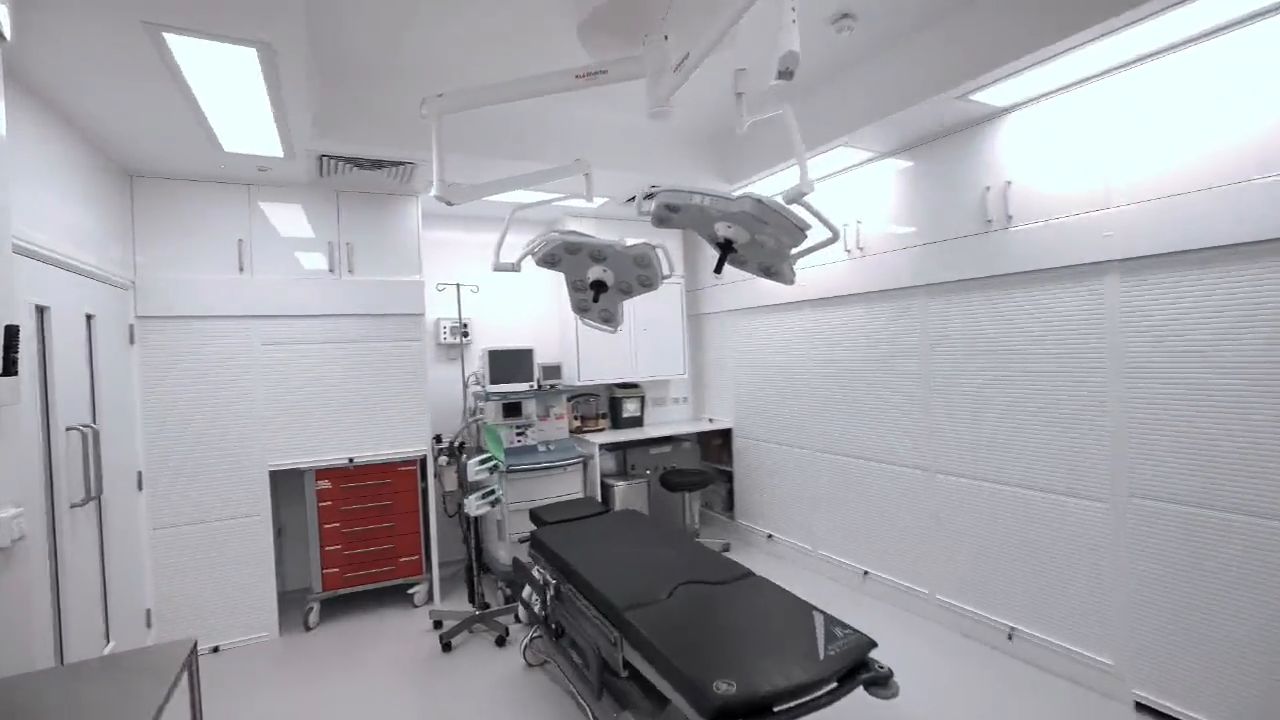
Both procedures are usually carried out under general anaesthetic. A full tummy tuck is generally a longer operation, may involve an overnight stay, and sometimes uses drains to remove fluid in the early days. A mini tummy tuck is typically shorter, but the difference in recovery is not always as dramatic as people imagine. Muscle repair is a major source of post-operative discomfort, so a mini procedure that includes it can still feel sore for a while.
After a full tummy tuck, most people walk slightly bent forward for the first several days to reduce tension on the wound, wear a compression garment for a number of weeks, and need around two weeks or more away from desk-based work. Recovery after a mini procedure is often somewhat quicker, though it varies from person to person. With either operation, heavy lifting and strenuous exercise are usually avoided for around six weeks, or longer if advised. Swelling settles gradually over several months, and the final contour can take six to twelve months to become clear. Our week-by-week tummy tuck recovery guide covers this in more detail.
Practical planning matters, especially in a busy city like London. You will need someone to take you home and ideally stay with you for the first day or two, and you should think about stairs, travel and, if you have young children, the fact that you will not be able to lift them for several weeks.
The risks are similar for both operations, although a full tummy tuck involves a larger area of surgery, so some are more likely. They include bleeding and haematoma, fluid collection known as seroma, infection, delayed wound healing particularly along the central part of the scar, loss of skin or fat at the wound edge, numbness of the lower abdomen that may last a long time or not fully return, blood clots in the legs or lungs, anaesthetic complications, asymmetry, contour irregularities, unsatisfactory scarring and the possibility of further surgery. Smoking and nicotine in any form, including vapes and patches, significantly increase the risk of wound problems, so you will be asked to stop well before and after surgery. A higher body mass index, diabetes, previous abdominal operations and a history of clotting problems also raise risk. A smaller operation is not automatically a safe one; every procedure carries real risk.
Who should not have either operation, at least for now
A tummy tuck is not a weight loss operation, and there are people for whom neither version is a good idea, at least at present.
If you are planning future pregnancies, it is generally sensible to wait. Pregnancy can stretch the skin again and reopen a muscle repair. Most surgeons advise waiting until your family is complete, and allowing time after the birth and after you have finished breastfeeding for your body to settle, often at least six to twelve months. The same applies if you are still losing weight or your weight tends to fluctuate. Operating before your weight has been stable for several months risks a result that changes as your weight does.
Surgery is also not appropriate if you smoke and are unwilling to stop, or if you have medical conditions that are not well controlled. If your main concern is a layer of fat with good skin tone and little looseness, liposuction may address it with far smaller scars, and it is sometimes combined with a tummy tuck when the flanks also need contouring. If most of your bulge is fat inside the abdomen, no form of abdominoplasty will flatten it.
Non-surgical skin tightening treatments have a place for mild laxity, but they cannot remove a genuine fold of excess skin, and it would not be honest to suggest otherwise.
Finally, surgery is not the right answer if you are hoping for a perfect or scarless result, if you feel pressured by someone else, or if concern about your appearance is causing distress that feels out of proportion. In that situation we may suggest pausing and seeking support before any decision about surgery. Saying no, or not yet, is part of responsible care.
How the decision is made at consultation in Kensington
Consultations at our Kensington clinic are doctor-led, and the aim is a recommendation based on your anatomy and goals rather than on which operation sounds smaller. We start with your history: pregnancies, weight changes, previous surgery, smoking, medicines, general health, and what exactly bothers you when you look in the mirror or get dressed.
The examination is done standing, sitting and lying down. Sitting forward shows how much loose skin folds above and below the navel. Lying down and lifting your head allows the doctor to feel for muscle separation and check for a hernia. Skin quality, stretch marks, existing scars and the likely scar position are all assessed, and the possible incision may be marked so you can see where it would sit.
You should then hear a clear explanation of which operation is recommended and why. If you would prefer a mini tummy tuck but your anatomy suggests a full one, the doctor will explain what a mini procedure would and would not achieve, so you can make an informed choice. You will not be pushed towards the bigger operation, and not operating is always an option.
In line with GMC guidance on cosmetic interventions, you will have time to reflect between consultation and any decision, and a second consultation is encouraged. Operations are performed by Dr Hassan Soueid or one of our qualified surgeons, and you can read more about Dr Hassan Soueid, the clinic's Founder and Medical Director. The clinic is registered with the Care Quality Commission.
Useful questions to ask include which operation is recommended and why, where the scar will sit and how long it will be, whether your belly button will move, how far the muscle repair will extend, whether you will stay overnight, and how complications are managed after you go home.
Booking your consultation
If you are weighing up a mini or full tummy tuck, a face-to-face assessment is the only reliable way to know which, if either, suits you. Our clinic is in Kensington, and we see patients from across London and beyond. You can request an appointment through our online booking page.
It helps to come prepared. Bring a list of your medicines and relevant medical history, details of previous abdominal surgery or pregnancies, and the questions that matter most to you. Think honestly about your plans for future pregnancies and the time you can set aside for recovery, including help at home in the first weeks.
We are introducing HonestFace, our own iPad app for digital consultation forms, consent signing and secure patient records, so in time more of the paperwork around your visit can be completed digitally. Whatever you decide after your consultation, there is no obligation to proceed, and taking time to think is always encouraged.
Frequently asked
Questions we get asked
- Is a mini tummy tuck a lower risk operation than a full tummy tuck?
- A mini tummy tuck involves a smaller area of surgery, so some risks such as wound healing problems may be less likely. However, it carries the same types of risk as a full tummy tuck, including bleeding, seroma, infection, numbness, blood clots and unsatisfactory scarring. A smaller operation is not automatically a safe one, and the right choice depends on what your abdomen actually needs.
- Can a mini tummy tuck repair muscle separation after pregnancy?
- Only partly. Through the shorter incision, the muscles can usually be tightened below the belly button, but the section above it cannot be properly reached. Because separation after pregnancy often extends above the navel, a full tummy tuck is frequently needed to repair it along its whole length. A doctor-led examination will show how far your separation runs.
- Will a tummy tuck get rid of my stretch marks?
- Only the stretch marks on the skin that is removed are taken away. A full tummy tuck often removes many marks below the belly button, while a mini tummy tuck removes fewer. Marks above the navel may be moved lower rather than removed. Neither operation should be thought of as a stretch mark treatment.
- How long should I wait after having a baby before a tummy tuck?
- Most surgeons advise waiting until your family is complete, as further pregnancies can stretch the skin and reopen a muscle repair. It is also sensible to wait until you have finished breastfeeding and your weight has been stable for several months, which often means at least six to twelve months after the birth. Trying pelvic health physiotherapy first is also worthwhile.
- Can liposuction be combined with a mini or full tummy tuck?
- Liposuction is often used alongside both operations to refine the contour, and sometimes to treat the flanks. Adding it lengthens the operation and can affect recovery, so whether it is appropriate for you is discussed at a doctor-led consultation, taking into account your health, your goals and the overall amount of surgery planned.