

Skin · 6 min read
Dermal Fillers Done Properly: Cheeks and Jawline
By Dr Hassan Soueid · MD, FRCS · Lead Surgeon, Kensington Cosmetic Clinic
Published 21 June 2026
TL;DR. Used well, dermal filler restores the support the face loses with age, lifting the cheeks and defining the jawline so the whole face looks fresher. Used badly, it bloats the face. The difference is restraint, anatomy and an experienced injector. This guide explains what cheek and jawline filler genuinely does, who it suits, how we avoid the overfilled look, and when we would honestly recommend something else.
What filler is actually for

Most age-related change in the mid-face is lost structure, not lines. As we age, the deep fat pads of the cheek descend and deflate, the bone itself remodels and recedes slightly, and the soft tissue that once sat high on the cheekbone slides downward. The result is a face that looks tired and slightly heavier in the lower third, even when the skin itself is still in good condition. Lines and folds are usually a downstream consequence of this lost support rather than the primary problem.
This is the key point that shapes how we use dermal fillers at Kensington Cosmetic Clinic. Replacing volume on the cheekbone subtly lifts the area below it, softening folds without touching them directly. Restore the scaffold and the tissue that depends on it sits where it should. The same principle sharpens a jawline that has lost definition, restoring a clean line between the face and the neck and reducing the early heaviness that patients often describe as jowling.
Cheek and jawline filler is therefore best understood as structural work, not line-filling. When a clinic treats every nasolabial fold or marionette line directly by injecting into it, the face tends to look fuller and flatter rather than lifted. When the underlying support is restored instead, the same folds soften as a side effect and the face keeps its natural contours. That distinction is the whole craft of the treatment.
Who genuinely benefits
The patients who get the most natural, satisfying results from cheek and jawline filler are usually those in their thirties, forties and fifties who have started to notice a loss of definition rather than a dramatic change. Typical signs include a mid-face that looks flatter than it did, cheeks that have lost their high point, a nasolabial fold that has deepened, and an early softening along the jaw. In these cases a modest, well-placed amount of filler restores the structure the face has quietly lost.
Younger patients sometimes seek filler to enhance rather than restore, for example to add projection to a naturally flat cheekbone or to sharpen a jawline that has always been soft. This can be entirely appropriate, but it calls for even more restraint, because the goal is to refine a feature within the bounds of the patient's own anatomy rather than to impose a shape the face was never built to hold. We are candid with younger patients about how little is usually needed.
Good candidates also share something less obvious: realistic expectations and reasonable skin quality. Filler restores volume and support, but it sits beneath the skin and cannot improve the surface above it. A patient whose main concern is structure and who understands that the result should look like a fresher version of themselves, not a different face, is exactly who this treatment serves well.
Natural versus overfilled: product, technique and the 'pillow face' trap
The overfilled look, often called 'pillow face', is now so recognisable that it has shaped public scepticism about filler entirely. It happens when too much product is placed, when it is placed in the wrong plane, or when the same areas are topped up repeatedly over years without anyone stepping back to assess the whole face. The cheeks become rounded and shiny, the natural shadows that give a face its character disappear, and the result reads as inflated rather than refreshed.
Avoiding it is mostly about discipline, and it follows a few clear principles.
- Treat the cause, restore structure on the cheekbone, rather than chasing every line.
- Use the right amount in the right plane, then stop.
- Build gradually across visits rather than over-filling in one sitting.
- Assess the face in motion and from multiple angles, not just head-on at rest.
- Keep a clear record of what has been placed and where, so the face is never quietly topped up beyond what it can carry.
The single most important habit is restraint. It is always possible to add a little more at a review appointment; it is far harder to undo a face that has been overfilled over several years. A good injector is willing to under-treat at the first visit and reassess, rather than chase a complete result in one sitting. That patience is what separates a natural outcome from an obvious one.
Not all filler is the same, and matching the product to the job matters as much as where it goes. For structural work on the cheekbone and jawline, we use firmer, more cohesive hyaluronic acid gels that hold their shape and provide lift. These are placed deep, often on or close to the bone, where they act as scaffolding. Softer, more spreadable gels are reserved for areas where the tissue is thin and a firm product would look or feel unnatural.
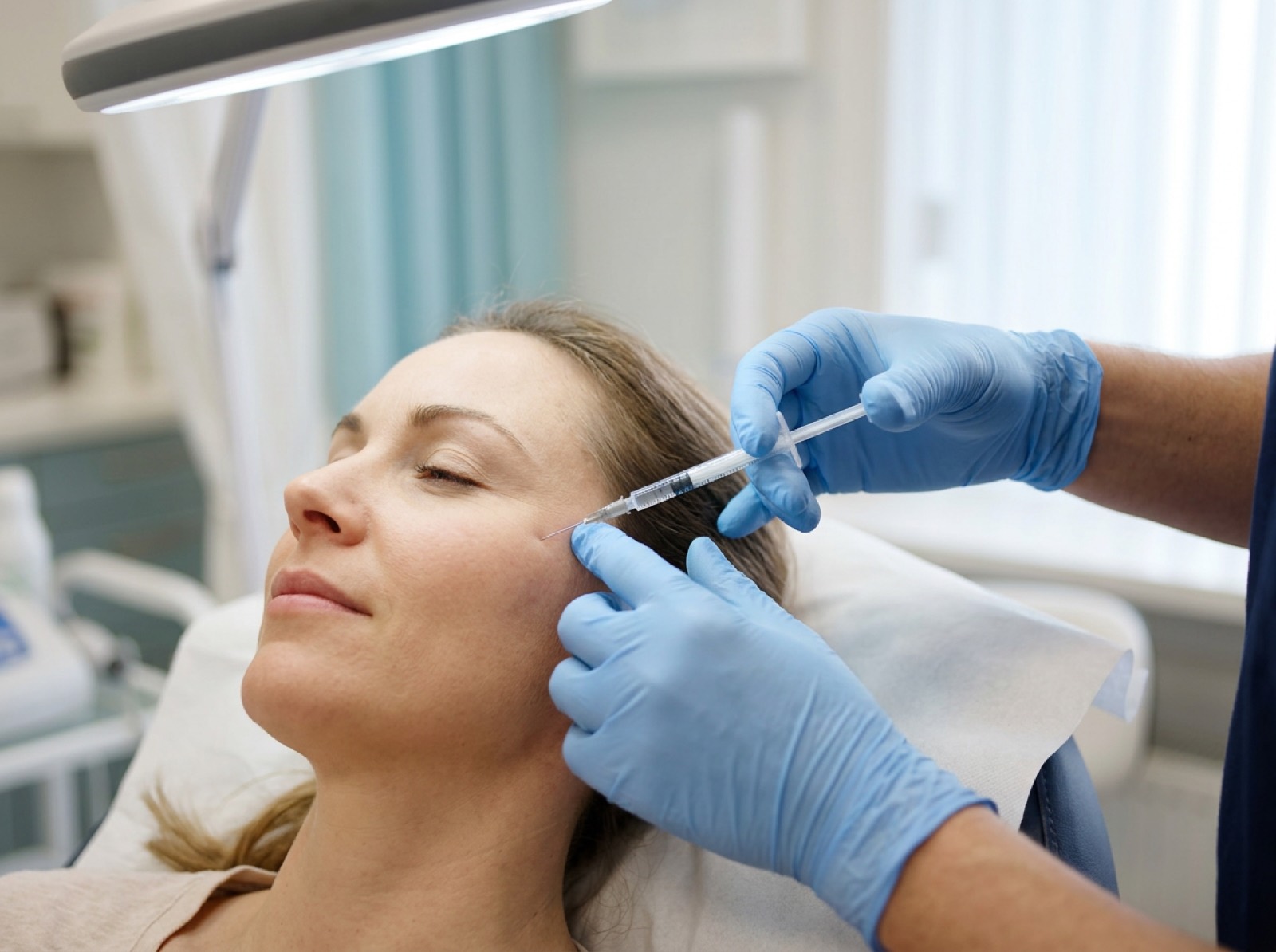
Technique is equally important. Placing filler in the correct deep plane, in small amounts, using either a fine needle or a blunt cannula depending on the area, is what produces a smooth, integrated result rather than a palpable lump. The jawline in particular rewards precise placement along the bone to create a clean line, and punishes overcorrection with a heavy, masculinised or sagging appearance. This is anatomy-led work, and there is no substitute for an injector who genuinely understands the layers of the face.
It is worth saying plainly that the device and the brand of filler matter far less than the hands placing it. A skilled injector with a modest product will outperform an inexperienced one with the most expensive gel on the market every time. When you assess a clinic, ask about the injector's experience and how they think about the whole face, not which brand they stock.
Reversibility and how long it lasts
Hyaluronic acid fillers can be dissolved if needed, which is one reason we favour them. An enzyme called hyaluronidase breaks the product down, which means that if a result is not what the patient hoped for, or if there is a complication, there is a route to reverse it. That safety margin is a genuine advantage of hyaluronic acid over permanent or semi-permanent fillers, which we do not use for exactly this reason. That said, reversibility is a safety net, not a plan. The goal is to place filler so well that it never needs reversing, and dissolving is best thought of as a remedy for a problem rather than a casual undo button.
Cheek and jawline filler is also not permanent in the ordinary course. Most patients can reasonably expect structural filler in these areas to last somewhere in the region of twelve to twenty-four months, though this varies considerably from person to person and we avoid promising a fixed figure. Firmer gels placed deep on the bone tend to last longer than softer products in mobile areas, partly because there is less movement to break them down.
Several factors affect longevity, including your metabolism, how active the area is, the product used and the volume placed. Rather than aiming to refill the moment the previous treatment fades, we prefer a maintenance approach where the face is reviewed periodically and topped up only where it is genuinely needed. This keeps the result consistent over time and, importantly, prevents the slow accumulation that leads to an overfilled appearance after several years of routine top-ups.
How it compares to fat transfer
For some patients seeking facial volume, facial fat transfer is an alternative worth understanding. Fat transfer takes fat from elsewhere on the body, processes it and reinjects it into the face to restore volume. Because it uses your own tissue, the fat that survives is permanent, and many patients value that it is a biological rather than synthetic solution.
The trade-offs are real, though. Fat transfer is a surgical procedure, usually under sedation or anaesthetic, with associated downtime and swelling, and a proportion of the transferred fat is naturally reabsorbed, which makes the final result harder to predict precisely. Filler, by contrast, is an in-clinic treatment with minimal downtime, an immediately visible and adjustable result, and the reversibility discussed above, at the cost of not being permanent.
Neither is simply better. Filler suits patients who want a controlled, low-downtime, adjustable result and are comfortable with periodic maintenance. Fat transfer suits those seeking a more substantial, permanent restoration of volume and who are willing to accept a surgical procedure and a less predictable take. We are happy to talk through both honestly rather than steering you toward whichever we happen to offer.
Risks, and how they are managed safely
Common side effects of cheek and jawline filler are minor and short-lived: swelling, bruising, tenderness and occasionally small lumps that settle or can be smoothed. These are expected and resolve within days to a couple of weeks. The risk that matters, and the one that justifies choosing your injector carefully, is vascular occlusion, where filler is inadvertently placed into or compresses a blood vessel and interrupts the blood supply to an area of skin.
Vascular occlusion is rare, but it is serious, and it is the reason filler should only be performed by a properly trained medical injector who knows the facial vasculature, recognises the warning signs early, and has hyaluronidase on hand to act immediately if needed. Managed by an experienced practitioner who understands the anatomy and uses careful technique, the risk is low and the response, should it ever occur, is well rehearsed. This is precisely the kind of safety infrastructure that separates a medical clinic from a non-clinical setting, and it is not a corner worth cutting to save money.
We mention this not to alarm but to be straight with you. Filler is a medical procedure with medical risks, and the right way to keep it safe is appropriate training, sound anatomical knowledge and a clinic equipped to manage complications, rather than pretending the risks do not exist.
Who this treatment is not right for
We turn patients away from filler more often than people expect, and we think that is a feature rather than a failing. If the issue is skin quality, fine surface lines, dullness or texture, a skin booster or microneedling is the better answer, because filler sits beneath the skin and cannot improve the surface above it. Adding volume to address a skin-quality concern simply produces a fuller face with the same surface issues.
If there is true descent, where the tissues have genuinely fallen rather than merely deflated, no amount of filler substitutes for a lift, and we will say so. Attempting to chase significant sagging with filler is the single most common route to the overfilled look, because the injector keeps adding volume to lift tissue that volume alone was never going to hold. In these cases the honest conversation is about surgical options, and we would rather have it early than after a patient has spent heavily on filler that could not deliver.
Filler is also not appropriate during pregnancy or breastfeeding, in the presence of active skin infection in the area, or for patients with certain medical conditions, all of which we assess at consultation. And it is not right for anyone seeking a dramatic transformation into a different face. If your expectation is a fundamentally altered appearance rather than a refreshed version of your own features, we will tell you honestly that filler is the wrong tool. For patients whose concern is dynamic lines from muscle movement rather than lost volume, anti-wrinkle injections may be more appropriate, alone or alongside structural filler.
Booking your consultation
If you are considering cheek or jawline filler, the most useful first step is a consultation where we assess your whole face, not just the area that concerns you, and give you an honest view of what filler can and cannot achieve for you. Sometimes that conversation leads to a modest, well-planned filler treatment; sometimes it leads us to recommend a skin treatment, fat transfer or a surgical option instead, and occasionally it leads us to advise doing nothing at all.
Our practitioners will explain the approach we would take, the realistic longevity, the risks and how we manage them, and the maintenance involved, without steering you toward a treatment that is not right for you. You can book a consultation at our clinic in Kensington, and we will give you a straight appraisal of whether cheek and jawline filler is the right choice, or whether your face would be better served another way.
Frequently asked
Questions we get asked about EnerPeel®
- How long does cheek and jawline filler last?
- Typically twelve to eighteen months, depending on the product and area, before a top-up is considered.
- Will filler make my face look puffy?
- Not when it is placed conservatively in the correct plane. Puffiness comes from over-filling, which we avoid.
- Is filler safe?
- In trained hands, hyaluronic acid filler has a strong safety record and is reversible. Injector experience is the key safety factor.