

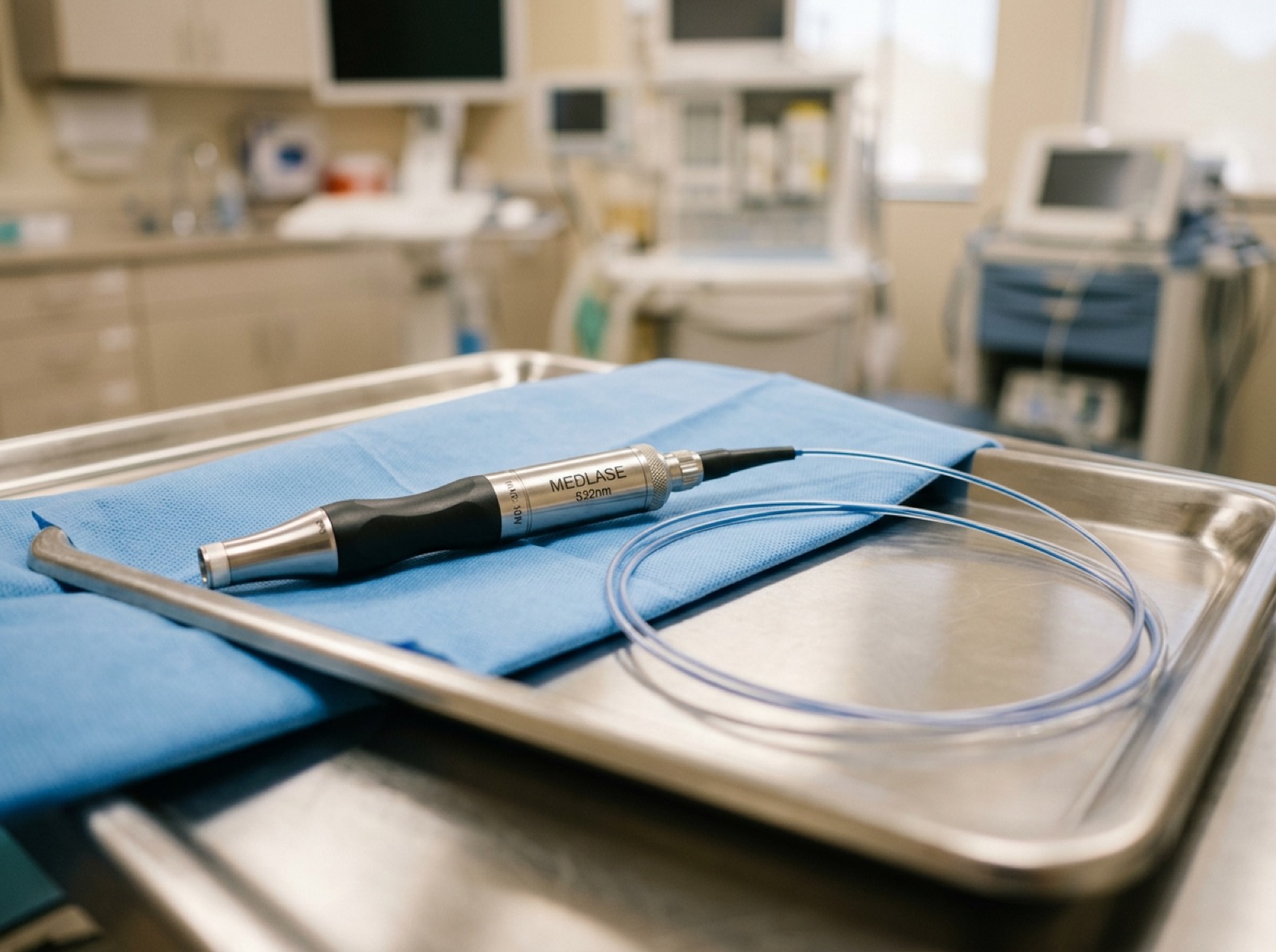
Skin · 6 min read
Endolift: Laser Skin Tightening Without Surgery
By Dr Hassan Soueid · MD, FRCS · Lead Surgeon, Kensington Cosmetic Clinic
Published 21 June 2026
TL;DR. Endolift threads a very fine laser fibre just under the skin to melt small fat pockets and tighten tissue by stimulating collagen. There are no incisions and downtime is short, but it is for mild to moderate laxity, not a substitute for a facelift. If you are in or around Kensington and want to understand whether this sub-dermal laser is a sensible step for you, this guide sets out honestly what it does, who it suits, and where its limits lie.
What Endolift actually does, the clinical mechanism
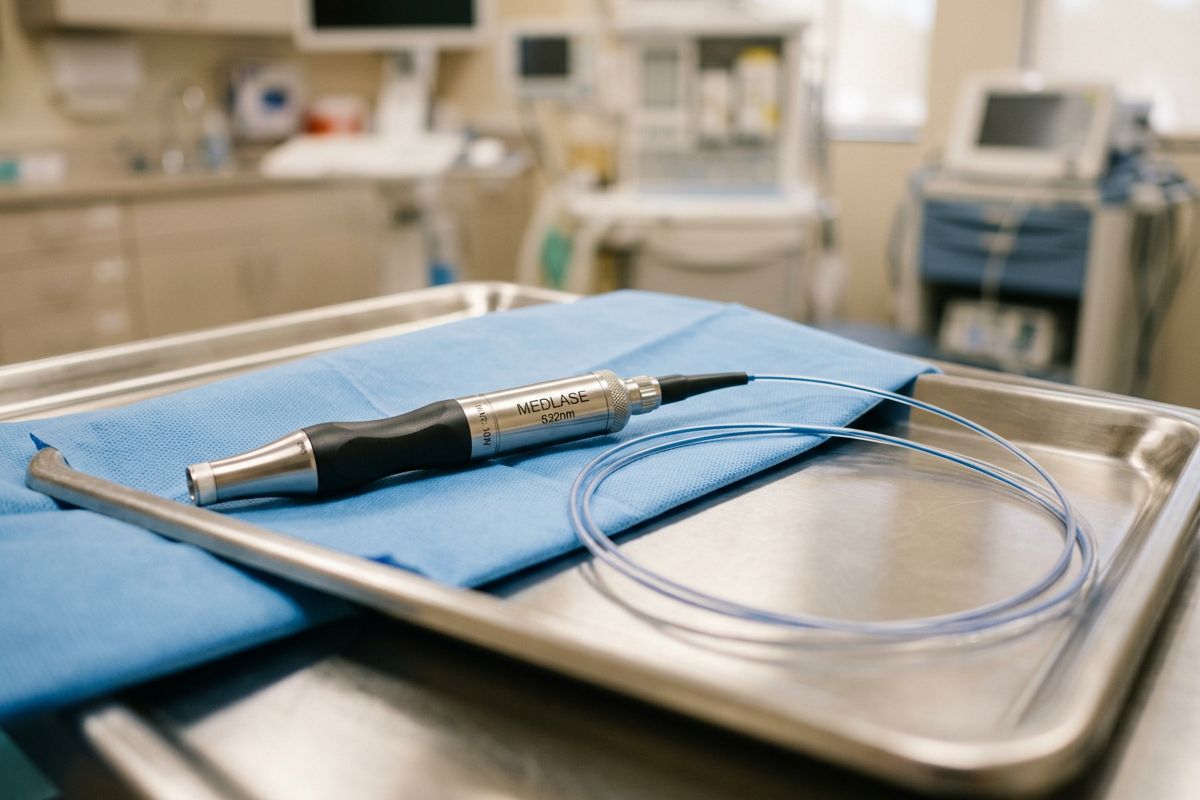
Endolift is a minimally invasive laser procedure that works from the inside out. A hair-thin optical fibre, far finer than a needle, is introduced under the skin through a tiny entry point that needs no stitches. The fibre carries a specific wavelength of laser energy, typically in the 1470nm range, which is strongly absorbed by both water and the small fat cells that sit in the sub-dermal layer. As the fibre is drawn through the tissue, that energy does two things at once: it reduces small, localised fat pockets and it heats the surrounding connective tissue.
That controlled heating is the heart of the treatment. When the collagen-rich tissue beneath the skin reaches a precise temperature, the existing collagen fibres contract, which produces an immediate, if modest, tightening effect. More importantly, the heat triggers a wound-healing response in the deeper layers, prompting the body to lay down new collagen and elastin over the weeks and months that follow. This is the same biological principle that underlies many energy-based skin treatments, but Endolift delivers the energy directly into the sub-dermal plane rather than through the surface of the skin.
Because the fibre works below the surface, the outer skin is largely spared. There is no ablation of the epidermis as there would be with a resurfacing laser, and no external wound to heal. This is what allows Endolift to combine a meaningful tightening mechanism with a short recovery. At Kensington Cosmetic Clinic, we treat it as a precise, targeted tool for specific areas of mild laxity rather than a whole-face rejuvenation, and we are clear with patients that the effect is structural tightening, not a change in skin texture or pigmentation. You can read more about the treatment itself on our Endolift page.
Who genuinely benefits from Endolift
The honest answer is a fairly specific group, and being clear about that group matters more than the technology. Endolift suits patients with mild to moderate skin laxity who have good underlying skin quality but are starting to notice early softening. The most common areas we treat are the lower face and jawline, the jowls, the area beneath the chin where a small amount of fat and laxity combine to blur the jaw, and sometimes the neck, the brow, or small pockets such as the area above the knees.
Patients who tend to be most satisfied share a few characteristics. They are often in their thirties, forties, or early fifties, their skin still has reasonable elasticity, and their concern is a softening of definition rather than true descent of the tissues. A patient with early jowling and a slightly heavy under-chin who wants to sharpen their jaw without surgery is a textbook candidate. So is a patient who has maintained good skin health and wants a discreet, structural refresh with minimal interruption to their life.
It can also work well in combination with other approaches. Some patients combine the sub-dermal tightening of Endolift with surface or volumising treatments, for example pairing it with a course of microneedling for skin texture, or with dermal fillers where there is genuine volume loss rather than laxity alone. These are separate problems with separate solutions, and a good plan addresses each on its own terms rather than expecting one treatment to do everything.
Realistic results and the timeline that comes with them
This is where honesty matters most. Endolift produces a gradual, natural-looking result, not an overnight transformation. There is often a small degree of immediate tightening from the collagen contraction during the procedure, but most of what you will eventually see develops slowly as new collagen forms. The meaningful change builds over roughly three to six months, and in some patients continues to refine for a little longer than that.
We are deliberate about not promising a specific outcome, because the response varies between individuals. Skin quality, age, the degree of laxity at the start, and how your body remodels collagen all influence the result. What we can say is that the treatment is designed to produce a subtle improvement in firmness and definition rather than a dramatic lift, and patients who understand that going in are almost always happier than those who expect a surgical-scale change from a non-surgical procedure.
Because the effect is collagen-driven, it is also not permanent in the way surgery is. The new collagen is real and the improvement is genuine, but skin continues to age after the treatment as it does naturally. Some patients choose to repeat the procedure after a year or two to maintain the effect. During your consultation we will give you a frank view of what level of change is realistic for your particular face, and we would always rather under-promise than set you up for disappointment.
Downtime and what recovery actually feels like
One of the genuine advantages of Endolift is that the recovery is short and predictable. The procedure is carried out under local anaesthetic, so you are awake and comfortable throughout, and there is no general anaesthetic and no overnight stay. The entry points are tiny and do not require sutures.
Most patients experience some swelling, tenderness, and occasionally mild bruising in the treated area for a few days. The swelling is usually most noticeable in the first forty-eight hours and then settles steadily. Many people feel comfortable returning to normal daily activities within a day or two, though we usually advise avoiding strenuous exercise, very hot environments, and anything that increases facial swelling for the first week or so. There may be a feeling of firmness or mild tightness as the tissue heals, which is a normal part of the process.
It is worth being realistic rather than glib about the phrase minimal downtime. It does not mean no downtime. You may not want to attend an important event the day after treatment if you are prone to swelling, and individual recovery varies. We will give you clear, written aftercare guidance and a point of contact, and we ask patients to allow a little flexibility in their diary in the first week rather than booking the procedure tightly against a major commitment.
Endolift compared with a surgical lift, and with CO2 laser and threads
Patients often come to us trying to choose between Endolift and other options, so an honest comparison is useful. The most important one is against a surgical facelift. A facelift physically repositions and removes lax tissue and skin, and it remains the most powerful and longest-lasting answer to significant laxity. Endolift does not move tissue or remove skin; it tightens and stimulates collagen in a defined plane. For mild laxity, that is enough to make a visible difference. For true skin descent and heavy jowls, it is not, and recommending it in that situation would be misleading.
Compared with a CO2 laser, the two treatments work in different layers and solve different problems. CO2 laser resurfacing works on the surface of the skin to improve texture, fine lines, pigmentation, and overall skin quality, and it carries a more noticeable surface recovery. Endolift works beneath the skin to tighten and reduce small fat pockets, leaving the surface largely intact. They are not competitors so much as tools for different concerns, and some patients benefit from addressing both surface and structure as part of a wider plan.
Against thread lifts, the comparison is more nuanced. Threads provide a degree of mechanical lift by suspending tissue on absorbable sutures, with an effect that is often more immediate but tends to be shorter-lived as the threads dissolve. Endolift relies on biological collagen stimulation, so its effect builds more slowly but comes from genuine tissue remodelling rather than suspension. Neither is a facelift, and the right choice depends on your anatomy, the area being treated, and what you are trying to achieve.
Risks, side effects, and the things we will tell you up front
No procedure is without risk, and we would rather you read this clearly than discover it later. The common, expected effects are the swelling, tenderness, and occasional bruising already described, which resolve over days. Because Endolift is a laser-based treatment delivered under the skin, there are also less common risks that we discuss with every patient: temporary numbness or altered sensation in the treated area, small areas of firmness as the tissue heals, contour irregularity, and, rarely, burns, blistering, or pigment change if energy is not delivered appropriately.
This is precisely why who performs the treatment matters. The safety of Endolift depends heavily on accurate placement of the fibre and careful control of the laser energy, which is a clinical skill, not a setting on a machine. We carry out a full assessment before recommending the procedure, we discuss your medical history and any medication, and we are honest if we think the risk-to-benefit balance does not favour treatment for you. Any clinic that presents a sub-dermal laser as risk-free is not being straight with you.
Who Endolift is not right for
We are direct about this at consultation. Endolift is not the right treatment for patients with significant skin laxity, heavy jowls, or true tissue descent. In those cases the honest recommendation is a surgical lift, and no amount of collagen stimulation will produce an equivalent result. We would rather have that conversation early than take on a treatment we know will underdeliver for your particular concern.
It is also not appropriate for patients whose primary concern is poor skin texture, surface pigmentation, or fine lines, because Endolift does not resurface the skin. Those concerns are better served by treatments that work on the surface layer, such as CO2 laser or a structured skin programme. Equally, where the real issue is volume loss rather than laxity, replacing structure with a tightening treatment will not address the problem and may even accentuate hollowing.
There are also general medical reasons we may advise against it, including pregnancy, active infection or skin conditions in the treatment area, certain medications, and unrealistic expectations about the scale of change. If you expect a non-surgical procedure to deliver a surgical result, the most useful thing we can do is set that expectation clearly before anything is booked. Endolift does what it does well; it is not trying to be a facelift, and neither are we.
Booking your consultation
If you would like to find out whether Endolift is a sensible option for your skin, or whether a different approach would serve you better, we would encourage you to book an assessment at our clinic at 49 Marloes Road, London W8 6LA. We will give you an honest appraisal of your degree of laxity, your skin quality, and the options most likely to address your specific concern, without steering you towards a treatment that is not appropriate for you.
You can book a consultation with our team, or read more about the procedure on our dedicated Endolift page. If your concern turns out to be more advanced than a sub-dermal laser can address, we will tell you so plainly and talk you through the surgical alternatives, because the right recommendation is always the honest one rather than the easy one.
Frequently asked
Questions we get asked about EnerPeel®
- Is Endolift painful?
- It is done under local anaesthetic and most patients tolerate it well, with some tenderness and swelling afterwards.
- When will I see results?
- A little early tightening, then a gradual improvement over three to six months as collagen rebuilds.
- Is it a facelift alternative?
- For mild laxity, it can delay surgery. For established jowls and skin descent, it is not a replacement.