

Skin · 11 min read
Enlarged Pores in London: Treatments That Can Help
By Dr Hassan Soueid · GMC 6107783 · Medical Director, Kensington Cosmetic Clinic
Published 16 November 2026
TL;DR. Pores cannot be closed or permanently shrunk, but matching treatment to the reason your pores look larger (oil, sun damage, age or scarring) can make them less noticeable, with downtime ranging from a few hours of redness to around a week at home.
Enlarged pores are one of the most common reasons people book a skin consultation with us in Kensington, and one of the most misunderstood. Search for enlarged pores treatment London and you will find promises of pores that are erased or closed for good. This guide takes a plainer line. It covers why pores look bigger, what microneedling, chemical peels, ClearLift and CO2 laser can and cannot change, how their downtime compares, and who should wait before having any of them.
Why pores look larger: oil, sun damage, age and scarring
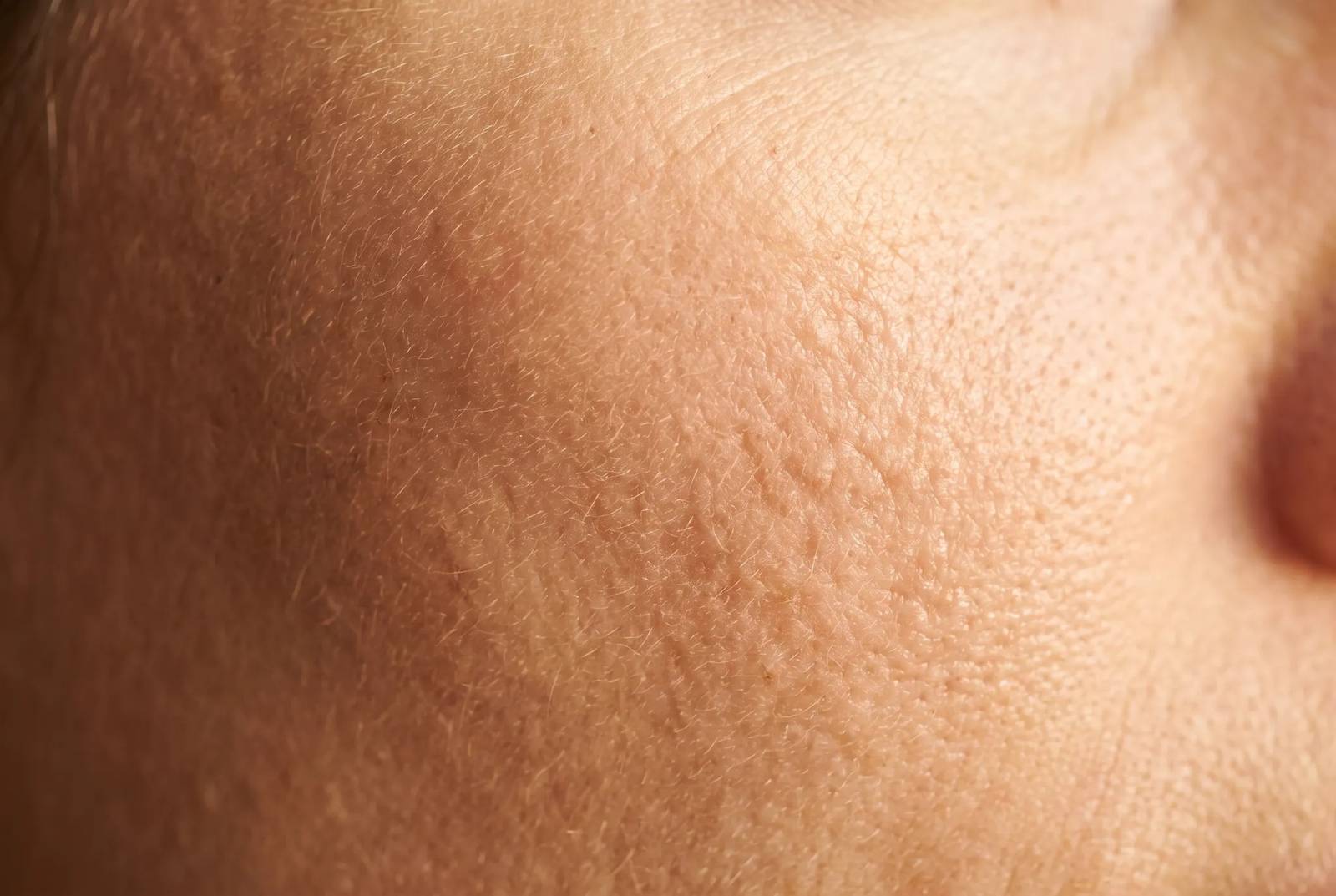
A pore is the opening of a hair follicle, connected to a sebaceous gland that produces sebum, the oil that keeps skin supple. Baseline pore size is largely genetic. What changes is how visible pores are, which usually comes down to one or more of four things.
Oil. The most common answer to the question "why are my pores so big?" is oily skin. Active sebaceous glands cluster on the nose, forehead and central cheeks, and the more sebum flowing through a follicle, the more stretched the opening tends to look. Sebum mixed with dead skin cells can sit in the opening as a sebaceous filament, the greyish dots on the nose that are often mistaken for blackheads. Hormones influence oil production too.
Sun damage. Ultraviolet light gradually breaks down the collagen and elastic fibres that support each pore wall. With less scaffolding, pores on the cheeks can start to look elongated or teardrop shaped rather than round.
Age. Even without much sun exposure, collagen production slows with age. The same loss of support that leads to fine lines can make pores look wider, particularly on the cheeks.
Scarring. Some marks that look like large pores are in fact small acne scars, especially narrow ice pick scars. They respond to different treatment, so it matters to tell them apart.
Lighting matters as well. A magnifying mirror under a bathroom spotlight makes almost anyone's pores look alarming, so a good assessment looks at skin at a normal conversational distance as well as up close.
Pores cannot be closed: what enlarged pores treatment in London actually changes
Pores do not have muscles. Steam does not open them and cold water does not close them, and no treatment, in a clinic or at home, can permanently shrink a pore or make it disappear. Pores are a normal, necessary part of skin; they let oil reach the surface.
What treatment can realistically do is make pores look less obvious, by:
- Reducing oil and congestion, so the opening is less stretched and less filled with debris.
- Supporting the collagen around the pore, so the walls hold their shape better.
- Smoothing the surface, so light reflects more evenly and texture looks softer.
- Improving scars that are being mistaken for pores.
The step most pore treatment pages skip is matching treatment to cause. If your pores look large mainly because your skin is oily and congested, a course of superficial peels and a good home routine may do more than a collagen-remodelling laser. If the main issue is sun damage or loss of firmness on the cheeks, peels alone are unlikely to change much, and microneedling or laser makes more sense. If what you are actually seeing is scarring, the plan changes again.
Many people have a mix of causes and benefit from a combined plan over several months. Improvement is usually gradual and modest, and it is not fixed in place: oil glands keep working, skin keeps ageing and sun exposure continues, so maintenance is normal. Sometimes the honest advice is that your pores are within the normal range and treatment is unlikely to change them enough to be worth the time and downtime.
Microneedling for pore appearance
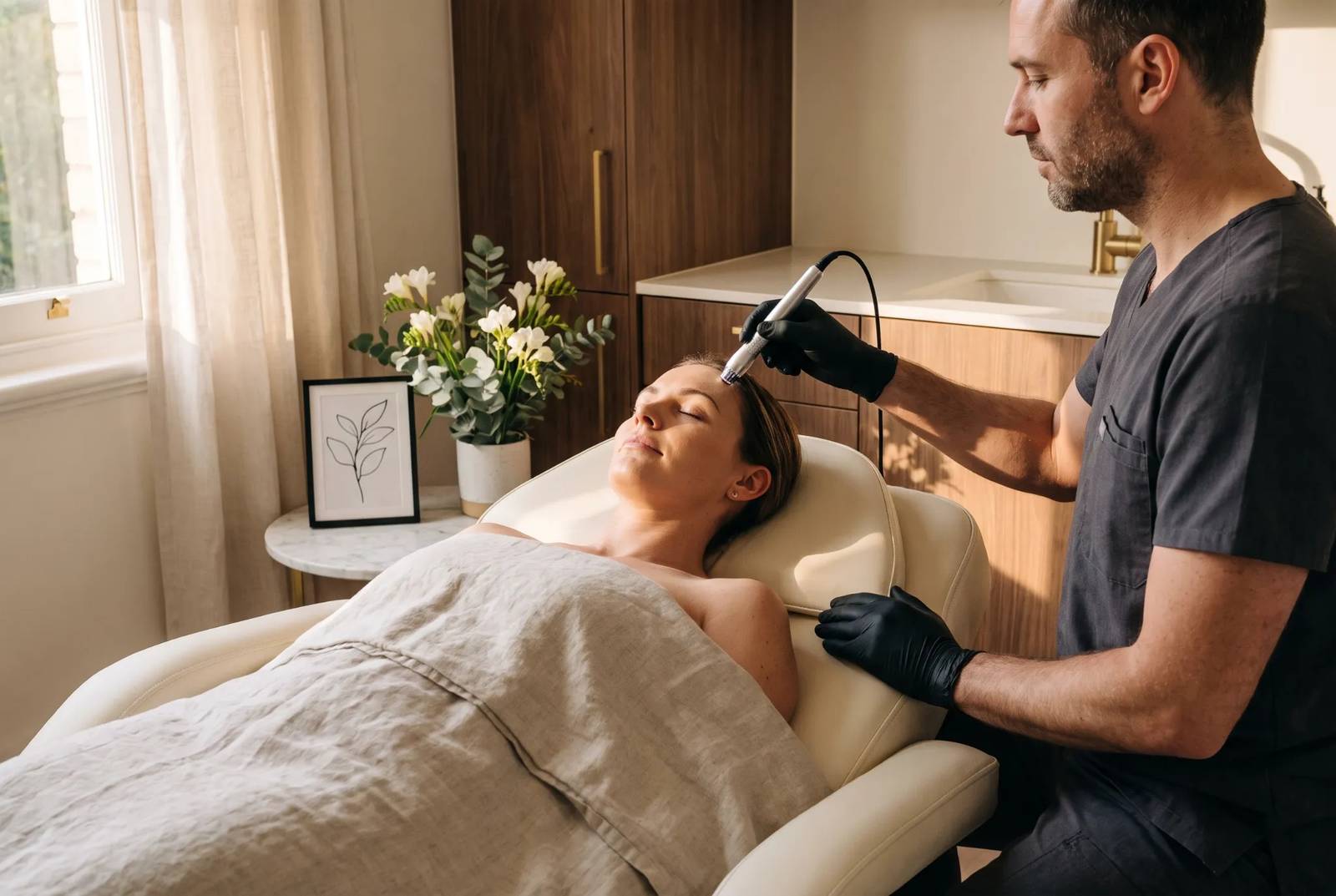
Microneedling uses very fine needles to create thousands of tiny, controlled channels in the skin. The skin responds with a healing process that includes the production of new collagen and elastin, and over the following months this remodelling can make skin firmer and smoother, which in turn can make pores look less prominent.
So does microneedling help large pores? The evidence is reasonably supportive for skin texture and acne scarring, and smaller studies suggest some improvement in pore appearance, but the effect is usually subtle and builds over a course rather than after one session. It tends to suit pores enlarged by sun damage, age or mild scarring better than pores driven mainly by oil. Our microneedling page explains the treatment, and our evidence guide to microneedling looks at the research in more detail. A course is commonly three to six sessions about four weeks apart, depending on how your skin responds.
Downtime: most people look mildly sunburnt for one to two days, with some tightness, dryness and light flaking for a few days after that. Many return to work the next day, but it is sensible not to book treatment just before an important event.
Risks: infection, a flare of spots, irritation from products applied too soon and, less commonly, post-inflammatory pigmentation. An overly aggressive technique can leave track-like marks. Microneedling is not suitable over inflamed acne, cold sores or any skin infection, and a tendency to keloid scarring needs discussion first.
For many people it is a sensible middle ground: more effect on texture than a superficial peel, much less downtime than ablative laser, and generally a lower pigmentation risk than heat-based treatments in darker skin.
Chemical peels and oily skin
Chemical peels use a controlled acid solution to loosen and remove dead cells from the outer layers of skin. For pores, the choice of acid matters.
Salicylic acid is oil soluble, so it can work inside the sebum in a pore rather than only on the surface. That makes it a sensible choice for oily, congested skin and blackheads. Glycolic and lactic acids work more on the surface, improving smoothness and brightness. Mandelic acid penetrates more slowly and is often chosen when a gentler approach is needed, including in darker skin.
Is a chemical peel for pores worthwhile? For oily skin, superficial peels can reduce congestion and smooth the surface, which often makes pores less noticeable. What they do not do to any real extent is rebuild collagen around the pore, so if sun damage or age is the main driver, peels are one part of a plan rather than the whole plan. Our chemical peels page explains the options. Superficial peels are usually given as a course of four to six sessions, two to four weeks apart. Deeper peels carry more downtime and risk and are rarely needed for pores alone.
Downtime: after a superficial peel, some people see nothing beyond pinkness for a few hours; others have dryness and light flaking for two to five days.
Risks and preparation: stinging, irritation, unexpectedly deep reactions on over-prepared or recently waxed skin, cold sore reactivation and post-inflammatory pigmentation. You will usually be asked to pause retinoids and exfoliating acids for several days beforehand, avoid waxing or threading the area, and protect your skin carefully from the sun.
ClearLift and CO2 laser compared by depth and downtime
Laser for open pores falls into two broad groups. Non-ablative lasers work beneath the surface without removing skin; ablative lasers remove microscopic columns of skin. That difference in depth shapes the downtime, the risk and how much change each session brings.
ClearLift
ClearLift is a non-ablative fractional laser that delivers very short pulses of energy beneath the surface to stimulate collagen without wounding the outer layer. For pores, the aim is gradual improvement in texture and firmness, typically over a course of several sessions a few weeks apart. Downtime is usually minimal: redness or warmth for a few hours, and most people carry on with their day. The trade-off is that change per session is modest. See our ClearLift page for more.
Fractional CO2 laser
Fractional CO2 is an ablative laser. It vaporises tiny columns of skin in a grid, leaving untreated skin between them to help healing. The healing response is much stronger, which is why CO2 is used for marked sun damage, deeper texture problems and acne scarring as well as pores. Fewer sessions are usually needed, sometimes only one, but each is a bigger undertaking. Our CO2 laser page and our article on CO2 laser resurfacing in London cover it in more detail.
Downtime is real: swelling, oozing and a raw, sunburnt feeling for the first few days, then crusting or a bronzed look as treated skin flakes away over about a week. Pinkness often lasts several weeks. Strict sun avoidance is needed afterwards. Risks include infection, cold sore reactivation, prolonged redness, darkening or lightening of the skin and, rarely, scarring.
Downtime compared in plain words
- Microneedling: a pink, slightly tight face for one to two days, then light flaking for a few days.
- Superficial chemical peel: anything from nothing visible to two to five days of dryness and flaking.
- ClearLift: redness for a few hours; most people go straight back to normal activities.
- Fractional CO2 laser: around a week at home with swelling and crusting, then several weeks of pinkness.
In general, the deeper the treatment, the more change per session and the more downtime and risk. The right choice depends on what is causing your pores to look larger, your skin type and how much time you can realistically set aside.
Darker skin types and pigmentation risk
Post-inflammatory hyperpigmentation (PIH) is darkening of the skin that follows inflammation or injury. Every treatment in this article deliberately injures or heats the skin, so every one can trigger it. Pigment cells in darker skin are more reactive, so the risk is higher in Black, South Asian, East Asian, Middle Eastern, Mediterranean and Latin American skin, and in anyone who tans easily. In a city as diverse as London, this is central to planning, not an afterthought. PIH is usually temporary, but it can take many months to fade.
Darker skin does not rule out treatment; it means choices and settings matter more:
- Microneedling, which does not rely on heat, is often a lower-risk starting point.
- Gentler peels, such as mandelic or carefully applied salicylic acid, are usually preferred over stronger or deeper peels.
- Non-ablative lasers generally carry less pigment risk than ablative ones. Fractional CO2 can sometimes be considered, but with conservative settings, careful preparation and a frank conversation about risk.
- A test patch, and a period of preparing the skin beforehand, may be recommended.
- Rigorous sun protection before and after treatment is essential.
If you have melasma, many resurfacing treatments can make it worse, and that needs addressing before pores.
Who should wait before treatment
Whatever your skin type, it is wiser to delay treatment if any of these apply:
- Active, inflamed acne. Treating over angry spots can worsen inflammation. Get acne under control first, with your GP, a dermatologist or our team.
- Isotretinoin, current or recent. This prescription acne medicine affects healing. Guidance varies, but many clinicians wait several months after the last dose, and longer before ablative laser.
- Cold sores. Resurfacing can trigger an outbreak. We will not treat during an active sore, and antiviral cover may be advised beforehand.
- A tan or recent sunburn. Holidays and sunbeds raise pigmentation risk; waiting until a tan has faded is safer.
- Pregnancy or breastfeeding. Many peels and lasers are postponed as a precaution.
Facial infection, eczema or rosacea flares and a history of keloid scarring also need discussion first.
Home care that supports clinic treatment
Clinic treatment works best alongside a sensible routine, and for some oily skin a good routine alone makes a visible difference. None of this shrinks pores permanently, but it can keep them clearer and better supported.
- Daily broad-spectrum SPF 30 or higher. The most useful step for preventing further collagen breakdown, and essential after any resurfacing.
- A retinoid. Retinoids increase cell turnover and support collagen with long-term use. Prescription strengths are available through a doctor; over-the-counter retinol is gentler. Introduce slowly, expect some dryness at first, and avoid in pregnancy.
- Salicylic acid. A leave-on product two or three times a week can help keep oily pores clearer.
- Niacinamide. There is some evidence it can reduce oiliness and improve the look of pores, though effects are modest.
- Gentle cleansing and a light, non-comedogenic moisturiser. Stripping oily skin leaves it irritated without reducing oil.
Some popular habits do more harm than good. Pore strips, harsh scrubs and squeezing can irritate skin, stretch the opening and, in darker skin, leave marks. Clay masks absorb surface oil and can make pores look smaller for a few hours, which is fine as a short-term measure.
Around clinic treatment, you will usually pause retinoids and acids for a few days beforehand, then use only a bland moisturiser and sunscreen until your skin has settled. Piling active ingredients onto freshly treated skin is a common cause of irritation and pigmentation.
Booking your consultation
Because pore size has several possible causes, the most useful first step is a consultation rather than a pre-chosen treatment. Skin consultations at our clinic in Kensington, London, are doctor-led. We look at your skin close up and at normal distance, and ask about your skin history, previous treatments, medicines including isotretinoin, cold sores, pigmentation and how much downtime you can manage.
We then explain which cause, or combination of causes, seems to be driving the appearance of your pores, and which options, if any, make sense. That might be peels, microneedling, ClearLift, fractional CO2 or a combination over several months. It might equally be advice to focus on home care, see your GP about active acne, or wait until a tan fades. We will be clear about what each option can and cannot change, the likely downtime and the risks, and you are welcome to take time to think before deciding.
Kensington Cosmetic Clinic was founded by Dr Hassan Soueid, a GMC-registered doctor and the clinic's Medical Director, and the clinic is registered with the Care Quality Commission. We are also introducing HonestFace, our own iPad app for digital consultation forms, consent signing and secure patient records.
If you would like to understand what is behind your enlarged pores, you can book a consultation at our Kensington clinic. Bring a list of the products you use and any treatments you have had; it helps us give advice that fits your skin rather than a generic plan.
Frequently asked
Questions we get asked
- Can pores be permanently shrunk?
- No. Pores are the openings of hair follicles and cannot be closed or permanently made smaller. Treatment can make them look less noticeable by reducing oil and congestion, supporting the collagen around them and smoothing the skin surface. Any improvement needs maintaining, because oil production, ageing and sun exposure all continue.
- Which treatment is best for enlarged pores?
- There is no single answer, because it depends on why your pores look larger. Oily, congested skin often responds to superficial peels, particularly salicylic acid, alongside a good home routine. Pores enlarged by sun damage or age may suit microneedling, ClearLift or fractional CO2 laser. Scarring needs its own plan. A doctor-led consultation helps match treatment to the cause, your skin type and the downtime you can manage.
- How many sessions will I need?
- It varies with the treatment and your skin. As a general guide, microneedling is often three to six sessions about four weeks apart, superficial peels four to six sessions two to four weeks apart, and ClearLift several sessions a few weeks apart. Fractional CO2 usually needs fewer sessions, sometimes one, but involves more downtime. Some form of maintenance is normally needed afterwards.
- Is laser safe for darker skin with large pores?
- Laser can be considered in darker skin, but the risk of post-inflammatory hyperpigmentation is higher, so the choice of laser, the settings and the preparation matter a great deal. Non-ablative treatments generally carry less pigment risk than ablative CO2, and microneedling or gentle peels are often lower-risk starting points. A test patch, skin preparation and strict sun protection may be advised, and no treatment is free of risk.
- What skincare helps with enlarged pores?
- Daily broad-spectrum SPF 30 or higher, a retinoid introduced slowly (not during pregnancy), a leave-on salicylic acid product for oily skin, niacinamide to help with oiliness, gentle cleansing and a light non-comedogenic moisturiser. Avoid pore strips, harsh scrubs and squeezing. Home care will not shrink pores permanently, but it can keep them clearer and support any clinic treatment.