

Skin · 10 min read
Gummy Smile Correction in London: Botox, Fillers or Surgery?
By Dr Hassan Soueid · MD, FRCS · Lead Surgeon, Kensington Cosmetic Clinic
Published 2 July 2026
TL;DR. A gummy smile has several distinct causes, and choosing the wrong treatment for your particular cause is the single most common reason people are disappointed with the outcome.
What exactly is a gummy smile, and why does it matter?
A gummy smile, clinically referred to as excessive gingival display, is generally defined as more than three to four millimetres of gum tissue visible above the upper teeth when smiling naturally. It is remarkably common. Studies suggest somewhere between ten and twenty-nine percent of young adults show some degree of excessive gingival display, with a higher prevalence in women. For most people it is simply a variation of normal anatomy. For others, it is a persistent source of self-consciousness that affects how freely they smile in photographs, in meetings or on dates.
Before any treatment is considered, the cause must be identified. This is not a box-ticking formality; it is clinically essential. The same aesthetic outcome, a smile that shows less gum, can be achieved through completely different mechanisms depending on whether the problem originates in the muscles that lift the upper lip, in the length of the upper lip itself, in the vertical height of the upper jaw, in the size and position of the teeth, or in a combination of factors. A practitioner who jumps straight to a treatment without first establishing the cause is not serving you well, regardless of how convenient or affordable that treatment might be.
At Kensington Cosmetic Clinic we see patients from across London and beyond who have sometimes already had one treatment that did not work, precisely because the underlying anatomy was not properly assessed. This guide is designed to give you a clear, honest picture of every option available so that your consultation is as productive as possible.
Understanding the causes: why your gummy smile is unique to you
The five principal causes of excessive gingival display each point toward a different treatment pathway.
Hypermobile upper lip. This is the most common cause seen in an aesthetics clinic. The muscles that elevate the upper lip, principally the levator labii superioris alaeque nasi and the levator labii superioris, contract with greater than average force or range of motion when smiling. The lip rises too high, exposing gum tissue that would otherwise remain hidden. Importantly, the teeth, jaw and lip length may all be entirely normal. This is the cause most amenable to Botox treatment.
Short or thin upper lip. Some people have a naturally short vertical distance between the base of the nose and the vermilion border of the upper lip. When the lip is short, even a normal degree of muscle contraction can expose significant gum. Dermal filler placed carefully in the upper lip can add volume and, crucially, slightly lengthen the lip at rest and during animation.
Vertical maxillary excess. Here the upper jaw itself is positioned too far downward relative to the rest of the face. This is a skeletal cause and it cannot be meaningfully addressed with injectables alone. Corrective jaw surgery, specifically a Le Fort I osteotomy performed by a maxillofacial or oral surgeon, is the definitive treatment. Aesthetic practitioners should be honest about the limits of non-surgical options in this group.
Altered passive eruption. In some patients the gum tissue simply covers too much of the tooth crown, making the teeth appear short and the gums appear excessive even when the underlying anatomy is normal. This is a dental issue, best addressed by a periodontist or cosmetic dentist through a procedure called crown lengthening or a gingivectomy.
Dentoalveolar extrusion. The teeth and the bone supporting them have over-erupted, pushing the gum line upward. Again, this is primarily a dental and orthodontic concern rather than an aesthetic medicine one.
In practice, many patients present with a mixed picture. A thorough clinical assessment, including measurements of lip length, lip mobility, tooth-to-gum ratio and jaw position, is the only way to determine which factor is dominant and which treatment or combination of treatments is appropriate.
Botox for gummy smile: the most popular non-surgical option
For patients whose gummy smile is driven primarily by a hypermobile upper lip, small doses of botulinum toxin type A injected into the lip elevator muscles remain the most widely chosen first-line treatment. The mechanism is straightforward: by partially relaxing the muscles responsible for lifting the upper lip, the lip rises less dramatically during a full smile, reducing gingival exposure by an average of two to four millimetres in well-selected candidates.
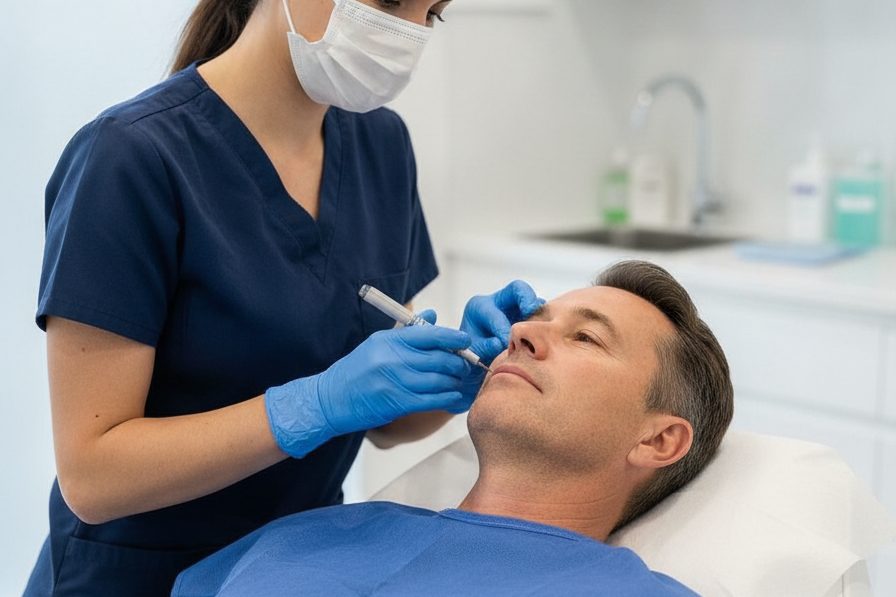
The treatment itself takes only a few minutes. Two to four injection points are typically used, placed with precision to avoid affecting adjacent muscles responsible for normal lip movement and speech. Results begin to appear within three to five days and reach their peak at around two weeks. The effect is temporary, lasting approximately three to four months in most patients, after which the muscles gradually return to their baseline activity.
This temporary nature is often cited as a disadvantage, but it is also genuinely useful. It allows a patient to experience the aesthetic change before committing to anything permanent, and it means that any unwanted effect, such as slight asymmetry or a feeling that the smile looks unnatural, will resolve on its own without intervention. The doses used are very small, typically two to four units per side, which minimises the risk of the lip appearing stiff or affecting speech, though both are possible side effects that patients should be aware of before proceeding.
Botox is not appropriate for patients whose gummy smile is caused by skeletal factors, altered passive eruption or a significantly short lip. Using it in these cases will produce at best a modest and unsatisfying result, and at worst a smile that looks constrained without the gum display actually being meaningfully reduced. You can read more about how we approach Botox and fillers at KCC and what a proper assessment involves.
Dermal fillers: addressing a short or thin upper lip
When a short upper lip is the primary driver of excessive gingival display, dermal filler placed in the upper lip can be a genuinely effective option. The principle is that adding volume to the body of the upper lip, particularly along the wet-dry border and in the central third, causes the lip to descend very slightly at rest and to cover a little more gum during animation. It is a subtle mechanism and the effect is generally less dramatic than Botox in a true hypermobile lip case, but in the right patient it can make a meaningful difference.
Hyaluronic acid fillers are the standard choice because they are reversible with hyaluronidase if the result is not what the patient hoped for. The treatment carries the usual risks associated with lip filler: bruising, swelling, asymmetry, lumpiness and, in rare cases, vascular complications. The lips are a vascular area and any practitioner injecting them must be trained and equipped to manage vascular occlusion immediately should it occur. This is non-negotiable.
It is worth being honest about the limitations here. Filler will not correct a gummy smile caused by a hypermobile lip, nor will it address skeletal causes. Overfilling the lip in an attempt to compensate for the wrong cause simply produces an unnatural appearance without solving the original problem. Our dermal fillers page explains in more detail how we assess lip anatomy before any treatment is planned.
For some patients, a combination of a small amount of lip filler and a low dose of Botox in the lip elevators addresses both a short lip and mild hypermobility simultaneously. This combination approach requires careful planning and should only be undertaken by an experienced injector who has assessed both components of the problem.
Surgical options: when injectables are not enough
There are patients for whom surgery is not a last resort but simply the most appropriate first option. Honesty about this is important, because recommending repeated injectable treatments to someone who has a fundamentally surgical problem does not serve them well, regardless of how much more convenient the non-surgical route might seem.
Lip repositioning surgery. This procedure, performed under local anaesthesia in most cases, involves removing a strip of mucosa from the inner surface of the upper lip and suturing the lip to a lower position on the gum. The result is a permanent reduction in how high the lip can rise during smiling. It is an elegant solution for patients with a hypermobile lip who do not want to commit to indefinite Botox treatments, or for whom Botox has produced a good result and they want something lasting. Recovery involves swelling and some tightness for two to four weeks, and the final result settles over approximately three months. The procedure carries risks including infection, scarring inside the mouth, asymmetry and, in a small proportion of cases, partial relapse as the tissues gradually stretch over time.
Orthognathic surgery. For patients with vertical maxillary excess, a Le Fort I osteotomy performed by a maxillofacial surgeon is the gold standard. This is major surgery carried out under general anaesthesia, with a recovery period measured in weeks and a full healing process that takes several months. It is not something undertaken lightly, but for patients with a significant skeletal contribution to their gummy smile it produces results that no amount of Botox or filler can replicate. We refer patients who need this level of intervention to appropriate surgical colleagues.
Gingivectomy and crown lengthening. Where altered passive eruption is the dominant cause, a periodontist can remove excess gum tissue to expose more of the natural tooth crown. This is a dental procedure rather than a cosmetic surgery one, but it is worth mentioning because patients sometimes arrive at a cosmetic clinic when their first port of call should have been a specialist dentist.
Risks, realistic expectations and who should not have treatment
Every treatment for gummy smile carries risks, and any practitioner who does not discuss them in detail before proceeding is not meeting the standard of care that patients in London deserve. Here is an honest summary.
Botox risks include temporary asymmetry, an overly flat or stiff smile, difficulty pronouncing certain sounds, and in rare cases the toxin spreading to adjacent muscles causing drooping of the lip or cheek. These effects resolve as the product wears off, but they can be distressing in the interim. The risk is significantly reduced by using conservative doses and by having the treatment performed by a medically qualified practitioner who understands the anatomy thoroughly.
Filler risks include bruising, swelling, migration of product, lumpiness, and the rare but serious risk of vascular occlusion. Patients on blood thinners, those with active cold sores or skin infections near the treatment area, and those who are pregnant or breastfeeding should not have filler treatment.
Surgical risks include infection, scarring, anaesthetic complications, asymmetry and relapse. The specific risk profile varies by procedure and by individual patient factors.
Who is not a good candidate for any of these treatments? Patients with unrealistic expectations, those who have not had a proper diagnosis of the cause of their gummy smile, those with active dental disease or periodontal problems, patients who are seeking treatment primarily due to external pressure rather than their own considered wish, and anyone under the age of eighteen. We also take a conservative approach with patients who have had multiple previous treatments and are seeking incremental improvements; sometimes the most honest advice is that further treatment is unlikely to produce meaningful additional benefit.
What to expect at a KCC assessment
A consultation for gummy smile correction at our Kensington clinic begins with a detailed conversation about what bothers you, how long it has been a concern, and what you have tried before if anything. We then carry out a clinical assessment that includes measuring the amount of gingival display at rest and during a natural smile, assessing upper lip length and mobility, examining the relationship between the teeth and gum tissue, and considering the overall proportions of the face.
We use photographs taken in clinic, not before-and-after comparisons, but standardised clinical images that help us plan treatment and track outcomes over time. We will explain clearly which cause or causes are contributing to your gummy smile, which treatment or treatments we believe are appropriate, what results are realistic, what the risks are, and what recovery involves. If we believe that a dental referral or a surgical referral is more appropriate than anything we offer in clinic, we will tell you that directly.
Dr Hassan leads all surgical and complex aesthetic assessments at our Kensington clinic, bringing a medically grounded approach to every consultation. We do not operate a high-volume, quick-turnaround model. Each patient is assessed as an individual, and no treatment is recommended unless we genuinely believe it is the right option for that person's specific anatomy and goals.
We see patients from across London and the wider South East, and we are experienced in managing patients who have had previous treatments elsewhere that have not produced the results they hoped for. If that describes your situation, a fresh assessment from a doctor-led perspective can often clarify what has happened and what, if anything, can be done differently.
Booking your consultation
If you are considering gummy smile correction in London and want an honest, anatomy-led assessment of your options, we would be glad to see you at our Kensington clinic. There is no obligation to proceed with any treatment following a consultation, and we will never recommend something simply because it is available or convenient.
To understand the full range of facial aesthetic treatments we offer, you may also find it useful to read about Botox and fillers and dermal fillers on our treatments pages before your appointment. When you are ready, you can book your consultation online and a member of our team will be in touch to confirm your appointment at our Kensington, London clinic.
Frequently asked
Questions we get asked about EnerPeel®
- How do I know whether Botox or fillers is the right treatment for my gummy smile?
- The answer depends entirely on the cause of your gummy smile. Botox works best when the primary cause is a hypermobile upper lip, meaning the muscles that lift the lip contract with too much force or range during smiling. Dermal filler is more appropriate when a short or thin upper lip is the main contributing factor. Many patients have a mixed picture, and some require a combination of both. A proper clinical assessment by a medically qualified practitioner is the only reliable way to determine which approach is right for your specific anatomy. Choosing a treatment without that assessment is one of the most common reasons for disappointing results.
- How long does Botox for gummy smile last, and will I need to keep having it?
- Botox for gummy smile typically lasts between three and four months, after which the muscles gradually return to their normal level of activity and the gummy smile reappears. Most patients who are happy with the result choose to repeat the treatment two to three times per year to maintain the effect. If you would prefer a longer-lasting solution and Botox has confirmed that relaxing the lip elevators produces the result you want, lip repositioning surgery may be worth discussing as a more permanent alternative. There is no obligation to continue with Botox indefinitely, and taking a break does not cause any permanent change to the muscles.
- Is gummy smile correction painful?
- Botox injections for gummy smile involve very small needles and are generally well tolerated without any anaesthetic, though a topical numbing cream can be applied beforehand if preferred. Lip filler injections are slightly more uncomfortable because the lips are a sensitive area, but most practitioners use a topical anaesthetic and many hyaluronic acid fillers contain lidocaine within the product itself, which reduces discomfort as the injection proceeds. Surgical options such as lip repositioning are performed under local anaesthesia, so the procedure itself should be pain-free, though some soreness and tightness during the healing period is expected and managed with standard pain relief.
- Can a gummy smile come back after surgical correction?
- Lip repositioning surgery is considered a long-lasting solution, but partial relapse is a recognised possibility. Studies suggest that a proportion of patients experience some degree of recurrence over time as the mucosal tissues gradually stretch. The likelihood of relapse varies between individuals and is influenced by factors including the amount of correction achieved, the patient's tissue characteristics and healing response. Orthognathic surgery for skeletal causes of gummy smile is generally considered more stable in the long term, though all surgical outcomes carry some degree of variability. Your surgeon should discuss the realistic probability of relapse with you before you consent to any procedure.
- Are there any causes of gummy smile that cannot be treated at a cosmetic clinic?
- Yes, and being honest about this is important. Gummy smiles caused primarily by vertical maxillary excess, a skeletal condition where the upper jaw sits too far downward, require orthognathic surgery performed by a maxillofacial or oral surgeon. This is beyond the scope of aesthetic medicine. Similarly, gummy smiles caused by altered passive eruption, where excess gum tissue covers too much of the tooth crown, are best addressed by a periodontist or cosmetic dentist through crown lengthening or gingivectomy. A good cosmetic clinic will identify when a patient's needs fall outside its scope and refer appropriately rather than offering treatments that are unlikely to produce a meaningful result.