


Surgical · 11 min read
Gynaecomastia Surgery in London: Male Chest Reduction Explained
By Dr Hassan Soueid · GMC 6107783 · Medical Director, Kensington Cosmetic Clinic
Published 24 November 2026
TL;DR. Gynaecomastia surgery can reduce a fuller male chest, but the right plan depends on whether the fullness is gland, fat or loose skin, and on ruling out medical causes first, so careful assessment matters as much as the operation.
If you are reading about gynaecomastia surgery in London, you may have been quietly thinking about it for a long time. Many men describe the same habits: loose or dark clothing, avoiding fitted T-shirts, keeping a shirt on at the pool or skipping the changing room altogether. Some feel awkward raising it even with their GP. A fuller male chest is common, it is a medical issue like any other, and you do not need to justify wanting it assessed.
This guide explains how we approach male chest reduction at Kensington Cosmetic Clinic, a doctor-led clinic in Kensington registered with the Care Quality Commission. It focuses on what matters before anyone talks about an operation: what the tissue is, whether there is a medical cause, and whether surgery is the right step at all. Male chest reduction sits within our breast surgery services and often involves liposuction as part of the plan.
What gynaecomastia is
Gynaecomastia is a benign enlargement of the glandular breast tissue in males. Every male has a small amount of this tissue behind the nipple, and under certain hormonal conditions it grows. It usually appears as a firm or rubbery disc sitting directly beneath the nipple and areola, sometimes on both sides and sometimes on one. In the early stage it can feel tender or sensitive, particularly when it brushes against clothing.
The usual driver is a shift in the balance between oestrogen, which stimulates breast tissue, and androgens such as testosterone, which hold it in check. That balance changes naturally in newborns, during puberty and in later life, which is when gynaecomastia is most often seen. It can also be triggered by medicines, anabolic steroids, some supplements and certain medical conditions.
Many men have a mixture of gland and fat, and fat alone is sometimes called pseudogynaecomastia. The distinction matters because glandular tissue does not respond to diet or training the way fat does. Plenty of men we meet have trained hard and lost weight, only to find the area under the nipple has barely changed. That is not a failure of effort; it reflects the type of tissue.
Newly developing tissue may settle if the cause is removed, whereas long-standing gynaecomastia tends to become firmer and more fibrous and is less likely to shrink. A fuller chest can also affect posture, confidence, relationships and how freely someone exercises or goes on holiday. Those feelings are valid reasons to seek advice, and exactly why the decision deserves a calm assessment rather than a quick fix.
Gland or fat: how it is assessed
Assessment starts with a conversation. We ask when the fullness began, whether it has changed recently, whether it is tender, whether it affects one side or both, and how your weight has moved over the years. We also ask about training, medicines and supplements, because these often explain a lot.
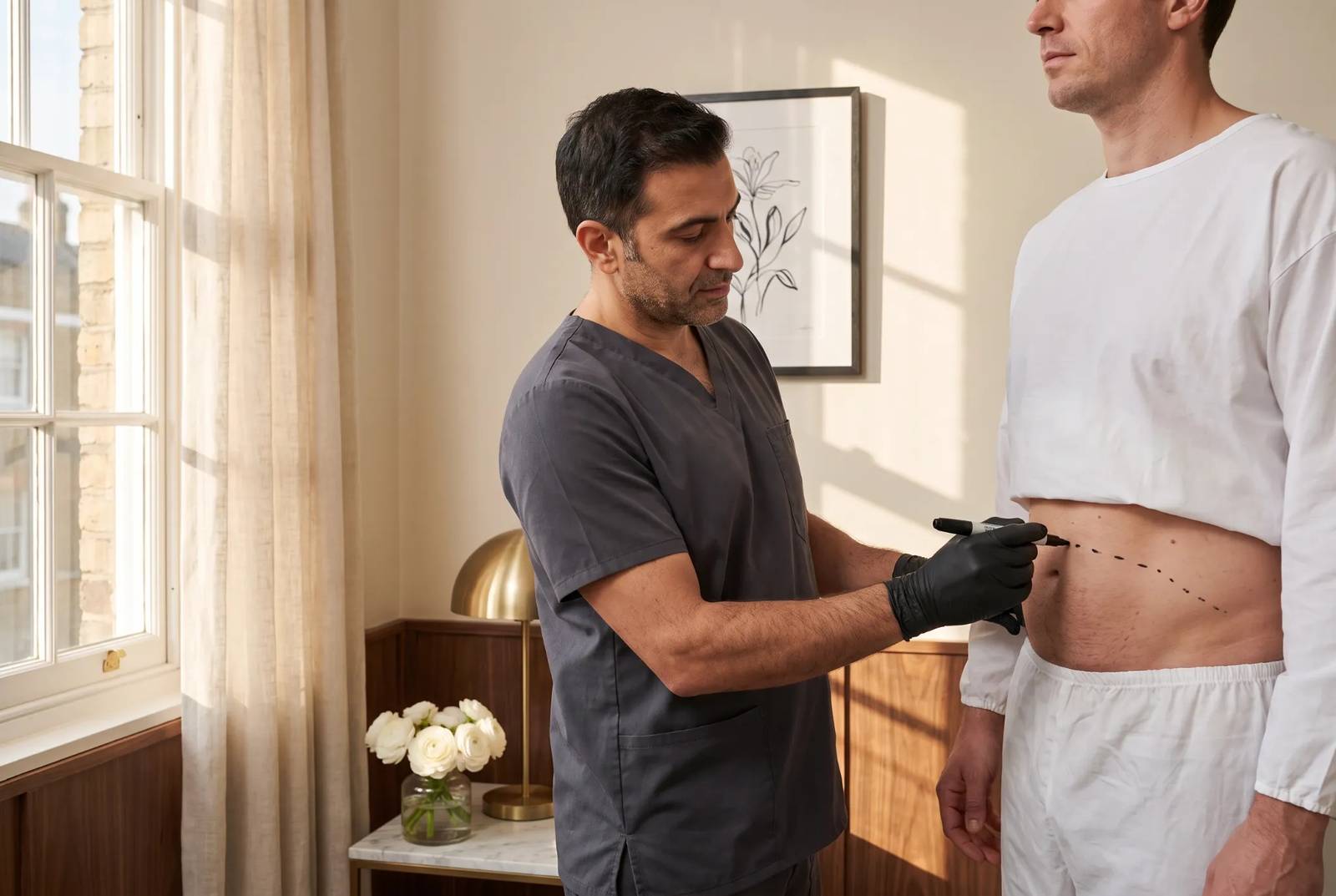
Examination is done standing and lying down, with a chaperone offered. The key step is feeling the tissue directly beneath the areola and comparing it with the rest of the chest. Glandular tissue usually feels like a distinct, firm disc centred under the nipple; fat feels softer and more evenly spread. We also look at skin quality, nipple position relative to the crease under the chest, any asymmetry, and whether loose skin would remain once volume is reduced.
In men with more body fat, a firm gland can be hard to feel, and an ultrasound scan can help clarify the picture. Getting the tissue type right shapes the whole plan, from technique to scars to recovery.
Some features point away from a cosmetic pathway altogether: a lump that is hard, irregular, off-centre from the nipple or fixed to the tissues beneath; nipple discharge or bleeding; skin dimpling; a newly inverted nipple; or swollen glands in the armpit. Breast cancer in men is uncommon, but it does occur. If we find any of these signs, we will advise you to see your GP promptly for referral to an NHS breast clinic. Cosmetic surgery is never the first step in that situation.
If the fullness turns out to be fat alone, liposuction may be the more relevant conversation, and our guide to what liposuction can and cannot do covers that in detail.
Medical checks before surgery
Because gynaecomastia often has a cause, a responsible plan looks for it before anyone operates. If the trigger is still active, removing tissue without addressing it can mean the problem returns.
Medicines are a common culprit. Examples include spironolactone, some hormone treatments for prostate conditions, finasteride and dutasteride, certain antipsychotics, some medicines for heartburn and stomach ulcers, digoxin and some HIV medicines. This is not a complete list. Please do not stop a prescribed medicine on your own; discuss alternatives with the doctor who prescribed it.
Anabolic steroids, unsupervised testosterone, prohormones and SARMs are another frequent cause. Some are converted in the body into oestrogen, and stopping them can disturb hormone levels for a while. Unregulated gym supplements and so-called testosterone boosters may contain undeclared hormonal ingredients, and heavy alcohol use and cannabis have also been linked with gynaecomastia. We ask about all of this without judgement, because honest answers lead to safer advice.
Medical conditions can play a part too, including liver disease, kidney disease, an overactive thyroid and low testosterone. Rarely, hormone-producing tumours, including some testicular tumours, are responsible. Skin contact with someone else's prescribed hormone gel or cream is another occasional, easily missed cause.
Depending on your history and examination, we may recommend blood tests such as testosterone, oestradiol, LH, FSH, prolactin, hCG, and thyroid, liver and kidney function. If anything is abnormal, or your GP is already investigating, we may suggest completing that process before surgery is discussed further. With your consent, we are happy to write to your GP.
We also check general fitness for surgery: smoking and vaping, blood pressure, any bleeding tendency, and blood thinners or supplements that affect clotting, such as fish oil, vitamin E and ginkgo.
Gynaecomastia surgery in London: liposuction, gland removal and skin
There is no single gynaecomastia operation. The plan is built around three possible components, fat, gland and skin, and most men need a combination. Surgery at KCC is performed by Dr Hassan Soueid or one of our qualified surgeons, following a doctor-led assessment, and the approach is tailored to what the examination and any tests show.
Liposuction reduces fat and smooths the transition towards the armpit and side of the chest. It is done through small incisions, often at the side of the chest or near the edge of the areola. On its own it suits fullness that is mainly fatty; it removes little firm gland, which is why a glandular disc usually needs direct excision.
Gland removal is usually performed through a curved incision along the lower edge of the areola, where darker skin meets paler chest skin. A scar on this natural border often sits less noticeably once healed, although every scar is visible to some degree and healing varies. A thin layer of tissue is usually left under the nipple, because removing too much can leave a hollow or pull the nipple inwards. The aim is a balanced contour, not removing everything possible.
Skin changes the trade-offs most. Mild looseness with good elasticity may tighten once volume is reduced. Moderate excess can be addressed by removing a ring of skin around the areola, leaving a scar that encircles it. Significant loose skin, for example after major weight loss, may need longer scars across the lower chest, and sometimes the nipple has to be repositioned or replaced as a graft. These larger operations carry more scarring and a higher chance of altered nipple sensation and appearance.
Smaller procedures can sometimes be performed under local anaesthetic, with or without sedation, while more extensive surgery is generally done under general anaesthetic. Many patients go home the same day. Drains are not always needed but may be used when more tissue has been removed.
Some men want the flanks or abdomen treated at the same time. That can be reasonable in suitable patients, but each extra area adds operating time and recovery; our article on male liposuction for the abdomen and flanks is a useful starting point.

Who should wait or not have surgery
Part of an honest consultation is saying when surgery is not the right step, or not yet.
Teenagers who are still developing are the clearest example. Gynaecomastia during puberty is common and frequently settles as hormones stabilise, and operating while the body is still changing risks recurrence and unnecessary surgery. The starting point is the GP, who may involve a paediatric team. We recognise how distressing this can be at school and in sport.
Men currently using anabolic steroids, SARMs, prohormones or unprescribed testosterone should also wait. The ongoing hormonal stimulus raises the chance of tissue returning, and these substances can affect surgical safety. We will usually ask for a sustained period off them, and in some cases we will decline to operate.
Unstable weight is another reason to pause. If you are actively losing weight, or intend to lose a significant amount, the chest will keep changing and the skin may loosen further. Planning surgery once your weight has been stable for a reasonable period gives a more predictable outcome and reduces the chance of needing further surgery.
We would also wait if a medical cause has not been investigated, or if a new medicine could be adjusted first. Smokers are asked to stop well before surgery because smoking impairs healing. If distress about the chest seems out of proportion to what we find, we will talk sensitively about body image and may suggest psychological support first. That is not a dismissal; it is about making sure surgery is likely to help.
Finally, surgery reduces tissue. It does not build muscle or create a particular physique, and the chest will still reflect your own anatomy, skin and healing.
Recovery: the vest, the gym and work
Recovery varies with the extent of surgery, but the broad pattern is predictable enough to plan around.
Expect the chest to feel tight, sore and bruised for the first few days; pain is usually manageable with the medication we advise. You will need someone to take you home and ideally stay the first night. Sleeping on your back, slightly propped up, tends to be more comfortable, and if drains are used we will explain their care.
You will wear a compression vest, usually day and night for several weeks, often around four to six, with short breaks for washing. It helps control swelling and supports the skin as it settles, and a second vest makes washing easier. Under clothing it is usually discreet, which many men appreciate on returning to work.
Many people in desk-based roles return to work after about a week, sometimes sooner after limited surgery. Jobs involving lifting, reaching or physical labour usually need longer, often a few weeks. Driving is possible once you are off strong painkillers and can safely perform an emergency stop.
The gym is the question we are asked most. Walking is encouraged from day one. Light cardio, such as a stationary bike, is often reintroduced at around two to three weeks, with lower-body work soon after. Chest training, push-ups, pressing and heavy upper-body lifting are generally held back for around six weeks, then built up gradually, and contact sports may need longer. Your surgeon will adjust this to your operation and healing, and following that advice helps reduce the risk of bleeding and fluid collections.
Swelling settles gradually. In the early weeks the area under the nipple can feel firm or lumpy, which is often part of normal healing, and the contour continues to change for several months. Scars typically look pink early on and mature over a year or longer; sun protection and scar care advice help.
Sensation changes are common. The nipple and surrounding skin may feel numb, tingly or oversensitive. These changes often improve over months as nerves recover, but in some people altered sensation persists, and that possibility is part of the consent discussion.
Risks and recurrence
Every operation carries risk, and male chest reduction is no exception. The aim here is not to alarm you but to make sure your decision is fully informed.
Haematoma, a collection of blood under the skin, is one of the more important early complications. It usually shows within the first day or so as swelling that is clearly worse on one side, with increasing tightness, pain or bruising. Some need a return to theatre to be drained. That is why we take bleeding history, blood thinners and supplements seriously, and why early rest matters.
A seroma is a build-up of clear fluid that can appear later, sometimes after drains are removed, and may feel like a soft, sloshing swelling. Many are managed in clinic by drawing the fluid off with a needle, occasionally more than once.
Other risks include infection; scars that become thickened, raised, stretched or discoloured; contour irregularities such as dents, ridges or residual fullness; asymmetry between the sides; and, if too much tissue is removed, a hollow or an inward-pulled nipple. With larger skin-removing operations, especially in smokers, there is a small risk of poor healing of the skin or nipple. General risks include blood clots and reactions to anaesthesia, and some patients need a further, smaller procedure to refine an area.
Recurrence is a fair question. Tissue that has been removed does not grow back, but any gland that remains can enlarge again if the original trigger returns, such as restarting steroids, a new medicine or a hormonal change. Fat can also reaccumulate with weight gain. That is why identifying the cause beforehand, and avoiding known triggers and keeping your weight stable afterwards, matters as much as the operation. Nobody can promise a particular outcome, and we will not try to.
Booking your consultation
A first consultation at our Kensington clinic in west London is doctor-led and unhurried. We take a full history, examine the chest with a chaperone offered, review any tests or GP letters you bring, and talk through whether surgery is appropriate, which approach would fit, and what the scars, recovery and risks would realistically mean for you. Not operating, or waiting, is always one of the options we discuss.
Please bring a list of every medicine, supplement and training product you use or have used recently, along with any blood results. You will have time to reflect before booking surgery, and a second consultation is welcome if you have more questions. We are introducing HonestFace, our own iPad app for digital consultation forms, consent signing and secure patient records, so as it is rolled out you may complete some of your paperwork that way.
Patients come to us from across London and beyond. You can read more about our Founder and Medical Director, Dr Hassan Soueid, a GMC-registered doctor, before your visit. When you are ready, book a consultation online and we will arrange a time to see you in Kensington.
Frequently asked
Questions we get asked
- How do I know if I have gynaecomastia or chest fat?
- You often cannot be sure on your own. Glandular gynaecomastia usually feels like a firm, rubbery disc directly under the nipple, while fat feels softer and more evenly spread, and many men have both. A doctor will examine the chest standing and lying down and may suggest an ultrasound if it is unclear. Any hard, irregular or fixed lump, nipple discharge or skin change should be checked promptly by your GP.
- What causes gynaecomastia?
- It usually reflects an imbalance between oestrogen and androgens such as testosterone. This happens naturally during puberty and later life, and can also be triggered by certain medicines, anabolic steroids, prohormones, SARMs, some unregulated supplements, heavy alcohol or cannabis use, and conditions affecting the liver, kidneys, thyroid or testosterone levels. Sometimes no clear cause is found. Identifying any active trigger before surgery reduces the chance of the problem returning.
- Will I have visible scars?
- Any surgery leaves scars. Liposuction incisions are small, and gland removal is usually done through an incision at the lower edge of the areola, where the scar often blends with the natural colour change, although healing varies between people. If loose skin needs removing, scars are longer, either around the areola or across the lower chest. Your doctor will explain the likely scar placement for your situation at consultation.
- When can I go back to the gym?
- Walking is encouraged from the first day. Light cardio is often reintroduced at around two to three weeks, with lower-body training soon after if you are comfortable. Chest work, push-ups, pressing and heavy upper-body lifting are generally avoided for around six weeks and then built up gradually. Your surgeon will tailor this to your operation and healing, as returning too early can increase the risk of bleeding or fluid collecting.
- Can gynaecomastia come back?
- Tissue that has been removed does not grow back, but any remaining gland can enlarge again if the original trigger returns, for example restarting anabolic steroids, starting certain medicines or a hormonal change. Fat on the chest can also return with weight gain. Investigating the cause before surgery, keeping your weight stable and avoiding known triggers afterwards all help, but no one can promise a particular outcome.