

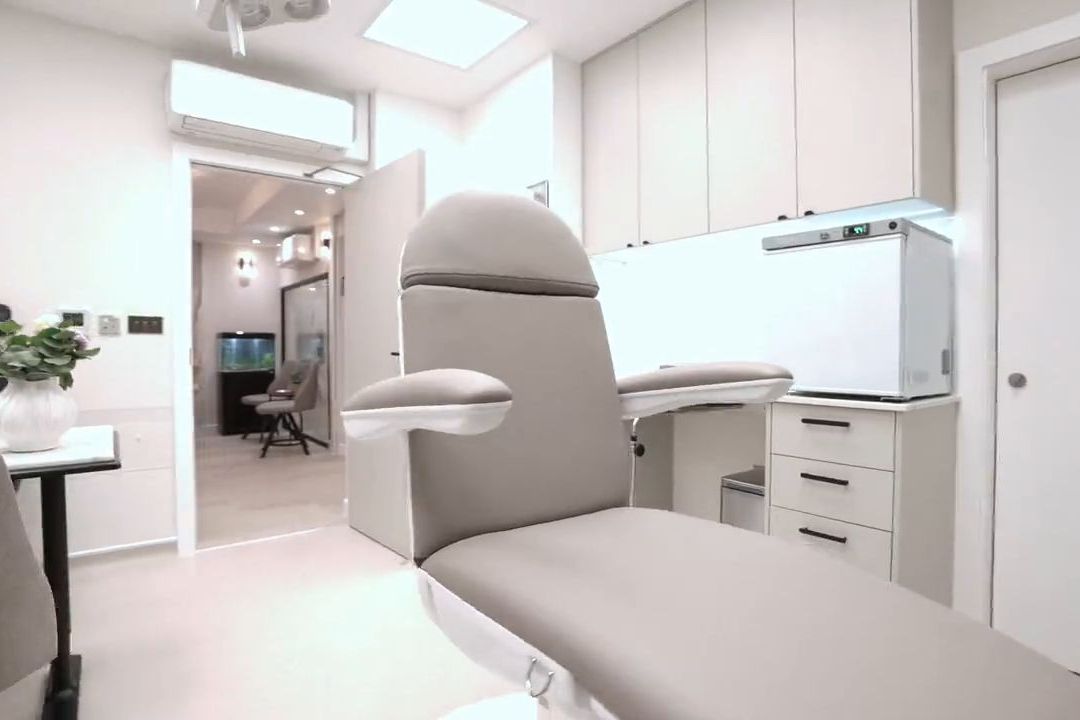
Surgical · 11 min read
Are You a Candidate for a Hair Transplant? Donor Area Assessment in London
By Dr Hassan Soueid · GMC 6107783 · Medical Director, Kensington Cosmetic Clinic
Published 12 November 2026
TL;DR. A hair transplant moves existing hair rather than creating new hair, so whether you are a suitable candidate depends less on how much you have lost and more on the quality and quantity of your donor hair, how your hair loss is likely to progress, and whether your expectations fit what a finite supply can realistically achieve.
Why candidacy comes before technique
Many people who contact us about hair restoration in London have already done a great deal of reading. They know the difference between FUE and FUT, they have opinions about graft numbers, and they often have a clear picture of the hairline they want. Those are reasonable things to think about, and we have covered the techniques themselves in our guide to FUE versus FUT hair transplants. But technique only answers the question of how hair is moved. The more fundamental question is whether you have enough of the right hair to move, and whether moving it now makes sense for the head of hair you are likely to have in ten or twenty years.
A hair transplant relocates follicles from an area of the scalp that tends to be more resistant to pattern hair loss into an area that has thinned. It does not create new follicles. Every graft placed at the front is one fewer available at the back, permanently. That is the central trade-off of the whole procedure, and it is why an honest candidacy assessment will sometimes conclude that surgery should wait, be scaled back, or not happen at all.
This article focuses on that assessment: what a doctor looks for in the donor area, how the pattern and pace of your hair loss shapes any plan, who tends not to be suitable, and what the alternatives are. It is general information and cannot replace an individual examination, because two people with similar-looking hair loss can have very different donor areas and very different outlooks.
What the donor area is, and why it is finite
In most men with pattern hair loss, the hair at the back and sides of the scalp persists long after the crown and front have thinned. This horseshoe-shaped region is usually described as the safe donor zone. Follicles taken from here tend to keep their original behaviour when moved to a new location, a principle often called donor dominance, and that is what makes transplantation possible in the first place.
The word safe is relative. The boundaries of the donor zone vary from person to person, and in some people the zone itself narrows or thins over time. Follicles harvested from the edges, or from areas that will later be affected by pattern loss, may look perfectly healthy on the day of surgery but may not last as well as follicles from the stable centre. A careful surgeon works within the area most likely to remain stable, even when that means fewer grafts are available.
The donor area is also finite in a very practical sense. Each extraction removes a follicle from the back of the head. Spread evenly and kept within sensible limits, this is usually not noticeable. Taken too far, it can leave visible thinning, a patchy or moth-eaten look, or scarring that shows when the hair is cut short. Overharvested donor areas are difficult to correct, and in some cases cannot be corrected. For that reason we think of the donor area as a budget that has to last a lifetime rather than a resource to spend in a single session.
Body hair, such as beard or chest hair, is sometimes discussed as a supplement. It can occasionally help in specific situations, but its texture, growth cycle and yield differ from scalp hair, and it is generally a secondary option rather than a substitute for an adequate scalp donor supply.

How we assess your donor area at consultation
Donor assessment is the part of a hair transplant consultation that patients often expect to be quick. In reality it is one of the most important parts of the appointment, and it involves more than a glance at the back of the head. At our Kensington clinic the doctor will usually examine the scalp in good light, part the hair in several places and use magnification to look at the follicles more closely. The main factors we consider include:
- Density. How many follicular units grow in a given area of the donor zone. Higher density generally means more grafts can be taken before thinning becomes visible, although density alone does not tell the whole story.
- Hair calibre. Thicker individual hairs give more visual coverage per graft. Someone with fine hair may need more grafts to achieve a similar appearance of fullness, which places more demand on the same donor area.
- Follicular unit make-up. Hair grows in natural groupings of one, two, three or occasionally more hairs. The proportion of multi-hair units influences how much coverage the donor supply can realistically provide.
- Miniaturisation in the donor zone. If hairs at the back and sides are already becoming finer and shorter, that can suggest the donor area is less stable than it looks. This is a significant caution sign.
- Scalp laxity. How freely the scalp moves matters if a strip technique is being considered, because it affects how safely a strip of tissue can be removed and closed.
- Existing scars. Previous hair surgery, injuries or other operations on the scalp can reduce the usable donor area and affect healing.
- Hair and skin characteristics. Colour contrast between hair and scalp, and whether hair is straight, wavy or tightly curled, influence both how coverage looks and how extraction is planned.
Taken together, these findings allow a doctor to estimate your usable donor supply, both for a first procedure and, just as importantly, for any future work you might want or need. We prefer not to quote graft numbers before an examination, because any figure given without seeing your scalp is a guess.
We will also ask about your general health and history. Thyroid problems, low iron, recent illness, significant stress, rapid weight loss, certain medications and a family history of hair loss can all be relevant. Sometimes shedding that looks like pattern loss has another cause that should be investigated first, and we may suggest blood tests through your GP or a review by another clinician before any surgical plan is discussed.
Your pattern of hair loss, your age and the long view
The recipient area matters as much as the donor area. Classification scales, such as the Norwood scale used for male pattern loss, are a helpful shorthand for describing where you are now. They are less helpful at predicting where you will be later, and that future picture is what really determines candidacy.
Age is a good example. Younger men, particularly those in their early twenties whose loss started early or is progressing quickly, are often less suitable for extensive surgery. That is not because the operation cannot be done. It is because the eventual pattern of their hair loss is still unknown. Transplanted hair from a stable donor area generally continues to grow, but the native hair around it does not stop thinning simply because a transplant has taken place. A low, dense hairline created at 24 can look isolated at 40 if the hair behind it has continued to recede, and by then the donor reserve needed to fill the gap may not exist. The result can be an unnatural appearance that is harder to address than the original hair loss.
Stability is therefore a key question. How quickly has your hair changed over the past few years? Is the shedding steady, accelerating or settling? Your own old photographs of your hair can be genuinely useful here, as can an honest family history. Where loss is still active, we will often recommend a period of observation, medical treatment or both before any surgery is considered.
Planning also involves priorities. For most people the front of the scalp has the greatest effect on how the face is framed, so this is commonly where limited grafts are focused first. The crown can require a large number of grafts to make a visible difference, and loss there may continue to progress, so it is often a lower priority when supply is limited. A conservative, age-appropriate hairline usually ages better than a low, straight one. If your hair loss is extensive and your donor supply is modest, the honest conversation is about what can sensibly be improved, not about restoring the hair you had at eighteen.
Hair transplant candidacy for women
Hair loss in women raises different questions. Female pattern hair loss most often appears as diffuse thinning across the top of the scalp, typically with a widening parting, rather than a receding hairline and bald crown. Crucially, the thinning can also affect the back and sides, which means the donor area may be less stable and less reliable than in many men. When the donor zone is itself thinning, moving hair from it may not provide a lasting benefit and could make the donor area look worse.
That does not mean surgery is never appropriate. Women with a well-defined area of loss, such as a stable patch of traction alopecia from years of tight hairstyles, or stable scarring after previous surgery or injury, may be suitable after careful assessment. But many women who ask about a transplant will find that surgery is not the first step.
Investigating the cause comes first. Iron deficiency, thyroid conditions, hormonal factors such as polycystic ovary syndrome, shedding after pregnancy, significant stress, illness and restrictive dieting can all cause or worsen hair loss. Some of these, such as telogen effluvium, a temporary increase in shedding after a trigger, often settle once the cause is addressed. Operating during a period of active shedding risks misjudging both the donor and recipient areas. Medical therapy and treatment of any underlying cause are frequently recommended first, with surgery revisited later if it still seems appropriate.
When a hair transplant is not the right choice
Part of a responsible consultation is being clear about who is unlikely to benefit. A hair transplant is usually not recommended, or needs much more caution, in the following situations:
- Active or unpredictable alopecia areata. This is an autoimmune form of hair loss in which transplanted hair may also be affected. It is generally managed medically rather than surgically.
- Active scarring alopecias. Conditions such as lichen planopilaris and frontal fibrosing alopecia can destroy follicles, and surgery during an active phase may fail or aggravate the condition. Dermatology input is usually needed, and surgery, if ever considered, typically requires a prolonged stable period.
- Hair pulling conditions. Where loss is caused by trichotillomania, the underlying cause needs support first, as surgery does not address it.
- A donor supply too limited for the area of loss. If there is simply not enough hair to make a meaningful, natural-looking difference, the kindest advice is often not to proceed.
- Certain health factors. Uncontrolled medical conditions, bleeding disorders, some medications and smoking can all affect safety and healing. Some of these can be optimised before surgery; others may rule it out.
- Expectations that surgery cannot meet. A transplant redistributes hair; it does not restore the density of youth. If someone is significantly distressed by a minor change, or the concern seems out of proportion to what we can see, we will discuss this openly and may suggest additional support before any decision.
Even for well-chosen candidates, hair transplantation carries risks. These include temporary shedding of existing hair around the treated area, infection, inflammation of the follicles, numbness, swelling, visible donor scarring, grafts that do not grow as hoped, an appearance that looks less natural than intended and the possibility of needing a further procedure. Growth also takes time, which we describe in our hair transplant recovery and growth timeline. Outcomes vary between individuals and cannot be guaranteed.
Alternatives and supporting treatments
Surgery is one option among several, and for some people it is not the best one. Medical therapy is frequently discussed first or alongside a transplant. There are prescription-only medicines and topical treatments that may help slow pattern hair loss or support existing hair in some people. These need a proper discussion with a doctor about suitability, possible side effects and the fact that any benefit generally depends on continued use. Because a transplant does not stop native hair from thinning, protecting the hair you already have can be an important part of a long-term plan.
PRP treatment, which uses a concentrate prepared from your own blood, is sometimes used to support thinning hair. The evidence is mixed and responses vary, so we present it as a possible supportive option rather than a reliable solution, and it cannot replace follicles that have already been lost. You can read more about our approach on our hair treatments page.
Non-medical approaches are legitimate too. A shorter haircut, a different style, scalp micropigmentation from an appropriately trained practitioner, or a well-made hair system can suit some people better than surgery. So can deciding to do nothing. Choosing not to have a transplant, or choosing to wait until your hair loss is clearer, is a reasonable outcome of a consultation and not a failure of one.
Booking your consultation
If you are considering a hair transplant in London, the most useful first step is an unhurried, doctor-led consultation that looks closely at your donor area and your likely future pattern of loss. Consultations are led by doctors, including Dr Hassan Soueid, a GMC-registered doctor and the clinic's Founder and Medical Director. If surgery is appropriate and you decide to go ahead, it is performed by Dr Hassan Soueid or one of our qualified surgeons. The clinic is registered with the Care Quality Commission.
It helps to bring a list of any medications and supplements you take, details of relevant medical conditions, information about previous hair treatments or scalp procedures, and a sense of how your hair has changed over time. It is also worth thinking about what matters most to you, whether that is framing the face, reducing how visible the scalp is, or simply understanding your options.
We are introducing HonestFace, our own iPad app for digital consultation forms, consent signing and secure patient records, so you may be asked to complete some paperwork this way as it is rolled out. There is no pressure to decide on the day. We encourage time to reflect after your consultation, and you are welcome to come back with further questions before making any decision.
Our clinic is in Kensington, west London. When you are ready, you can book a consultation online and we will arrange a time to assess your hair and talk through realistic options.
Frequently asked
Questions we get asked
- Can I have a hair transplant if my hair is still falling out?
- Sometimes, but active or rapid hair loss is a reason for caution. Native hair can keep thinning around transplanted hair, which may leave an unnatural look later. A doctor may suggest a period of observation or medical treatment first so that any plan is based on a clearer picture of your future pattern.
- How do I know if my donor area is good enough?
- This can only be judged by examination. A doctor will look at density, hair thickness, how many hairs grow in each follicular unit, any thinning at the back and sides, scalp laxity and existing scars. Together these give an estimate of how much hair can be moved safely over your lifetime.
- Am I too young for a hair transplant?
- There is no single cut-off, but people in their early twenties are often less suitable for extensive surgery because their eventual pattern of hair loss is still unknown. Using donor hair too early can limit options later. Many younger patients are advised to consider medical therapy and review their situation over time.
- Can women have a hair transplant?
- Some can, particularly where there is a well-defined, stable area of loss such as traction alopecia or scarring. Many women have diffuse thinning that can also affect the donor area, which makes surgery less suitable. Underlying causes such as iron deficiency, thyroid or hormonal factors should usually be investigated first.
- Will I need more than one procedure?
- Some people do, either because their hair loss continues or because a single session cannot cover a large area. This is why donor hair is planned as a lifetime budget. Your doctor can discuss whether further work might be needed, although future needs can never be predicted with certainty.