


Surgical · 11 min read
Hooded Eyelids in London: When Upper Blepharoplasty Is the Answer
By Dr Hassan Soueid · GMC 6107783 · Medical Director, Kensington Cosmetic Clinic
Published 6 November 2026
TL;DR. Hooded eyelids can come from excess eyelid skin, a low brow, a weak eyelid muscle or simply inherited anatomy, and upper blepharoplasty only helps when loose skin, with or without bulging fat, is the main cause, so a careful doctor-led assessment matters more than the label.
'Hooded eyelids' is one of the phrases we hear most often from people who come to see us in Kensington. It usually describes a fold of upper lid tissue that sits low over the lash line, hides the eyelid crease, smudges eyeliner and, for some people, makes the eyes look tired or heavy even after a full night's sleep. For a smaller group, the fold sits low enough to brush the lashes or narrow the top of their field of vision, particularly by the end of the day.
It is tempting to assume that hooding always means eyelid surgery. Sometimes it does. Often, though, the fold you see in the mirror is the end result of something happening elsewhere: the brow, the muscle that lifts the lid, or the shape you were born with. This guide focuses on that question of cause, because it decides whether upper blepharoplasty is likely to be helpful, partly helpful, or not the right operation at all. If you want a broader overview of eyelid surgery itself, our general guide to blepharoplasty in London covers upper and lower procedures in more detail.
What people mean by hooded eyelids
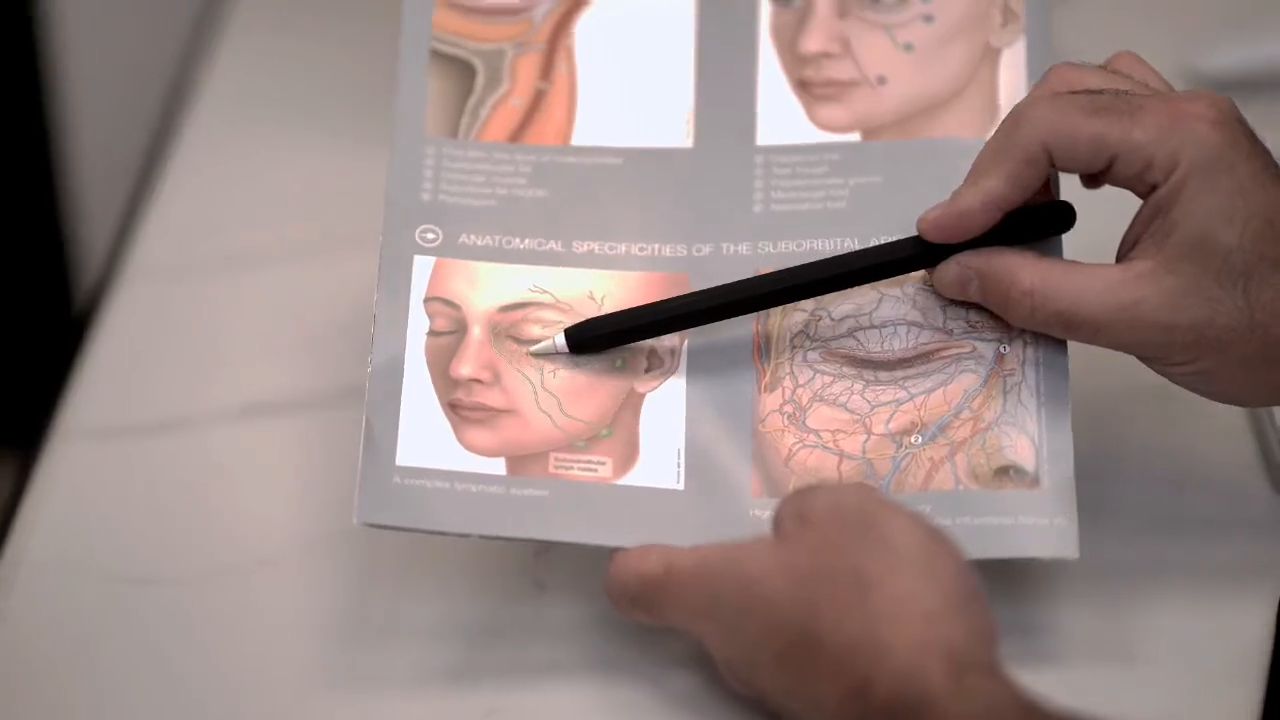
In clinical terms, hooding is not a diagnosis. It is a description of how the upper eyelid area looks. Two people can describe themselves as having identical hooded lids and turn out to have quite different anatomy underneath. A useful way to think about it is that the upper eyelid sits within a small system made up of several parts:
- The eyelid skin, which is among the thinnest skin on the body and loosens with age, sun exposure and genetics.
- The orbicularis muscle, which closes the eye, and the fat pads behind it, particularly towards the inner corner.
- The levator muscle, which lifts the eyelid and attaches to it through a thin, tendon-like sheet.
- The eyebrow and forehead, which rest above the lid and, as they descend, push tissue downwards into the eyelid space.
- The bony orbit and surrounding soft tissue volume, which change subtly over time.
When someone says their lids have become hooded, any one of these, or more commonly a combination, may be responsible. A mirror or a selfie cannot reliably tell them apart, which is why a proper in-person examination is the starting point.
The main causes of hooding, and why the cause decides the treatment
Excess upper eyelid skin (dermatochalasis)
This is the classic reason for upper blepharoplasty. With time, eyelid skin loses elasticity and stretches. The excess folds over the crease and may rest on the lashes. In some people there is also a bulge of fat, most often near the inner corner of the eye, which adds fullness. When the brow is sitting in a reasonable position and the eyelid itself opens normally, this pattern tends to be well suited to an upper blepharoplasty.
A low or descending brow (brow ptosis)
The brow does not stay still over a lifetime. As the forehead tissues relax, the outer part of the brow in particular can drop, and the skin it was supporting is pushed into the upper lid. Many people unconsciously raise their eyebrows all day to compensate, which can be a clue: if you relax your forehead completely and the hooding suddenly looks much heavier, the brow may be a significant contributor. Removing eyelid skin in this situation can actually pull the brow down further, because brow skin and eyelid skin are continuous. The more appropriate conversation may be about the brow, either instead of, or alongside, the eyelid.
A drooping eyelid margin (ptosis)
True ptosis is different from hooding. Here the eyelid itself sits too low because the levator muscle or its attachment has weakened or stretched, which can happen with age, long-term contact lens wear, previous eye surgery or, less commonly, nerve or muscle conditions. The tell-tale sign is that the edge of the lid, where the lashes grow, covers more of the coloured part of the eye than it should. Upper blepharoplasty removes skin; it does not tighten the levator. If ptosis is present, a skin-only operation will not correct it and may make it more obvious. Ptosis needs its own assessment and, depending on the cause, may need referral to an oculoplastic specialist or to your GP for investigation, especially if it has appeared suddenly or varies through the day.
Inherited eyelid shape
Some people have had a low or hidden crease since their teens. This may be a family trait or part of their ethnic heritage, and it is not a sign of ageing or a problem that needs fixing. Surgery to alter a lid shape that has always been there is a different and more delicate conversation, because it changes a feature of identity rather than addressing something that has changed. We would always want to understand exactly what someone hopes to alter, and why, before considering it.
Puffiness and swelling from medical causes
Thyroid eye disease, allergies, eczema around the eyes, kidney problems, fluid retention and some medicines can all cause upper lid fullness that comes and goes or progresses. These are medical issues first. Operating without addressing the underlying cause risks a poor outcome, and in thyroid eye disease surgery is usually only considered once the condition has been stable for a significant period, with input from the team managing it.
When upper blepharoplasty is the answer
Upper blepharoplasty removes a measured amount of excess skin from the upper eyelid and, where appropriate, a small amount of muscle or fat. The incision is placed in or near the natural crease so that the scar, once healed, tends to sit within the fold when the eyes are open. The aim is to reduce the overhang, define the crease and, in people whose skin was resting on their lashes, relieve that sense of heaviness.
In general terms, you may be a reasonable candidate if:
- The main problem is loose eyelid skin, with or without some fat fullness, rather than a low brow or a drooping lid margin.
- Your brow sits in a broadly acceptable position when your forehead is relaxed.
- Your eyes are healthy, with no significant dry eye, untreated eye disease or recent eye surgery.
- You are in good general health, do not smoke or are willing to stop around the time of surgery, and any blood pressure or bleeding issues are well controlled.
- You understand that the operation changes the upper eyelid, not the brow, crow's feet or under-eye area.
Upper blepharoplasty is sometimes combined with other procedures when assessment shows more than one contributor, for example a brow procedure where the brow is low, or a facelift where someone is also concerned about the lower face. Combining procedures can mean a single recovery, but it also lengthens the operation and adds to the overall risk, so it is never the default.
Operations at KCC are performed by Dr Hassan Soueid or one of our qualified surgeons, following a doctor-led consultation. Upper eyelid surgery is often carried out under local anaesthetic, sometimes with sedation, though the most appropriate approach for you is discussed at consultation rather than assumed.
When upper blepharoplasty is not the answer
Being honest about who should not have the operation matters as much as explaining who might benefit. Upper blepharoplasty is unlikely to be the right choice, at least on its own, if any of the following apply:
- The brow is the main problem. Removing lid skin when the real issue is a descended brow can leave the eye area looking crowded and may lower the brow further.
- You have ptosis. A skin-only operation does not lift a drooping lid margin.
- You have significant dry eye. Eyelid surgery can make dry eye symptoms worse, usually temporarily but occasionally for longer. If you already use lubricating drops several times a day, this needs careful assessment and sometimes input from an optometrist or ophthalmologist first.
- You have active thyroid eye disease or another unstable eye condition.
- You take blood thinners that cannot safely be paused, or have a bleeding disorder. Bleeding behind the eye is rare but potentially serious.
- Concern about your appearance feels urgent or distressing, or you are hoping to look like someone else. If worry about appearance is affecting daily life, we would rather talk about that openly than proceed with surgery.
- The hooding is mild and the bother is mainly fine, crepey skin. Surgery is a considerable step for a small amount of laxity, and a non-surgical skin approach may be more proportionate.
A consultation that ends with 'not yet' or 'not this operation' is a legitimate outcome, not a failed one.

Non-surgical options: what they can and cannot do
Many people would prefer to avoid surgery, which is entirely reasonable. It is worth being clear, though, that no injection, laser or device removes a fold of genuinely excess skin. Non-surgical treatments work on skin quality, muscle balance or volume, and are most suitable when hooding is mild or when someone is not ready, or not suitable, for an operation.
Anti-wrinkle injections
Anti-wrinkle treatment uses a prescription-only medicine to relax selected muscles. In carefully chosen cases, treating the muscles that pull the brow downwards can allow the outer brow to sit marginally higher for a few months. Any effect is modest and temporary, and if the forehead muscle that holds the brow up is over-treated, hooding can look heavier rather than lighter. This is why we treat brow-area injections as a medical decision requiring assessment, not a quick add-on. Whether it is appropriate for you is something to discuss at consultation.
Laser and energy-based skin treatments
CO2 laser resurfacing and other skin resurfacing approaches aim to improve the texture and quality of thin, crepey eyelid skin, and some may produce a degree of tightening. Endolift, a fibre laser delivered beneath the skin, is sometimes discussed for mild laxity in selected facial areas. These treatments have their own downtime and risks, including redness, swelling and pigment change, and responses vary between individuals. They are not a substitute for blepharoplasty where there is a true overhang of skin.
Dermal fillers
In some faces, volume loss around the brow contributes to it sitting lower or to the upper eye area looking hollow. Small amounts of filler are occasionally used here, but the area is anatomically delicate, close to important blood vessels, and overfilling can make hooding worse. It is very much a case-by-case decision.
For some patients a sensible plan is to work on skin quality now and revisit surgery later. For others, especially where skin rests on the lashes, non-surgical options are unlikely to offer meaningful benefit and may simply delay more appropriate treatment.
What the assessment at our Kensington clinic involves
Consultations at KCC are doctor-led and take place at our clinic in Kensington, West London. Because the key question with hooding is why it is happening, the assessment is detailed. It typically covers:
- Your concerns in your own words. What bothers you, when you notice it, and what you would like to change. This often reveals whether the issue is skin, brow or something else.
- Eye and medical history. Dry eye, contact lens use, previous eye or laser surgery, thyroid problems, blood pressure, medicines and supplements that affect bleeding, smoking and general health.
- Examination of the brow and lid together. Brow position with the forehead relaxed, the height of the lid margin relative to the pupil, the amount of skin excess, fat fullness, crease position, eyelid closure and symmetry between the two sides. Most people already have some asymmetry, and it is better to point it out before surgery than after.
- Vision and comfort. Whether the hooding affects your field of view, reading or driving. If it significantly obstructs vision, it may be worth speaking to your GP, as functional eyelid surgery is sometimes available on the NHS subject to local criteria.
- A frank discussion of options. Surgical, non-surgical, combined, or doing nothing for now, with the risks and recovery of each.
You can read more about Dr Hassan Soueid, our Founder and Medical Director, who leads the clinic's medical approach. KCC is registered with the Care Quality Commission. We are also introducing HonestFace, our own iPad app for digital consultation forms, consent signing and secure patient records, so that paperwork can be completed clearly and stored securely as part of your care.
If surgery is appropriate, there is always a cooling-off period between consultation and operation. Consent is a process rather than a signature, and you are encouraged to go away, reflect and come back with questions.
Risks, recovery and realistic expectations
Upper blepharoplasty is a common operation, but it is still surgery on a sensitive area. Potential risks include:
- Bruising and swelling, which are expected and usually settle over the first couple of weeks, though subtle swelling can persist longer.
- Dry, gritty or watery eyes, usually temporary but occasionally longer lasting.
- Difficulty closing the eyes fully in the early period, particularly during sleep.
- Asymmetry, or a crease that heals at a slightly different height to the one planned.
- Scarring, which usually fades within the crease but can occasionally be raised, visible at the outer end or slow to settle.
- Removing too little skin, leaving residual hooding, or rarely too much, which can affect eyelid closure.
- Infection, bleeding and, rarely, bleeding behind the eye, which is a surgical emergency that threatens vision.
- The possibility of needing further surgery.
Recovery usually involves cold compresses, keeping the head elevated, avoiding strenuous exercise and heavy lifting for a period, avoiding eye make-up and contact lenses until advised, and attending follow-up. Many people plan time away from work and social commitments while visible bruising settles. Our upper blepharoplasty recovery timeline goes through this stage by stage.
On expectations: the operation changes the eyelid. It does not stop ageing, and your skin and brow will continue to change over the years. It will not treat crow's feet, dark circles or lower lid bags, and it will not change the quality of the remaining skin. Healing varies between people, and it can take several months for the eyelid and scar to settle fully. Our aim at consultation is to make sure you understand all of this before you decide anything.
Booking your consultation
If you have hooded eyelids and are wondering whether upper blepharoplasty is right for you, the most useful first step is an in-person assessment rather than a decision based on online comparisons. At our Kensington clinic in London we will look at the brow, lid and skin together, explain what we think is driving the hooding, and talk through surgical and non-surgical options, including the option of not treating at all.
Please bring a list of your medicines, any relevant eye history and your glasses or contact lens prescription if you have one. You are welcome to bring someone with you. There is no obligation to proceed, and if we think another professional, such as your GP, an optometrist or an oculoplastic specialist, is better placed to help, we will tell you.
You can book a consultation online or contact the clinic team to arrange a time that suits you.
Frequently asked
Questions we get asked
- How can I tell whether my hooding comes from eyelid skin or from my brow?
- A simple clue is to relax your forehead completely and look in the mirror. If the hooding becomes much heavier, your brow may be contributing, because many people raise their eyebrows unconsciously to compensate. This is only a rough guide, though. A proper in-person examination of the brow, lid margin and skin together is the reliable way to tell, and it often shows a combination of causes.
- Can non-surgical treatments get rid of hooded eyelids?
- Non-surgical treatments cannot remove a fold of genuinely excess skin. Laser and resurfacing treatments aim to improve skin quality and may offer some tightening in mild cases, and carefully placed anti-wrinkle injections can occasionally lift the outer brow slightly for a few months. These options suit mild hooding or people not ready for surgery, and whether any is appropriate is decided at consultation.
- Will upper blepharoplasty lift my eyebrows?
- No. Upper blepharoplasty removes excess eyelid skin and sometimes a small amount of muscle or fat. It does not raise the brow, and in some people removing lid skin can draw a low brow down further. If the brow is a significant cause of your hooding, a brow procedure may need to be discussed instead of, or alongside, eyelid surgery.
- Is upper blepharoplasty available on the NHS?
- Eyelid surgery for cosmetic reasons is generally not available on the NHS. If your hooding significantly obstructs your vision, functional eyelid surgery is sometimes funded, subject to local criteria and assessment. Your GP is the right person to speak to about this, and we may suggest it at consultation if your vision appears to be affected.
- Who performs upper blepharoplasty at KCC?
- Upper blepharoplasty at KCC is performed by Dr Hassan Soueid or one of our qualified surgeons. Every patient first has a doctor-led consultation at our Kensington clinic in London, where the cause of the hooding, the risks and the alternatives are discussed, followed by a cooling-off period before any surgery is booked.