


Skin · 11 min read
How Long Do Dermal Fillers Last? Areas and Longevity in London
By Dr Hassan Soueid · GMC 6107783 · Medical Director, Kensington Cosmetic Clinic
Published 22 November 2026
TL;DR. Hyaluronic acid dermal fillers tend to fade gradually over many months rather than vanishing on a set date, and how long they last depends on the area treated, the product chosen, the amount used and your own tissues, so any single number you see quoted should be treated as a rough guide, not a promise.
Why there is no single answer to "how long do fillers last?"
It is one of the most common questions we hear in clinic in Kensington, and it is a fair one. If you are going to invest time and money in a treatment, you want to know what you are signing up for. The honest answer is that dermal filler longevity is a range rather than a fixed figure, and that range shifts depending on where in the face the filler is placed, which product is used, how deep it sits and how your body handles it.
You will see confident numbers online and on social media, often presented as if they apply to everyone. In reality, two people treated in the same area with the same product can notice very different timelines. One may feel their lips have softened within a few months, while another still sees a subtle difference much later. Neither is unusual, and neither necessarily means anything went wrong.
This guide takes a different angle from our other filler articles. Rather than focusing on how a particular area is treated, it looks at what actually happens to filler over time, why different parts of the face behave differently, what tends to shorten or extend longevity, and how to think about maintenance in a way that keeps your face looking like your own. If you would like an overview of the treatment itself first, our dermal fillers page covers the basics.
What actually happens to filler after it is injected
Most dermal fillers used in UK aesthetic practice today, and the type discussed throughout this article, are based on hyaluronic acid. Hyaluronic acid is a sugar molecule that occurs naturally in your skin and connective tissue, where it helps hold water and provide volume and suppleness. In its natural form, your body turns it over within days. To make it last longer as a filler, manufacturers link the molecules together, a process called cross-linking, which makes the gel more resistant to being broken down.
Once injected, the filler goes through a few broad stages. In the first days there is usually some swelling from the injections themselves and from the gel drawing in water. This can make an area look fuller than it will eventually settle, which is why we generally advise waiting around two weeks before judging the outcome. After that, the filler settles and integrates into the surrounding tissue, and this is the point at which most people feel they are seeing the real effect.
From then on, the body slowly breaks the filler down. Natural enzymes, including your own hyaluronidase, and normal metabolic processes gradually degrade the gel. This is not a sudden event. Most people describe a slow softening, often so gradual that they only notice it when comparing how they look now with how they felt a few months earlier.
There is one further point that rarely appears in marketing. Some imaging studies have suggested that filler material can remain in the tissues for longer than its visible effect lasts. In other words, the fact that you can no longer see a difference does not always mean all the product has gone. This matters a great deal when deciding how often to top up, which we come back to below.
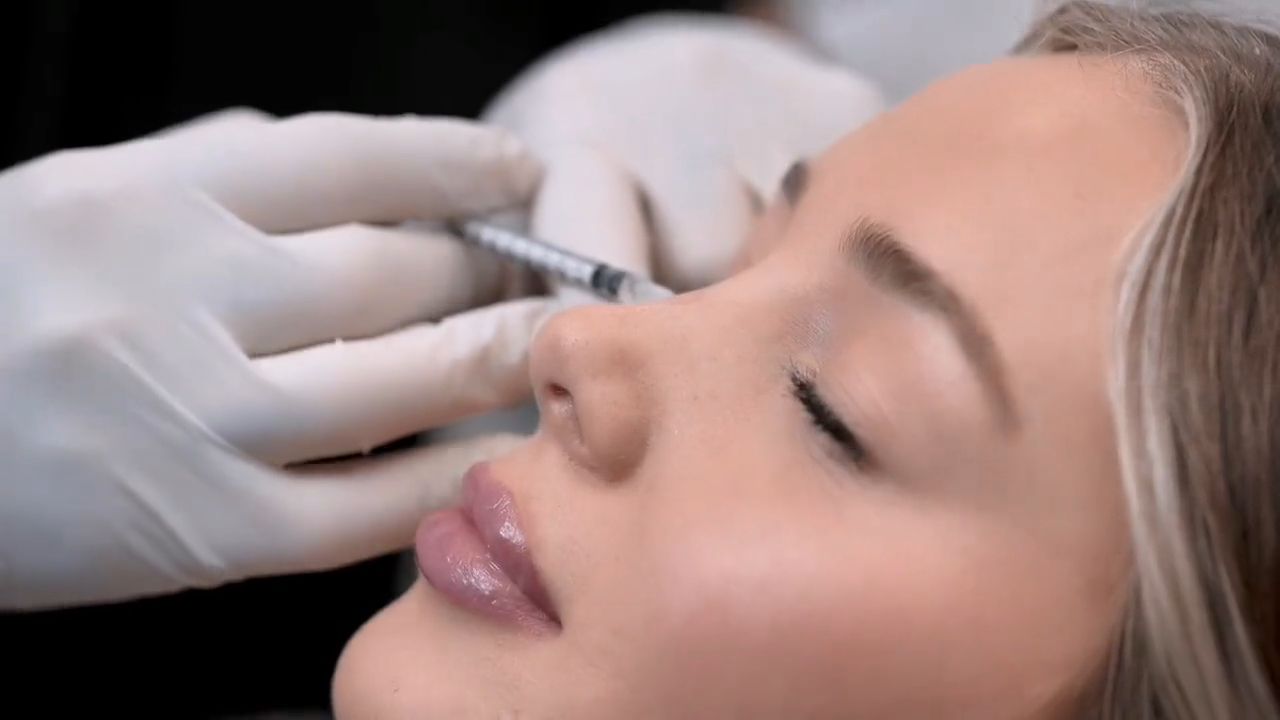
Area by area: how longevity tends to differ
Product information from manufacturers commonly quotes durations ranging from several months to more than a year, depending on the product and the area. Those figures come from clinical studies in selected groups of people, so they are a useful reference rather than a prediction for any individual. What is more helpful in practice is understanding why certain areas tend to sit at different points in that range.
Lips
The lips are among the most mobile parts of the face. You use them constantly to talk, eat, drink and express yourself, and they have a rich blood supply. Lip fillers are also usually softer, more flexible gels so that the lips still look and move naturally. All of this tends to mean that lip filler is one of the shorter-lasting treatments, and many people notice softening sooner here than anywhere else. Lips are also the area where people are most tempted to top up too often, which can gradually change the shape in a way that no longer looks natural. Our article on lip filler and natural-looking outcomes goes into this in more detail.
Cheeks and midface
Cheek filler is usually placed deeper, often close to the bone, using a firmer gel designed to provide structure and support. The deeper tissues move less than the lips, and firmer products are generally more resistant to breakdown. As a result, cheek treatment often lasts longer than lip treatment. Because the midface supports the tissues below it, subtle cheek support can sometimes soften the appearance of lines lower down, which is one reason we often assess the cheeks before considering the folds around the mouth.
Jawline and chin
Jawline and chin treatments use some of the firmest, most structural gels, again placed deep and close to bone. These areas are relatively stable and tend to sit towards the longer end of the range. That said, jawline treatment often involves larger volumes, and the overall shape depends on how the filler sits alongside your own bone structure, muscle and skin. A strong, defined jaw may suit some faces and look out of place on others.
Tear troughs and under-eyes
The under-eye area moves relatively little and filler here is usually used in small amounts, so it can persist for a surprisingly long time. That can be a benefit, but it is also a reason for caution. The skin is thin, the area is prone to fluid retention, and filler placed too superficially can cause a bluish tinge or puffiness that lingers. Not everyone with dark circles or hollowing is a good candidate, and for some people eyelid surgery is a more appropriate route. We compare the two in our guide to tear trough filler versus blepharoplasty.
Nasolabial folds and marionette lines
The folds running from the nose to the mouth, and the lines from the corners of the mouth towards the chin, sit in highly mobile areas, so longevity here is variable. More importantly, these lines are often a consequence of changes elsewhere, such as loss of midface support or skin laxity. Filling the fold directly can help in selected people, but repeatedly filling it without addressing the underlying cause can lead to a heavy, unnatural look around the mouth.
Temples and nose
Temple filler is placed deep in an area with little movement, so it can last reasonably well. Non-surgical nose reshaping with filler can also be long-lasting, but the nose carries a higher risk of serious vascular complications than many other areas, and filler can only add volume, not reduce size or improve breathing. For people wanting a lasting structural change, surgical rhinoplasty is a very different proposition with its own risks and recovery, and it is worth understanding both before deciding.
What can shorten or extend how long filler lasts
Beyond the area treated, several factors influence longevity. Some are within your control, many are not.
- The product. Fillers differ in how firm, cohesive and cross-linked they are. A firmer, more structural gel is generally chosen for deep support and tends to last longer than a softer gel designed for lips or fine lines. Choosing the right product for the area matters more than choosing the longest-lasting one.
- The amount and placement. Deeper placement and larger volumes tend to persist longer, but more is not automatically better. Overcorrecting to make a treatment last longer is one of the more common routes to an unnatural appearance.
- Movement. Areas that move a lot tend to break filler down faster than those that are relatively still.
- Your own metabolism and tissues. People genuinely vary in how quickly they break down hyaluronic acid. There is no reliable test to predict this in advance, which is why your experience after a first treatment is often a more reliable guide than any published figure.
- Age and skin quality. As we age, we lose bone, fat and collagen support. Filler sits within that changing framework, so the effect can appear to fade partly because the face around it continues to change.
- Weight changes. Significant weight gain or loss alters facial volume and can change how filler looks, sometimes making a previously balanced treatment look too full or too hollow.
- Sun exposure and smoking. These affect skin quality and collagen over time. Their direct effect on filler breakdown is less clear, but they certainly influence how the face ages overall.
- Exercise. You will often read that very active people metabolise filler faster. The evidence for this is limited and largely anecdotal, so we would not suggest changing a healthy exercise routine to make filler last longer.

Why how it looks over time matters more than how long it lasts
Many people judge filler by asking how long until it wears off. A more useful question is how the face looks at each stage, and whether repeated treatments are keeping things in proportion.
Because filler softens gradually, and because some product may remain even after the visible effect has faded, there is a real risk of accumulation if top-ups are booked on a fixed schedule rather than in response to genuine need. Over several years, small additions layered on top of residual product can stretch tissues, blur natural contours and create the slightly overfilled appearance that many people are keen to avoid. Filler can also occasionally move away from where it was placed, particularly when large volumes are used in mobile areas.
For this reason, we prefer to review rather than simply repeat. At a follow-up appointment, the doctor will look at how the area has settled, compare it with your goals and your face as a whole, and only then discuss whether anything further is needed. Sometimes the honest recommendation is to wait. Sometimes it is to treat a different area that is now affecting the balance of the face. Occasionally it is to dissolve old product before doing anything else.
It also helps to think in terms of a long-term plan rather than isolated appointments. A modest, well-judged treatment maintained thoughtfully will usually age more gracefully than a larger one repeated at the first hint of softening. If you find yourself wanting top-ups more and more often, that is worth discussing openly, because it can be a sign that filler is no longer the right tool for what is bothering you.
When filler is not the right answer
Dermal fillers are good at restoring or adding volume in carefully chosen places. They are not good at everything, and using them for the wrong problem is a common reason people feel treatment does not last or never quite looks right.
Filler does not tighten loose skin. If the main concern is sagging along the jaw and neck, adding volume can make the lower face look heavier rather than lifted, and a surgical option such as a facelift may be more appropriate for some people, with all the recovery, scarring and risk that surgery involves. Similarly, heavy or hooded upper eyelid skin is not something filler can correct; an upper blepharoplasty addresses excess skin directly.
Where someone wants longer-lasting volume and has suitable donor fat, fat transfer is sometimes discussed. It is a surgical procedure with its own recovery, and the proportion of transferred fat that survives varies between individuals, so it should not be thought of as a permanent filler. For lines caused mainly by muscle movement, such as frown lines, anti-wrinkle injections work in a different way and may be more suitable, which is something to explore in consultation. For texture, fine lines and pigmentation, treatments such as skin resurfacing or microneedling target skin quality rather than volume.
Filler is also not suitable for everyone. We would usually advise against treatment if you are pregnant or breastfeeding, have an active skin infection or cold sore in the area, have certain autoimmune or bleeding conditions, or have previously reacted to filler. We also take time to understand your motivation. If someone feels deeply distressed about a feature that others barely notice, or is seeking repeated treatment without ever feeling satisfied, more filler is unlikely to help, and we will say so.
Risks, dissolving and planning maintenance safely
Dermal fillers are often described as low-risk, but they are medical treatments and should be approached as such. Common, usually short-lived effects include swelling, bruising, tenderness and redness at injection sites. Some people notice small lumps or unevenness, which may settle by themselves or need further management.
Less commonly, infection or delayed inflammatory reactions can occur, sometimes weeks or months after treatment. The most serious risk is vascular occlusion, where filler blocks or compresses a blood vessel. This is rare, but it can lead to skin damage and, very rarely, to loss of vision. Knowledge of facial anatomy, careful technique, appropriate product choice and the ability to recognise and treat complications promptly are central to reducing these risks, which is one reason we believe filler treatment should be doctor-led.
A practical advantage of hyaluronic acid fillers is that they can usually be dissolved using an enzyme called hyaluronidase, which is a prescription-only medicine in the UK. Dissolving can be used in an emergency, to correct lumps or migration, or to reset an area before a fresh, more conservative plan. It is not without risk; some people react to hyaluronidase, and it may temporarily affect your own natural hyaluronic acid, so we discuss this carefully if it is needed.
When it comes to maintenance, a sensible approach usually involves a review once the initial treatment has settled, then follow-ups based on how your face is actually changing rather than a fixed calendar. If you have had filler elsewhere in London or abroad, keep a note of what was used and where, as this history helps whoever treats you next make safer decisions.
Booking your consultation
If you are considering dermal fillers, or wondering whether a previous treatment has faded or simply needs reviewing, a consultation is the sensible place to start. At Kensington Cosmetic Clinic, consultations are doctor-led, and treatments are performed by Dr Hassan Soueid or one of our qualified doctors. Dr Hassan Soueid is a GMC-registered doctor and the clinic's Founder and Medical Director, and the clinic is registered with the Care Quality Commission.
During your consultation we will talk through your concerns, examine the area, review your medical history and any previous filler, and explain honestly whether filler is likely to help, how long it might reasonably be expected to last in your case, and what the risks are. If another approach would suit you better, or if the right choice is no treatment at all, we will tell you. There is no expectation to book treatment on the day, and you are welcome to take time to think it over.
We are also introducing HonestFace, our own iPad app for digital consultation forms, consent signing and secure patient records, designed to make the paperwork side of your visit simpler.
Our clinic is in Kensington, within easy reach of central and west London. If you would like to discuss dermal fillers with one of our doctors in London, you can book your consultation online.
Frequently asked
Questions we get asked
- Do lip fillers wear off faster than cheek fillers?
- Often, yes, although it varies between individuals. The lips move constantly, have a rich blood supply and are usually treated with softer gels, so many people notice softening there sooner. Cheek filler is typically a firmer gel placed deeper, near the bone, where there is less movement, so it tends to persist longer. Your own experience after a first treatment is usually a more reliable guide than any general figure.
- Does filler ever disappear completely?
- Hyaluronic acid filler is gradually broken down by the body, but this happens slowly, and some imaging studies have suggested material can remain in the tissues for longer than its visible effect lasts. That is why we review the area before adding more, rather than topping up on a fixed schedule, to reduce the risk of gradual accumulation and an overfilled look.
- Is there anything I can do to make my filler last longer?
- The biggest influences are the area treated, the product chosen, how deeply it is placed and your own metabolism, most of which are outside your control. Protecting your skin from the sun, not smoking and keeping your weight stable support how your face ages overall. Claims that avoiding exercise makes filler last longer are largely anecdotal, so we would not recommend changing a healthy routine.
- How often should I have filler top-ups?
- There is no fixed interval that suits everyone. We prefer to see you once the initial treatment has settled and then plan follow-ups based on how your face is actually changing. Sometimes the honest advice is to wait, to treat a different area, or occasionally to dissolve old product first. If you feel you need top-ups more and more often, it is worth discussing whether filler is still the right approach.
- Can dermal fillers be dissolved if I am unhappy with them?
- Hyaluronic acid fillers can usually be dissolved with an enzyme called hyaluronidase, which is a prescription-only medicine in the UK. It can be used in an emergency, to correct lumps or migration, or to reset an area. It carries its own risks, including allergic reaction, so it is assessed and discussed carefully at a doctor-led consultation before use.