

Skin · 10 min read
Morpheus8 in London: what RF microneedling can and cannot do
By Dr Hassan Soueid · MD, FRCS · Lead Surgeon, Kensington Cosmetic Clinic
Published 25 June 2026
TL;DR. Morpheus8 is a well-evidenced radiofrequency microneedling device that can meaningfully improve skin texture, fine lines and mild laxity, but it is not a surgical substitute and will not deliver the structural lift that a facelift provides.
What exactly is Morpheus8?
Morpheus8 is a fractional radiofrequency (RF) microneedling system made by InMode. It works by driving an array of ultra-fine gold-tipped needles into the skin to a precisely controlled depth, then discharging RF energy at the tip of each needle. The combination does two things simultaneously: the needles create micro-injuries that trigger the skin's natural wound-healing cascade, and the RF energy heats the deeper dermis and the superficial fat layer beneath it, causing collagen fibres to contract and stimulating the production of new collagen and elastin over the following weeks and months.
What distinguishes Morpheus8 from standard microneedling devices is that depth and energy can be adjusted independently, allowing a trained clinician to target different tissue layers in the same session. The standard handpiece reaches up to 4 mm, while the Morpheus8 Body handpiece can reach 7 mm, making it suitable for areas with thicker subcutaneous tissue such as the abdomen, inner thighs and upper arms. In a clinic setting in London, the face, neck, décolletage and body are the most commonly treated areas.
The technology is not new. Fractional RF microneedling has been studied in peer-reviewed literature since the early 2010s, and Morpheus8 specifically has accumulated a reasonable body of clinical data supporting modest but measurable improvements in skin laxity, acne scarring, pore size and overall skin quality. The key word is modest. Understanding that distinction upfront is essential to having a satisfying experience with the treatment.
What Morpheus8 can realistically achieve
When performed correctly on an appropriate candidate, Morpheus8 can deliver a range of genuine improvements. It is important to frame these as improvements rather than transformations, because the marketing language that surrounds many energy-based devices in London and elsewhere tends toward the dramatic, and that does patients a disservice.
Skin texture and tone. This is arguably where Morpheus8 performs most consistently. Patients with enlarged pores, mild acne scarring, uneven texture or early photoageing often notice a meaningful smoothing effect after a course of treatments. The micro-injury response encourages surface skin cell turnover, while the RF component improves the underlying dermal architecture.
Fine lines and early laxity. Patients in their late thirties to mid-fifties with mild to moderate skin laxity, particularly around the lower face and neck, can see genuine tightening. This is not the same as surgical tightening, but for someone who is not yet ready for or interested in surgery, it can represent a worthwhile improvement. Combining Morpheus8 with dermal fillers or other adjunct treatments is something our clinicians assess on a case-by-case basis, as layering treatments without proper medical oversight carries its own risks.
Acne scarring. Atrophic (depressed) acne scars respond reasonably well to fractional RF microneedling. Multiple sessions are typically required, and results depend heavily on scar depth, skin type and how the treatment is calibrated. Ice-pick scars tend to be more resistant than rolling or boxcar scars.
Stretch marks and body skin laxity. The body handpiece can address mild stretch marks and loose skin on the abdomen or thighs, though results here are more variable and should not be compared with what surgical procedures such as liposuction or abdominoplasty can achieve in terms of contouring or excess skin removal.
Hyperhidrosis. Some evidence exists for RF microneedling reducing excessive sweating by targeting sweat glands, though this is a secondary application and not the primary reason most patients seek the treatment.
What Morpheus8 cannot do
This section matters just as much as the one above, and any clinic in London that glosses over it is not serving you well.
It cannot replace surgery for significant laxity. If you have substantial skin redundancy on the neck, heavy jowling or significant brow ptosis, Morpheus8 will not produce the structural correction that a surgical procedure would. The RF energy tightens existing collagen and stimulates new collagen production, but it cannot reposition descended facial structures, remove excess skin or address the deep SMAS layer in the way that a surgical facelift does. Patients who come to us hoping Morpheus8 will give them a surgical outcome are gently redirected toward a more appropriate conversation about their options.
It cannot remove fat in any meaningful volume. Some promotional material implies that Morpheus8 can significantly reduce submental fat or body fat. The RF energy at the depths used does cause some disruption to superficial adipocytes, but the effect on fat volume is modest at best. If fat reduction is the primary goal, a different treatment pathway is more appropriate.
It cannot correct deep structural volume loss on its own. Age-related volume loss in the midface, temples and tear troughs is a structural issue. Morpheus8 improves the quality of the overlying skin but does not replace lost volume. That typically requires a separate conversation about volumising treatments.
It cannot guarantee uniform results across all skin types. Darker skin tones carry a higher risk of post-inflammatory hyperpigmentation (PIH) with any thermal or ablative treatment. This does not mean Morpheus8 is contraindicated for patients with Fitzpatrick skin types IV to VI, but it does mean the treatment parameters must be adjusted carefully and the clinician must have specific experience with darker skin. Rushing into treatment with an inexperienced provider is one of the most common causes of adverse outcomes in London's busy aesthetics market.
It is not pain-free. Topical anaesthetic cream is applied before treatment and significantly reduces discomfort, but Morpheus8 is not a comfortable procedure. Most patients describe a sensation of heat and pressure. The deeper settings used on the neck and body tend to be more uncomfortable than facial settings. Honest pre-treatment counselling about this is important.
Who is a good candidate?
The ideal Morpheus8 candidate is someone with mild to moderate concerns rather than advanced ageing changes or significant structural issues. More specifically, good candidates tend to be patients in their mid-thirties to late fifties who are noticing early skin laxity, textural changes or mild jowling but who are not yet at the stage where surgery would be the most logical recommendation. They should have realistic expectations, be in good general health, and not have active skin infections, certain autoimmune conditions or implanted electronic devices in the treatment area.
Patients who are pregnant or breastfeeding should not undergo the treatment. Those with a history of keloid scarring should be assessed very carefully. Isotretinoin use within the past six months is generally considered a contraindication, as the drug affects wound healing. A thorough medical history and face-to-face consultation is not optional; it is the foundation of safe treatment.
Younger patients in their late twenties or early thirties sometimes enquire about Morpheus8 for preventative purposes. There is some logic to this from a collagen-stimulation standpoint, but the risk-benefit calculation is different when the baseline skin quality is already good. A consultation with our clinical team in Kensington will help determine whether the treatment is genuinely warranted or whether a less invasive option such as microneedling would be more proportionate.
The treatment process and recovery
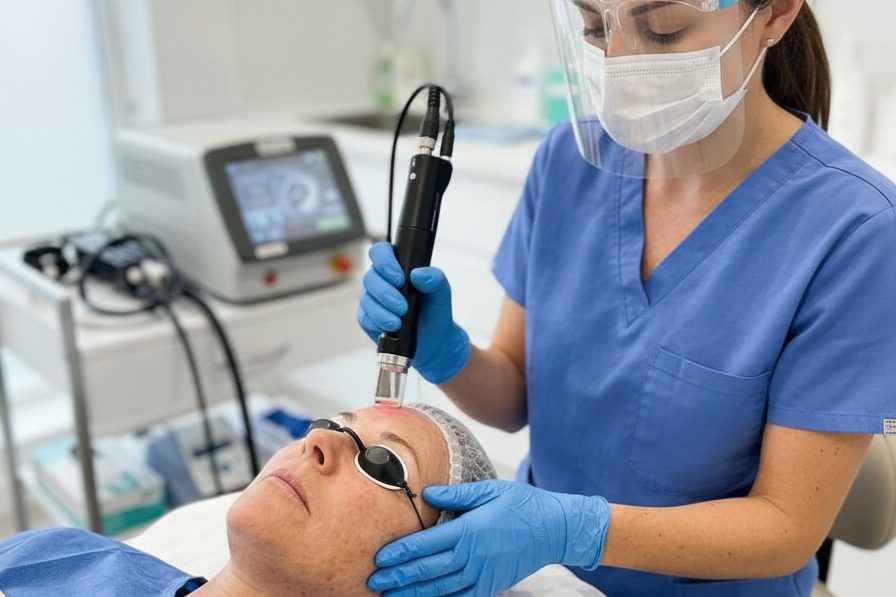
A typical Morpheus8 session at our Kensington clinic begins with a thorough cleanse of the skin followed by the application of topical anaesthetic cream, which is left in place for approximately 30 to 45 minutes. The treatment itself usually takes between 30 and 60 minutes depending on the area being treated. The clinician will use different tip configurations and depth settings across the treatment zone, adjusting parameters based on the specific anatomy and concerns of each area.
Immediately after treatment, the skin appears red and there is often mild swelling, particularly around the eyes and cheeks. Most patients describe the skin as feeling warm and tight, similar to mild sunburn. This acute redness typically settles within 24 to 72 hours, though some patients experience prolonged redness or mild bruising for up to a week. Small pinpoint marks from the needle entry sites are visible for a few days and should not be picked at or covered with heavy make-up during the initial healing period.
Most patients can return to work within two to three days, though this depends on individual healing and the intensity of the treatment performed. Sun protection is non-negotiable during the recovery period and for several weeks afterwards. The skin is more vulnerable to UV damage after any resurfacing treatment, and failure to protect it adequately can lead to pigmentation changes that are difficult to reverse.
A course of three treatments spaced four to six weeks apart is a common starting protocol for facial concerns, though this varies by individual. Results are not immediate. The collagen remodelling process takes time, and the most noticeable improvements are typically seen two to three months after the final session in a course. Maintenance treatments once or twice a year are often recommended to sustain results.
Risks and how we manage them
No aesthetic treatment is without risk, and a doctor-led clinic in London should be transparent about this rather than minimising it to secure bookings.
The most common adverse effects are temporary and include redness, swelling, bruising and mild skin sensitivity. These are expected and resolve without intervention in the majority of cases. Less common but more significant risks include post-inflammatory hyperpigmentation, particularly in darker skin tones, burns from incorrect energy settings, infection if aftercare instructions are not followed, and prolonged erythema. Very rarely, patients experience textural changes or scarring, which is more likely when treatment is performed at excessive energy levels or on skin that was not properly assessed beforehand.
The risk of serious adverse outcomes is substantially reduced when treatment is performed by a qualified medical professional who understands facial anatomy, has experience calibrating the device for different skin types, and conducts a proper pre-treatment assessment. At our clinic in London, all energy-based treatments are overseen by our medical director. You can read more about our clinical approach on the Dr Hassan page.
We also want to be clear that combining Morpheus8 with other active treatments such as chemical peels, laser resurfacing or injectables in the same session requires careful clinical judgement. Stacking treatments without appropriate spacing and oversight increases the risk of complications and is not something we do without a thorough individual assessment.
How Morpheus8 fits within a broader treatment plan
One of the most useful ways to think about Morpheus8 is as one tool within a broader approach to skin health and facial ageing rather than a standalone solution. For many patients in London, the most effective outcomes come from combining Morpheus8 with complementary treatments that address different aspects of the ageing process.
Skin quality, for instance, can be further supported by treatments that address pigmentation and surface irregularities. Our CO2 laser treatment works at a different depth and mechanism to Morpheus8 and may be more appropriate for certain surface concerns, while treatments targeting pigmentation can complement the textural improvements Morpheus8 provides. The sequencing and spacing of these treatments matters enormously and should always be guided by a clinician who can assess your skin in person rather than by a generic protocol.
For patients with more advanced laxity who are not ready for surgery, combining Morpheus8 with other non-surgical tightening modalities may extend the window before surgical intervention becomes the most appropriate recommendation. However, we are always honest when a patient's concerns have moved beyond what non-surgical treatments can reasonably address. Recommending a treatment that will not deliver meaningful benefit is not in anyone's interest.
Booking your consultation
If you are considering Morpheus8 and are based in or visiting London, the most important first step is a thorough, unhurried consultation with a qualified clinician who can assess your skin in person, discuss your goals honestly and explain all the options available to you, including those that might serve you better than Morpheus8.
At our clinic in Kensington, consultations are conducted by our medical team and are designed to give you the information you need to make a genuinely informed decision. We do not operate a high-volume, high-pressure booking model. We would rather you leave a consultation understanding your options clearly than commit to a treatment that is not right for you.
To arrange a consultation, please visit our booking page and select the aesthetics consultation option. We look forward to speaking with you.
Frequently asked
Questions we get asked about EnerPeel®
- How many Morpheus8 sessions will I need?
- Most patients undergo a course of three sessions spaced four to six weeks apart for facial concerns. Body treatments may follow a similar protocol. The exact number depends on your individual skin condition, the area being treated and the results achieved after each session. Your clinician will reassess at each appointment and adjust the plan accordingly. Maintenance sessions once or twice a year are often recommended to sustain improvements over the longer term.
- Is Morpheus8 safe for darker skin tones?
- Morpheus8 can be used on darker skin tones, including Fitzpatrick types IV to VI, but it requires careful adjustment of treatment parameters and a clinician with specific experience in this area. The primary risk for darker skin is post-inflammatory hyperpigmentation, where the skin produces excess melanin in response to the thermal injury. This risk is significantly reduced when treatment settings are conservative and appropriate pre- and post-treatment skincare protocols are followed. A thorough assessment before treatment is essential.
- How long does it take to see results from Morpheus8?
- Results from Morpheus8 are not immediate because the primary mechanism is collagen remodelling, which takes time. Most patients begin to notice improvements in skin texture and firmness from around four to six weeks after treatment, with more significant changes becoming apparent at two to three months after completing a course. The full benefit of a treatment course is typically visible at the three-month mark. Individual results vary depending on age, skin condition, lifestyle factors and the number of sessions completed.
- Can Morpheus8 be combined with other treatments?
- Morpheus8 can be part of a broader treatment plan that includes other procedures, but the sequencing and spacing of treatments must be carefully managed by a qualified clinician. Combining Morpheus8 with injectables, laser treatments or chemical peels in the same session or too close together increases the risk of adverse reactions. At our clinic, we assess each patient individually and create a structured plan that allows adequate healing time between different modalities. We do not recommend following generic combination protocols found online.
- What is the difference between Morpheus8 and standard microneedling?
- Standard microneedling creates micro-injuries in the skin using fine needles to stimulate the wound-healing response and collagen production. Morpheus8 does the same but adds radiofrequency energy delivered directly through the needle tips into the deeper dermis and superficial fat layer. This additional thermal component allows Morpheus8 to target deeper tissue structures and achieve a degree of tissue contraction that standard microneedling cannot. The trade-off is that Morpheus8 involves more downtime, greater discomfort and a higher risk profile, which is why the clinical assessment before treatment is so important.