

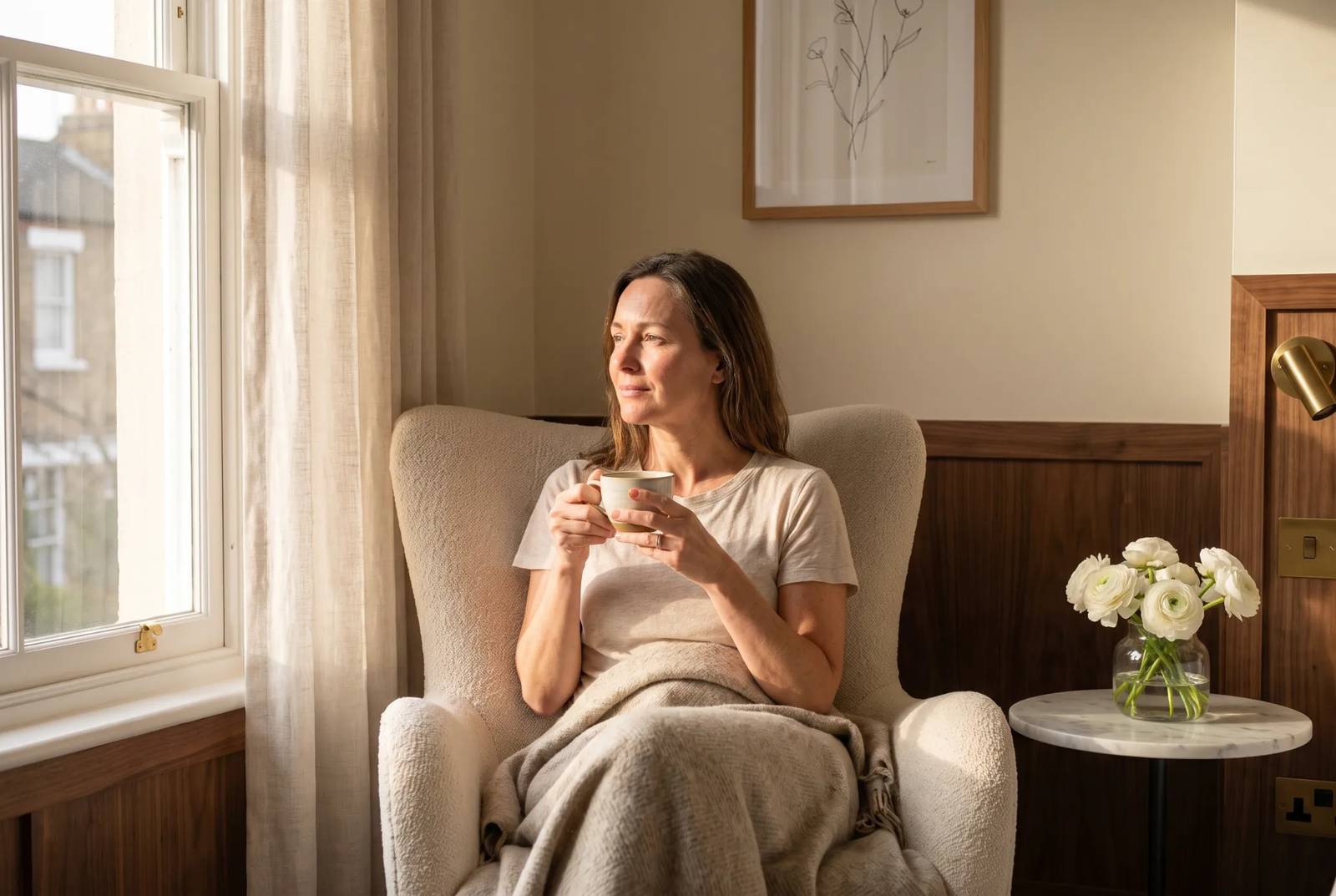
Surgical · 11 min read
Recovering at Home After Cosmetic Surgery: The First Two Weeks
By Dr Hassan Soueid · GMC 6107783 · Medical Director, Kensington Cosmetic Clinic
Published 21 November 2026
TL;DR. The first two weeks of recovery after cosmetic surgery at home are mostly about rest, gentle and frequent walking, steady pain relief and spotting warning signs early, and a low patch around days five to ten is common and usually passes.
Much of your recovery happens without a doctor or nurse in the room. With good preparation it can be calm and manageable. This guide walks through the first fortnight in order, from preparing your home to knowing when a symptom is ordinary and when it needs a phone call. It is general information only. Your surgeon's written instructions always come first, because recovery depends on the procedure, your health and how your body heals. Nothing here predicts how your own recovery will go.
Setting up your home before surgery
The most useful recovery work happens in the week before your operation. Once you are home, sore and tired, even small jobs such as finding a charger or reaching a high shelf can feel like a lot.
Arrange a carer. After a general anaesthetic or sedation you need a responsible adult with you for at least the first 24 hours. Many patients find that two or three days of help makes a real difference. Your carer needs no medical training. They should be able to help you to the bathroom, prepare simple food, keep track of medication times and call for help if something seems wrong. Check they genuinely have the time free rather than planning to pop in between other commitments.
Stairs and sleeping. If your bedroom and bathroom are on different floors, consider sleeping downstairs for the first few nights. Many operations call for sleeping with your upper body raised, so gather extra pillows or a wedge. Some patients prefer a recliner chair at first. Clear loose rugs and cables, and put a night light on the route to the toilet.
A recovery station. Within arm's reach of where you will rest, keep water, your medication and a written schedule, your phone and charger, tissues and light snacks. Add the clinic's contact numbers, including the out-of-hours number you will be given. Stock easy meals, fibre-rich food and plenty to drink, as constipation is common after surgery. Loose, front-fastening clothing is far easier than anything pulled over your head.
Children and pets. After abdominal or breast surgery you will usually be asked not to lift anything heavy for several weeks, and a toddler counts. Arrange help with the school run, bath times and night wakings. Explain to older children that you need gentle cuddles for a while. Dogs that jump up or pull on the lead need someone else to walk them, and pets should be kept off your bed and away from dressings.
Health preparation. Stop smoking and nicotine products as instructed, because nicotine reduces blood flow to healing skin. Tell us about every medicine and supplement you take, as some affect bleeding. If you are having a tummy tuck or combined surgery, all of this matters even more, because the restrictions last longer.
Getting home from Kensington on the day
You cannot drive yourself home, and travelling alone on public transport is not appropriate after an anaesthetic. Most patients are collected from our Kensington clinic by their carer, by car or taxi. Before you leave, the team will go through your medication, dressings and any drains. They will also explain how to wear a compression garment if you have one and give you the date of your first follow-up. Ask questions now and have your carer listen too, because anaesthetic makes details hard to remember. You will also be given written instructions to take home.
For the journey, a small cushion between the seatbelt and your abdomen or chest helps. Sitting in the back can make it easier to get in and out. Keep water and a sick bag to hand in case of nausea.
Many patients live within London and the trip is short. If you are travelling from further afield, talk to us before surgery about where you will spend the first night or two. Long car journeys soon after surgery increase the risk of blood clots. If one is unavoidable, stop roughly every hour to walk briefly. Flying soon after surgery carries extra clot risk and should be discussed with your surgeon before you book anything.
Once home, go straight to your prepared rest area. The first evening is for resting, sipping fluids, eating something light if you feel like it and keeping to your medication schedule. It is not for unpacking or catching up on emails.

Days one to three: rest, pain relief and moving
The first three days are usually the most uncomfortable. Expect tiredness, soreness, tightness and swelling, and possibly nausea as the anaesthetic wears off. This is the body's normal response to surgery, not a sign that something has gone wrong.
Pain relief. Take painkillers regularly as prescribed rather than waiting until pain is severe. It is easier to stay ahead of discomfort than to catch up with it. Keep a simple log of what you took and when. Do not add other painkillers or anti-inflammatory medicines without checking first, as some increase bleeding. Stronger painkillers can cause drowsiness and constipation, so drink well and use any laxative you have been advised to take.
Rest is not the same as staying still. Blood clots in the deep veins of the legs (deep vein thrombosis) and clots that travel to the lungs (pulmonary embolism) are serious risks after any operation. Your surgical team will assess your individual risk. They may give you compression stockings, a garment or blood-thinning injections to use at home. Use exactly what is prescribed, and add these simple habits:
- Walk around the house for a few minutes every hour or so while awake, with someone nearby the first few times.
- When sitting or lying, point and flex your feet and circle your ankles ten times each hour.
- Take slow, deep breaths several times an hour to keep your lungs well expanded.
- Drink regularly unless told otherwise, as dehydration makes clots more likely.
- Avoid sitting for long periods, and do not cross your legs.
Wounds, drains and garments. Leave dressings alone unless you have been shown how to change them. If you have drains, your carer may help empty them and record the output. Keep them secured so they do not pull. Wear compression garments as instructed. Showering rules vary by procedure, so follow your written instructions rather than general advice online.
Sleep. Broken sleep is common. Depending on the operation, you may be asked to sleep on your back, with your head raised or with your knees slightly bent. Daytime naps are fine. Call us if you cannot get comfortable at all, or if pain is steadily getting worse rather than slowly settling.
Days four to seven: swelling and the low mood dip
Swelling and bruising. Swelling often peaks around days two to four and then settles slowly, although it can take weeks or months to resolve fully. Bruising fades from purple through green to yellow. It may track downwards and appear where nothing was operated on. Areas can feel firm, lumpy, numb or tingly, and itching is common as wounds heal. What matters is the direction of travel. Gradual improvement is reassuring, while sudden or one-sided change should be reported.
Your first check. Many patients have a follow-up within the first week or so to check wounds and drains. Write your questions down beforehand and mention anything that worries you, however small.
The low mood dip. Somewhere between days five and ten, many people notice their mood drop. Several causes often combine: the after-effects of anaesthetic and painkillers, broken sleep, being housebound and depending on others. On top of that, you see yourself swollen and bruised before you can judge anything. Some people feel tearful or irritable, or caught in a sense of 'what have I done?'. These feelings are common and usually ease as swelling settles and routines return.
Small things help. Get dressed each morning, step outside for fresh air if you can and stay in touch with friends. Avoid scrutinising the mirror or comparing yourself with images online, because early appearance tells you little. Tell your carer how you feel rather than hiding it. Contact your GP or us if low mood is severe, lasts beyond the first couple of weeks, or stops you eating or sleeping. If you have thoughts of harming yourself, call 999 or go to A&E. Samaritans are available any time on 116 123.
If you have a history of anxiety, depression or body image concerns, please raise it at consultation. It does not automatically rule out surgery, but it helps us plan support and timing.

Week two: getting back to normal tasks
In the second week most people manage more for themselves, take short walks outside and spend more of the day upright. Energy comes and goes, and feeling fine in the morning but exhausted by mid-afternoon is common. Build up gradually and treat tiredness as a signal to rest, not something to push through.
What usually becomes possible. Making a drink or a simple meal, showering and dressing yourself, and gradually longer walks. Some stitches are removed around this point. Compression garments usually continue for several more weeks.
What usually still waits. Heavy lifting, including shopping, laundry baskets and children. Vacuuming and other twisting housework. The gym, running and swimming. Sunbathing. Do not start scar creams, massage or silicone products until your surgeon confirms the wounds have fully closed, and keep healing scars out of the sun.
Returning to work. Time off depends on the procedure and your job. A desk-based role is very different from one involving lifting, standing all day or caring for others. Commuting across London is tiring, and crowded transport brings a risk of being knocked. A phased return or working from home can help where your employer allows it. Plan generously, because returning early is easier than asking for more leave.
Driving. Do not drive for at least 24 to 48 hours after a general anaesthetic, and often for much longer. Only drive once you are off any medicine that makes you drowsy. You also need to be able to wear a seatbelt comfortably, turn to check blind spots and perform an emergency stop without hesitating. It is illegal to drive if a medicine impairs your driving, and some insurers have conditions after surgery, so check your policy. Your surgeon will advise on timing for your operation.
Warning signs and who to call
Most discomfort in the first fortnight is expected. Knowing what is normal lets you rest without worrying about every twinge, and act quickly when something is not.
Usually normal:
- Soreness and tightness that gradually ease.
- Swelling and bruising on both sides that slowly settle.
- Numbness or tingling around the treated area.
- Some blood-stained ooze in the first day or two, particularly after liposuction.
- Tiredness and some low mood.
Call the clinic promptly, day or night, if you notice:
- A temperature of 38°C or above, shivering or feeling generally unwell.
- Redness spreading from a wound, increasing heat, or cloudy or smelly discharge.
- Pain that is getting worse, or is not controlled by your prescribed medication.
- Sudden, tense swelling, especially on one side, which can signal a collection of blood called a haematoma.
- Bleeding that soaks through dressings, or a wound that opens.
- Skin that turns dark or dusky.
- Pain, swelling or warmth in one calf or thigh, which can indicate a deep vein thrombosis.
- Persistent vomiting or being unable to keep fluids down.
Call 999 if you have:
- Sudden breathlessness, chest pain or coughing up blood, which can signal a clot in the lungs.
- Collapse, fainting or new confusion.
- Swelling of the lips, tongue or throat, or difficulty breathing.
Out-of-hours contact. Before you go home you will be given a number to call outside clinic hours. Save it in your phone and your carer's, and write it on your recovery station list. If you cannot get through quickly and you are worried, do not wait. Use NHS 111, or 999 or A&E in an emergency, and tell them which operation you had and when. We would always rather hear about something minor than have you sit at home with a concern.
How recovery after cosmetic surgery at home differs by procedure
The overall shape of the first fortnight is similar after most operations, but the details vary, and your own plan will be specific to you.
Tummy tuck. After a tummy tuck you will usually walk slightly bent forward for the first days to ease tension on the wound. You will also sleep with your back raised and knees bent, and you may have drains. Lifting and driving restrictions tend to last longer than after many other operations. Our week-by-week tummy tuck recovery guide goes into more detail.
Liposuction. After liposuction, expect to wear a compression garment for much of the day and night. There is often some fluid leakage from the small incisions in the first day or two, so old towels help. Swelling can make the area look lumpy or larger at first. Walking matters just as much here.
Breast surgery. After breast surgery you will usually sleep on your back and wear a supportive surgical bra. You will also need to avoid lifting your arms above shoulder height or carrying anything heavy for a period. Front-fastening clothing is essential, and tightness across the chest is common early on.
Facelift. After a facelift, keep your head raised and avoid bending forward, straining or turning your neck sharply. Expect visible swelling and bruising that may make you prefer to stay in. Hair washing and colouring wait until you are advised. Our facelift recovery day-by-day guide covers the facial details.
Combined procedures. Combining operations, as in a mummy makeover, usually means a longer and more demanding recovery. You will need more help at home and especially careful clot prevention, so childcare and work need planning well ahead.
Booking your consultation
A good recovery starts long before the operation. At your doctor-led consultation in Kensington, we talk through whether a procedure suits you. We also discuss what the first fortnight at home will realistically look like for your body, your job and your household. We will ask who can stay with you, about stairs, children and pets, and about your medical history and medicines. We will also explain your individual clot risk and how it will be managed. Surgery is not right for everyone. If your health, timing or home circumstances would make recovery difficult, we will say so honestly.
Consultations are led by Dr Hassan Soueid, our Founder and Medical Director, and our medical team. Operations are performed by Dr Hassan Soueid or one of our qualified surgeons. Kensington Cosmetic Clinic is registered with the Care Quality Commission.
We are introducing HonestFace, our own iPad app for digital consultation forms, consent signing and secure patient records, so that paperwork can be completed and stored in one place.
If you are considering surgery in London and want an honest conversation about recovery, you can book a consultation with our team. Bring your questions, a list of your medicines and, ideally, the person who will be looking after you at home.
Frequently asked
Questions we get asked
- How long should I take off work after cosmetic surgery?
- It depends on the operation, your health and your job. As a broad guide, people with desk-based roles often need around one to two weeks after smaller procedures. A tummy tuck, facelift or combined surgery often needs two weeks or more. Physical jobs, or roles involving lifting or caring for others, usually need longer. Your surgeon will give you individual advice at consultation, and it is wise to plan generously.
- When can I drive after surgery?
- Do not drive for at least 24 to 48 hours after a general anaesthetic, and often for much longer. You should only drive when you are off any medicine that makes you drowsy. You also need to be able to wear a seatbelt comfortably, turn to check blind spots and perform an emergency stop without hesitating. After abdominal or breast surgery this commonly takes several weeks. Check your insurance policy, and follow your surgeon's advice for your operation.
- Is it normal to feel low after surgery?
- Yes, it is common to feel low, tearful or irritable, often somewhere between days five and ten. Anaesthetic, painkillers, poor sleep, being housebound and seeing early swelling all play a part, and these feelings usually ease as recovery progresses. If low mood is severe, lasts beyond the first couple of weeks or stops you eating or sleeping, contact your GP or the clinic. If you have thoughts of harming yourself, call 999 or contact Samaritans on 116 123.
- What warning signs mean I should call the clinic?
- Call promptly, day or night, if you have any of the following: a temperature of 38°C or above, spreading redness or discharge from a wound, worsening or uncontrolled pain, sudden one-sided swelling, bleeding that soaks through dressings, a wound that opens, or pain and swelling in one calf. Call 999 for chest pain, sudden breathlessness, coughing up blood, collapse or swelling of the throat. If you cannot reach us quickly, use NHS 111 or go to A&E.
- Do I need someone to stay with me?
- Yes. After a general anaesthetic or sedation you need a responsible adult with you for at least the first 24 hours, and many patients benefit from two or three days of help. Your carer can help you move around safely, manage medication, prepare food and call for help if needed. You will also need practical support with children, pets and lifting for longer, especially after abdominal, breast or combined surgery.