

Skin · 11 min read
Polynucleotides for the Under-Eye Area: Why We Prefer This Over Tear-Trough Filler
By Dr Hassan Soueid · MD, FRCS · Lead Surgeon, Kensington Cosmetic Clinic
Published 25 May 2026
TL;DR - Polynucleotide injections for the under-eye area work by stimulating your own tissue regeneration rather than adding foreign volume, which is why we at Kensington Cosmetic Clinic often recommend them ahead of hyaluronic acid tear-trough filler. The under-eye skin is the thinnest on the face, and placing a gel filler there carries real risks, the Tyndall effect, lumpiness, and migration, that polynucleotides largely sidestep. Results build gradually over several weeks, they are not a one-session fix, and they will not suit everyone. If you are in London and weighing up your options for periorbital rejuvenation, this post sets out our honest clinical reasoning.
What polynucleotides actually are, and why the under-eye area is where they shine
Polynucleotides (PDRN/PN) are long-chain DNA fragments derived from purified salmon or trout sperm cells. The biological mechanism is well-documented: they bind to adenosine A2A receptors in the tissue, triggering a cascade that promotes fibroblast proliferation, collagen and elastin synthesis, and local angiogenesis. In plain terms, they encourage your skin to repair and rebuild itself rather than simply filling a space with an external substance.
The periorbital region, the skin around and beneath the eye, is where this mechanism is arguably most clinically relevant. The skin here can be as thin as 0.5 mm, it is subject to constant movement, and it sits over a complex anatomy of fat compartments, the orbicularis oculi muscle, and the orbital septum. Volume loss in the tear trough is real, but so is the skin quality deficit: crepiness, fine lines, pigmentation from poor microcirculation, and a general loss of structural integrity that no amount of filler volume will address.
Polynucleotides address that second category directly. By improving the extracellular matrix and increasing local hydration at a cellular level (not through hygroscopic water-binding the way hyaluronic acid works), they produce a genuine improvement in skin texture, tone, and resilience over a course of treatment. Patients often describe the result as the skin looking less tired rather than looking filled, which is, frankly, what most people presenting to us in Kensington with under-eye concerns actually want.
It is worth being clear that polynucleotides are not a volumiser. If your primary concern is a deep structural hollow, a true loss of fat in the tear-trough groove, then polynucleotides alone will not correct that. We will come back to this distinction when we discuss who this treatment is and is not right for.
The honest case against tear-trough filler, what the evidence and our clinical experience tell us
Tear-trough filler with hyaluronic acid is one of the most technically demanding injectable procedures in facial aesthetics. Done well, by an experienced injector who understands periorbital anatomy, it can produce excellent results. We do still offer it at our London clinic. But we have become increasingly selective about recommending it, and it is worth explaining why.
The Tyndall effect, the bluish discolouration that occurs when filler is placed too superficially in thin skin, is not rare. It is a predictable consequence of placing a light-scattering gel beneath skin that has almost no subcutaneous buffer. Even when placed correctly in the sub-orbicularis oculi fat (SOOF) or pre-periosteal plane, filler can migrate over time, become palpable, or create a puffy, oedematous appearance that is worse under certain lighting conditions than the original hollow was.
Vascular occlusion risk is also higher in the periorbital region than almost anywhere else on the face. The angular artery, the infraorbital artery, and the anastomoses around the orbital rim mean that an inadvertent intravascular injection carries a risk of vision compromise. This is a rare event, but it is not theoretical, and it informs our risk-benefit calculus when a patient has mild-to-moderate hollowing that could be meaningfully improved with a regenerative approach instead.
There is also the question of what happens over time. Hyaluronic acid in the tear trough tends to absorb water and can appear more prominent with fluid retention, after a long flight, after a salty meal, in the morning. Patients who have had repeated filler cycles sometimes present with a chronically swollen under-eye that is difficult to reverse even with hyaluronidase. Dr Anna Peca, who sees a significant number of filler complication cases at our Kensington clinic, describes this as one of the most common reasons patients seek a second opinion.
None of this means tear-trough filler is wrong. It means the risk-benefit calculation needs to be done honestly for each patient, and for many, particularly those with thin skin, mild hollowing, or skin quality concerns, polynucleotides represent a more appropriate first-line treatment.
How we use polynucleotides for periorbital rejuvenation at our Kensington clinic
Our standard protocol for polynucleotide under-eye treatment involves a course of sessions spaced approximately three to four weeks apart. The exact number depends on the degree of skin laxity, the depth of the tear-trough groove, and whether we are treating pigmentation and crepiness alongside the structural concerns. Most patients complete two to three sessions before we assess the full result.
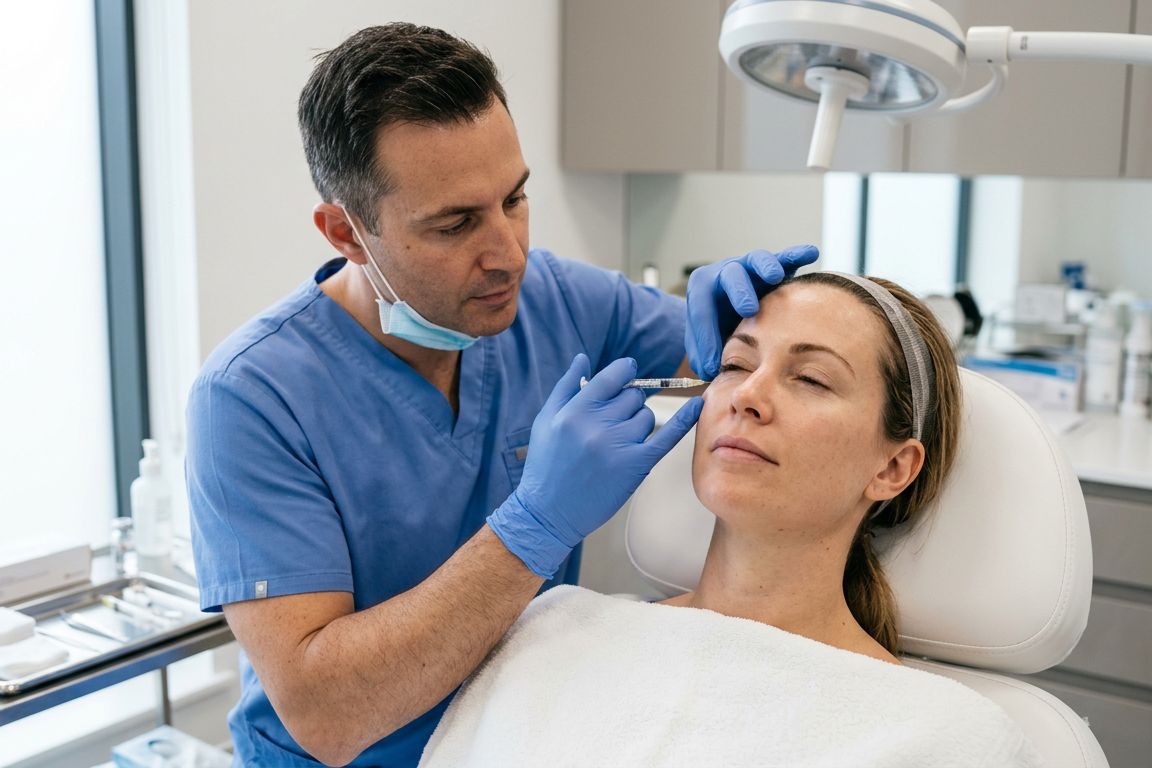
The injections are placed intradermally and subdermally along the tear-trough line and into the lower eyelid skin itself. We use fine-gauge needles and, where appropriate, a cannula for the deeper plane. The procedure takes around twenty minutes. There is no topical anaesthetic required by most patients, though we offer it. Downtime is minimal, some redness and occasional small bruises for a day or two, but nothing that requires significant social downtime for the majority of people.
We typically combine polynucleotides with our microneedling protocol in patients who have significant skin texture concerns alongside the volumetric deficit. The microneedling creates controlled micro-injury channels that enhance polynucleotide absorption and independently stimulate collagen remodelling. This combination is particularly effective for the crepey, fine-lined under-eye skin that develops in the mid-forties and beyond.
For patients with more significant photodamage or pigmentation in the periorbital region, we may also incorporate LED therapy as an adjunct, it is low-risk, well-tolerated around the eye area (with appropriate shielding), and supports the anti-inflammatory phase of tissue remodelling that polynucleotides initiate. Dr Deniz Kanliada frequently uses this combination approach for patients presenting with both structural and pigmentary under-eye concerns.
Results are not immediate. Patients need to understand this before they book. The biological process of fibroblast activation and new collagen deposition takes weeks to manifest visually. We typically see the most meaningful improvement between four and eight weeks after the final session in a course. Maintenance sessions every six to twelve months are usually sufficient to sustain the result.
Who this treatment is right for, and who it is not
Polynucleotides for the under-eye area work best in patients who have mild-to-moderate hollowing combined with genuine skin quality concerns: fine lines, crepiness, a dull or tired appearance, or early pigmentary changes from poor microcirculation. They are also well-suited to patients who have had previous tear-trough filler and want to reduce their dependence on it, or who have had a complication and want a safer long-term maintenance strategy.
They are a reasonable choice for patients in their late thirties through to their sixties who are not yet at the point where surgical intervention is appropriate or desired. For context, when patients ask us about the broader spectrum of periorbital ageing, we sometimes point them to our post on brow lift versus Botox for forehead lines, the same principle applies here: understanding which layer of the problem you are treating determines which tool is appropriate.
This treatment is not the right choice for patients with significant fat herniation (the bulging fat pads that cause prominent under-eye bags). Polynucleotides will not reduce fat prolapse, and neither will filler, in fact, adding volume in that context often makes the bags look worse. Those patients need a surgical assessment, and we would refer them for a lower blepharoplasty consultation rather than proceed with injectables.
It is also not suitable for patients with active skin infections, known allergy to salmon or fish products (given the biological source of the polynucleotides), or autoimmune conditions affecting the skin. Patients who are pregnant or breastfeeding are excluded as a precaution. And patients with very deep structural hollowing, a true skeletal deficit at the orbital rim, will likely need either filler placed by an experienced injector in the correct anatomical plane, or a surgical approach such as fat transfer to the periorbital region, before polynucleotides become relevant as a maintenance tool.
We are also honest with patients who have unrealistic expectations about speed. If you need a result in two weeks for a specific event, polynucleotides are not the treatment. If you are willing to invest in a course of treatment and wait for the biology to work, the results can be genuinely impressive and, importantly, they look natural because they are driven by your own tissue.
Polynucleotides versus other non-surgical skin boosters: how they compare
Patients often arrive having read about Profhilo, Seventy Hyal, or other injectable skin boosters and want to understand how polynucleotides differ. It is a fair question. We have written a dedicated post on Profhilo as a skin booster in London which covers its mechanism in detail, but the short answer is that Profhilo works primarily through bio-remodelling of the extracellular matrix via hyaluronic acid, whereas polynucleotides work through direct cellular signalling and DNA-level repair mechanisms.
In practice, Profhilo is an excellent full-face skin quality treatment and works well on the cheeks, neck, and décolletage. It is less well-suited to the under-eye area specifically because it is injected in bolus deposits at specific anatomical points (the BAP technique), and the under-eye region does not lend itself to that approach. Polynucleotides, injected intradermally in small aliquots along the tear-trough line, are better adapted to the precise anatomy of the periorbital region.
PRP (platelet-rich plasma) is another regenerative option we use, and it shares some mechanistic overlap with polynucleotides, both work through growth factor signalling and tissue repair pathways. Our PRP treatment page explains the process in detail. For the under-eye area, we sometimes use PRP and polynucleotides in combination, particularly in patients with significant pigmentary concerns, as PRP has a reasonable evidence base for reducing periorbital hyperpigmentation. The two are not competing treatments; they are complementary tools.
Botox in the periorbital region, specifically treating the orbicularis oculi to reduce dynamic lines, is sometimes combined with polynucleotides. Botox addresses the muscular component of crow's feet and lower eyelid crinkles; polynucleotides address the skin quality component. Our botox and fillers page covers the full range of injectable options we offer, and in consultation we will discuss which combination makes clinical sense for your specific anatomy and concerns.
What to expect at your consultation and in the weeks after treatment
At Kensington Cosmetic Clinic, every patient considering polynucleotide treatment for the under-eye area is seen in a full consultation before any treatment is administered. We do not offer walk-in injectable appointments. The consultation, with Dr Hassan Soueid or one of our senior aesthetic practitioners, involves a detailed assessment of your periorbital anatomy, your skin type and quality, your medical history, and your aesthetic goals.
We will look at whether your concern is primarily volumetric, primarily skin quality, or a combination of both. We will assess the degree of fat herniation, the depth of the nasojugal groove, the quality of the lower eyelid skin, and the presence of any pigmentary changes. We will also look at the broader facial context, the midface volume, the position of the malar fat pad, and the overall facial proportions, because the under-eye area does not exist in isolation. Sometimes what looks like a tear-trough problem is actually a midface volume deficit, and treating the wrong area produces a poor result regardless of which product you use.
If we proceed with polynucleotides, we will explain the course structure, the expected timeline for results, and the realistic range of improvement. We will also discuss what we would recommend if the polynucleotide course alone does not achieve the desired result, whether that is adding a small amount of filler, incorporating additional skin treatments, or, in some cases, referring for a surgical opinion. For patients curious about how non-surgical periorbital work fits into the broader picture of facial rejuvenation, our post on non-surgical facelift options in West London gives useful context.
After each session, you can expect mild redness and occasional pinpoint bruising that typically resolves within forty-eight hours. We advise avoiding strenuous exercise, alcohol, and significant sun exposure for twenty-four hours post-treatment. Makeup can be applied the following morning. There is no requirement to take time off work for most patients, though we ask those with very active social schedules to plan their sessions accordingly.
The improvement is cumulative. After the first session, some patients notice a subtle improvement in skin hydration and brightness within two weeks. After the second and third sessions, the structural improvement, reduced hollowing, improved skin thickness, better light reflection, becomes more apparent. We photograph patients at baseline and at review to give an objective comparison, because the changes are gradual enough that patients sometimes underestimate them without a side-by-side reference.
Booking your consultation
If you are based in London, whether in Kensington, Earl's Court, or further afield, and you are considering treatment for under-eye hollowing, dark circles, or periorbital skin quality, we would encourage you to start with a proper consultation rather than booking a treatment. The under-eye area is one of the most anatomically complex regions of the face, and the right treatment depends entirely on an accurate assessment of what is actually driving the problem.
You can book your consultation here, or read more about the full range of injectable and regenerative options we offer on our botox and fillers treatment page. Our clinic is located at 49 Marloes Road, London W8 6LA, a short walk from High Street Kensington station. We see patients from across London and internationally, and we are happy to conduct an initial video consultation for those travelling from outside the city before committing to an in-person visit.
We will not recommend a treatment we do not believe is right for you. If polynucleotides are the appropriate first step, we will tell you. If they are not, we will tell you that too, and explain what is.
Frequently asked
Questions we get asked about EnerPeel®
- How many sessions of polynucleotides do I need for the under-eye area?
- Most patients require two to three sessions spaced three to four weeks apart to complete an initial course. The exact number depends on the degree of skin laxity, the depth of the tear-trough groove, and whether we are combining treatment with other modalities such as microneedling or PRP. We assess the result at the end of the course and recommend maintenance sessions every six to twelve months thereafter.
- Is the treatment painful?
- Most patients find it tolerable without topical anaesthetic, though we offer numbing cream for those who prefer it. The under-eye skin is sensitive, and you will feel the injections, but the needles used are very fine and the procedure takes around twenty minutes. Mild discomfort rather than significant pain is the typical experience.
- Can I have polynucleotides if I have previously had tear-trough filler?
- Yes, in many cases. If the previous filler has fully dissolved, either naturally over time or with hyaluronidase, polynucleotides are a reasonable next step. If there is residual filler present, we will assess whether it needs to be dissolved first before proceeding, as injecting polynucleotides into tissue that already contains hyaluronic acid filler can complicate the assessment of results and, in some cases, the tissue response.
- Are polynucleotides safe for patients with fish allergies?
- No, polynucleotides are derived from purified salmon or trout DNA, and patients with a known allergy to fish or fish products should not have this treatment. This is one of the absolute contraindications we screen for at consultation. If you have a fish allergy, we would discuss alternative regenerative options such as PRP, which is derived from your own blood.
- How do polynucleotides compare to tear-trough filler in terms of cost?
- A single session of polynucleotides is generally less expensive than a syringe of premium hyaluronic acid filler, but the treatment requires a course of sessions rather than a single appointment, so the total cost of the initial course is broadly comparable. The key difference is that polynucleotides improve the underlying tissue quality over time, which can reduce the frequency and volume of future treatments, whereas filler typically needs to be repeated at similar volumes each cycle.