

Surgical · 11 min read
Tummy Tuck with Muscle Repair: Diastasis Recti Surgery in London
By Dr Hassan Soueid · GMC 6107783 · Medical Director, Kensington Cosmetic Clinic
Published 10 November 2026
TL;DR. A tummy tuck with muscle repair can bring separated abdominal muscles back towards the midline and remove loose skin. It is a major operation, best considered only after physiotherapy, once your family is complete and your weight is stable, and it will not fix every symptom people link to diastasis.
What diastasis recti actually is
The rectus abdominis muscles, often called the six-pack muscles, run in two vertical bands down the front of the abdomen. A band of connective tissue called the linea alba joins them in the midline. During pregnancy, the growing uterus stretches the whole abdominal wall, and hormonal changes soften connective tissue. The linea alba thins and widens, and the two muscle bands drift apart. This separation is called diastasis recti, or rectus diastasis.
A degree of separation is a normal part of late pregnancy, and for many women the gap narrows considerably in the months after birth. For others it does not close fully. The muscles themselves are usually healthy. The problem is that the tissue between them has been stretched and no longer holds the abdominal contents firmly in place. When you strain, cough or sit up from lying down, you may see a ridge or a dome along the midline, or feel a soft trough between the muscles.
Diastasis is not only a post-pregnancy issue. It can follow significant weight gain and loss, and it also occurs in men, particularly those who carry weight centrally. Multiple pregnancies, twins, larger babies and caesarean births are often discussed as contributing factors, although every abdomen behaves differently.
The patients we see in London describe a range of concerns. These include a stomach that looks rounded or pregnant even at a stable weight, loose or crepey skin, a feeling that the core is weak or disconnected, and sometimes back discomfort. Some of these are clearly linked to the separation. Others may have several causes. Part of an honest consultation is working out which of your concerns surgery could realistically address and which it probably would not.
Measuring the gap, and why physiotherapy usually comes first
Diastasis is usually assessed by feeling along the midline while you lift your head and shoulders slightly from lying down. The examining clinician estimates the width of the gap, often in finger-widths, at several points above, at and below the belly button. They also note how deep and how firm the tissue feels. An ultrasound scan can give a more objective measurement. It can also look for a hernia, a separate but related problem where tissue or fat pushes through a weak point in the abdominal wall, often at or near the belly button.
Width is only part of the picture. Physiotherapy research has increasingly focused on how well the linea alba tenses when you engage your deep core muscles, rather than on the gap alone. Some people with a moderate gap function well and have few symptoms. Others with a narrower gap feel significant weakness.
For most people, the first step is not surgery. A pelvic health physiotherapist can assess your core and pelvic floor together and design a progressive exercise programme. Many women find this improves strength, control and comfort, and for some it is enough. Even when it does not close the gap, it often improves how the abdomen functions. That conditioning is also valuable preparation for surgery if you later go ahead. We generally want to know that you have tried a reasonable period of guided rehabilitation before we recommend an operation.
It is also worth knowing that surgical repair of diastasis for cosmetic reasons is generally not routinely funded on the NHS. Where there is a significant hernia or another medical problem, your GP may refer you for an NHS assessment, and we would encourage you to explore that route. Private surgery in London is a choice, not an obligation. A good consultation should leave you clear on the alternatives as well as the operation itself.
How the muscle repair is done during a tummy tuck
The surgical repair of diastasis is called plication. During a tummy tuck (abdominoplasty), the skin and fat of the abdomen are lifted away from the abdominal wall. This exposes the stretched linea alba from the lower ribs down towards the pubic area. The surgeon marks the edges of the separated muscles and brings them back towards the midline with strong, permanent or long-lasting sutures, often in more than one layer. This narrows and tightens the front of the abdominal wall, rather like taking in the waist of a garment.
Once the repair is complete, the surgeon removes the excess lower abdominal skin, redrapes the remaining skin, brings the belly button out through a new opening and closes the wound. The scar usually sits low across the lower abdomen so that most underwear can cover it. Its final length depends on how much skin needs removing.
If the surgeon finds an umbilical or other small hernia, it can often be repaired during the same operation. Larger hernias, or those involving bowel, may need a different approach or a general surgical opinion, and occasionally a mesh. Your surgeon will discuss this with you if it applies.
Not everyone needs a full abdominoplasty. If the separation is mainly below the belly button and skin excess is limited, a smaller operation may be considered. However, a mini tummy tuck gives limited access to the upper abdominal wall, so it is often not the right choice when the gap extends above the navel. We cover this trade-off in our guide to mini versus full tummy tuck. Some patients also have liposuction to the flanks at the same time to refine the waist. This adds to operating time and is assessed case by case.
At Kensington Cosmetic Clinic, surgery is performed by Dr Hassan Soueid or one of our qualified surgeons. It takes place under general anaesthetic and usually lasts a few hours. Your surgical plan, including whether plication is appropriate at all, is agreed at a doctor-led consultation rather than assumed in advance.
What muscle repair can and cannot do
Plication can reduce the width of the separation and tighten the front of the abdominal wall. Combined with removal of loose skin, it aims to make the abdomen look less rounded in profile and feel firmer. That is the realistic goal. How much change you notice depends on how wide the gap was, the quality of your tissues, your skin elasticity, your build and how you heal. Nobody can promise a particular shape.
There are important things it cannot do.
- It does not remove fat inside the abdomen. Visceral fat sits behind the muscles, around the organs. If much of the fullness comes from there, tightening the muscle wall will have a limited effect. Pulling the wall tight against a large internal volume can also increase discomfort and risk. Weight loss, not surgery, addresses visceral fat.
- It is not a weight-loss operation. Removing skin and some fat makes little difference to the number on the scales.
- It does not reliably cure back pain, pelvic floor problems or continence issues. Some studies have reported improvements in back pain and quality of life after diastasis repair, but the evidence is mixed, and these symptoms often have several causes. We would never recommend surgery on the promise that it will fix them.
- It does not replace core strength. Sutures hold the tissue together, but you still need to train and use the muscles well afterwards.
- It does not stop bloating. Abdominal wall surgery does not affect bloating related to digestion.
The trade-off is a permanent scar across the lower abdomen and around the belly button. Recovery is also noticeably more uncomfortable than after skin removal alone, because the muscle layer has been tightened. These are not reasons to avoid surgery, but they are part of a fair decision.
Who this operation is not for
Plication is a significant step. In some situations we would advise waiting or choosing a different path.
If you are planning another pregnancy. A future pregnancy will stretch the repaired tissue again and can undo some or all of the change, as well as stretching the newly tightened skin. Surgery is generally best considered once your family is complete. If you are unsure, it is usually wiser to wait.
If you have recently given birth or are still breastfeeding. The body continues to change for many months after pregnancy. Before assessing you for surgery, we usually recommend allowing time for recovery and natural improvement, completing a course of physiotherapy and finishing breastfeeding. That way, decisions are made from a stable baseline.
If your weight is not yet stable. Ideally you will be at, or close to, a weight you can maintain. Significant weight loss after surgery can leave fresh laxity, and weight gain can stretch the repair. A higher body mass index also increases the risk of wound problems and blood clots.
If you smoke or use nicotine. Nicotine in any form, including vapes, patches and gum, reduces blood flow to the skin. This increases the risk of wound breakdown and tissue loss. You will be asked to stop well before and after surgery.
If certain medical conditions are not well controlled. Diabetes, clotting disorders, significant heart or lung disease and some medications can affect suitability. We take a full medical history and, where needed, may ask for information from your GP.
If you mainly hope for a functional cure. If your chief concern is pelvic floor symptoms or back pain rather than the shape and laxity of your abdomen, a physiotherapy-led approach and a medical assessment should come first.
We also look carefully at expectations and wellbeing. If concern about your appearance is causing a lot of distress, or if it seems that no change would ever feel like enough, we may suggest support before any surgical decision.
Risks that are specific to muscle repair
Every tummy tuck carries the general risks of surgery and anaesthesia. These include bleeding, infection, fluid collections (seroma), wound healing problems, changes in skin sensation, asymmetry, and scars that widen or thicken. Adding muscle repair brings some particular considerations.
Blood clots. Tightening the abdominal wall raises pressure inside the abdomen, which can slow blood return from the legs. Combined with reduced mobility after surgery, this contributes to the risk of deep vein thrombosis and pulmonary embolism. These are rare but serious. Prevention typically includes compression, early walking and, in many cases, blood-thinning injections, with the plan tailored to your individual risk.
A tight feeling and breathing. Most patients feel very tight across the abdomen for some weeks, and deep breaths and coughing can feel restricted at first. Rarely, an excessively tight repair can affect breathing. This is one reason the surgeon judges the degree of tightening carefully during the operation.
Recurrence. The repair can stretch again over time, particularly with a later pregnancy, weight gain or heavy straining. Reported recurrence rates vary with technique and length of follow-up, so we would not quote a single figure, but it is a real possibility.
Sutures. Occasionally you may feel a deep stitch beneath thin skin. It can cause discomfort and, rarely, need removing.
Wound healing. The skin edges at the centre of the scar have the most tension and the least blood supply. Delayed healing is most likely here, especially in people who smoke or have diabetes.
Combined procedures. When plication is part of a mummy makeover alongside breast surgery, operating time and overall recovery increase, and we weigh that carefully.
Your surgeon will explain these risks in the context of your own health, and you will have time to consider them before giving consent.
Recovery when your core has been repaired
Recovery after a tummy tuck with plication follows the general pattern of any abdominoplasty, which we describe in our week-by-week tummy tuck recovery guide. A few points are particular to the muscle repair.
In the first days you will walk slightly bent forward. This reduces tension on the repair and the skin closure, and you will gradually straighten over a week or two. Sleeping with your back raised and a pillow under your knees helps. You will wear a supportive garment or binder for several weeks, as advised.
Walking little and often from the first day is encouraged, because it helps circulation and lowers the risk of clots. What you must avoid is straining the repair. That means no heavy lifting, no sit-ups or crunches, and nothing that makes your abdomen bulge forward, for a period your surgeon will set, usually several weeks. For parents of young children this is often the hardest part. Lifting a toddler, a car seat or a pushchair is off limits for some time, so arranging practical help at home before surgery is essential, not optional.
Coughing and sneezing can be uncomfortable, and gently supporting your abdomen with a pillow helps. Constipation from pain relief and reduced activity is common and worth planning for, because straining is unhelpful.
Many people return to desk-based work after a few weeks, but physical jobs take longer. You can drive again once you can wear a seatbelt comfortably and brake suddenly without hesitation, and you should check with your insurer.
Once your surgeon is happy with your healing, a gradual return to core work helps you use the repaired wall well, ideally guided by a physiotherapist. Swelling settles over months, and the scar continues to mature for a year or more. It takes time before you can judge how your abdomen has settled.
Booking your consultation
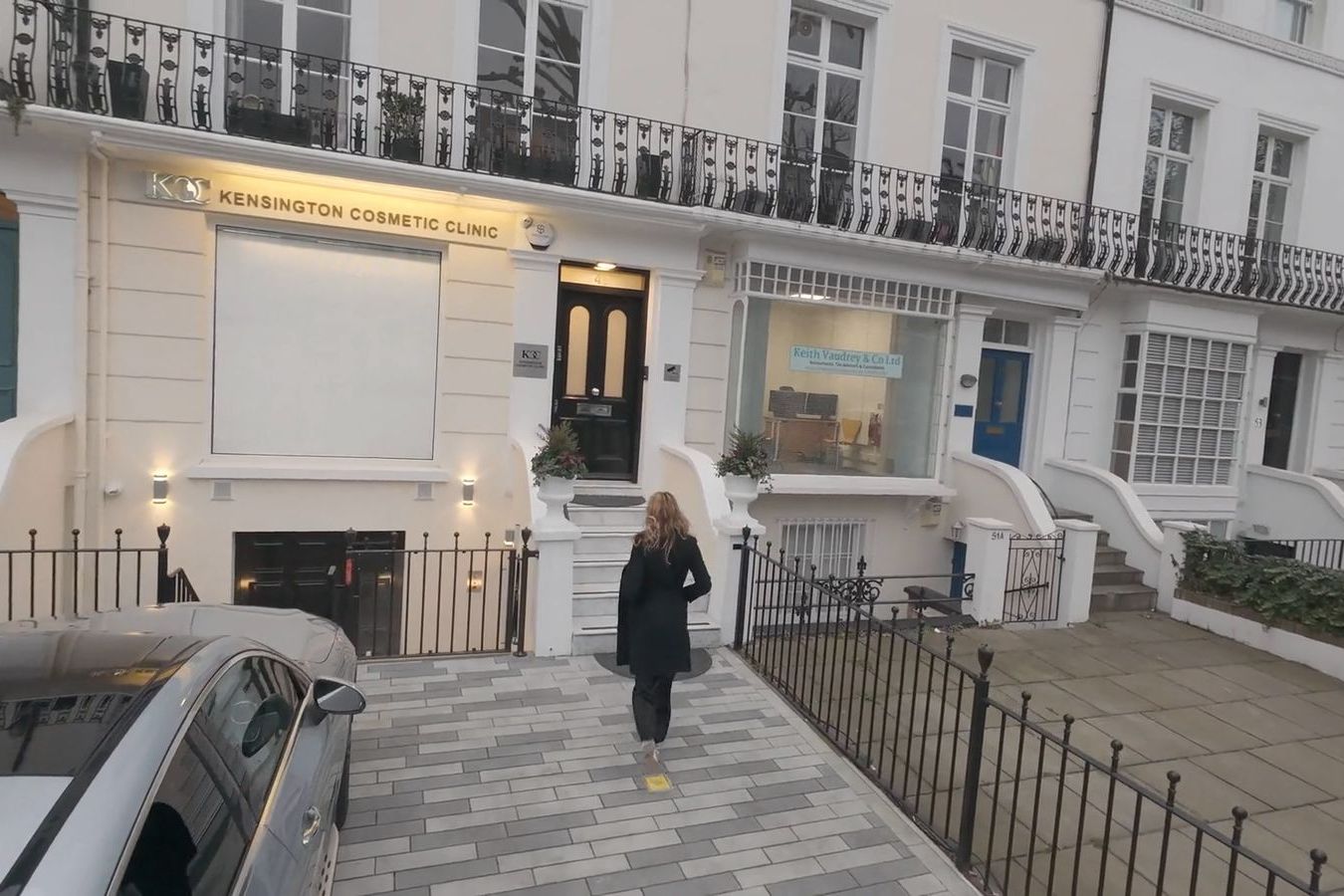
If you are living with diastasis and wondering whether surgery is right for you, a consultation is a chance to have your abdomen examined, ask questions and hear an honest view. That includes hearing if the answer is to wait or to try physiotherapy first. Consultations at our clinic in Kensington, West London, are doctor-led. You can read more about our Founder and Medical Director, Dr Hassan Soueid, before you come in.
It helps to bring details of your pregnancies and births, any previous abdominal surgery including caesarean sections, your medical history and medications, and any physiotherapy assessments or scans you have had. We will discuss whether plication is likely to help, whether a full or smaller operation suits your anatomy, and what recovery would mean for your work and family.
We are introducing HonestFace, our own iPad app for digital consultation forms, consent signing and secure patient records, so you may be asked to complete some paperwork this way. Consent is never rushed. You will have time to reflect between consultation and surgery, and you are welcome to come back with further questions.
Kensington Cosmetic Clinic is registered with the Care Quality Commission. If you would like to talk through diastasis recti repair in London, you can book a consultation online or contact our team.
Frequently asked
Questions we get asked
- Can diastasis recti close without surgery?
- For many women the gap narrows naturally in the months after birth, and a structured programme with a pelvic health physiotherapist often improves strength and function even if some separation remains. Surgery is usually only considered once rehabilitation has been tried and your body has had time to settle.
- Is muscle repair always part of a tummy tuck?
- No. Plication is only performed when there is a separation that is suitable for repair. Some people mainly have loose skin with a firm abdominal wall and do not need it. Whether it is appropriate for you is decided at a doctor-led consultation after examination.
- What happens if I get pregnant after diastasis repair?
- Pregnancy is usually possible after a tummy tuck, but it will stretch the repaired tissue and skin again and may undo some or all of the change. This is why surgery is generally best considered once your family is complete. If you are unsure about future pregnancies, waiting is usually the wiser choice.
- Will diastasis repair fix my back pain or pelvic floor problems?
- Not reliably. Some studies have reported improvements in back pain after repair, but the evidence is mixed and these symptoms often have several causes. Pelvic floor and continence issues need their own assessment, usually with a physiotherapist or your GP. We do not recommend surgery on the promise of relieving these symptoms.
- How long before I can lift my children after surgery?
- Heavy lifting, including toddlers, car seats and pushchairs, has to be avoided for several weeks to protect the muscle repair. Your surgeon will give you a timeframe based on your operation and healing. Arranging help at home before surgery is essential.