

Skin · 11 min read
Mesotherapy London: Tiny Vitamin Injections, Worth It?
By Dr Hassan Soueid · MD, FRCS · Lead Surgeon, Kensington Cosmetic Clinic
Published 25 May 2026
TL;DR - Mesotherapy involves microinjections of vitamins, minerals, amino acids and low-molecular-weight hyaluronic acid into the mid-dermis or scalp. The technique has genuine physiological rationale, bypassing the skin barrier to deliver actives where topical products cannot reach, but the evidence base is uneven, and results depend heavily on what is injected, how often, and by whom. At our mesotherapy London clinic in Kensington we use it selectively: as part of a structured skin-health programme or alongside treatments such as PRP for hair thinning, rather than as a standalone miracle cure. If a provider is promising dramatic skin transformation from a single session, be sceptical.
What mesotherapy actually is, and where the idea comes from
Mesotherapy was developed in France in the 1950s by Dr Michel Pistor, who coined the phrase "peu, rarement, au bon endroit", little, rarely, in the right place. The original concept was local pharmacological delivery: inject small amounts of a substance directly into the tissue that needs it, reducing systemic exposure and theoretically increasing local bioavailability. For decades it was used in European sports medicine and pain clinics before aesthetic practitioners adopted it for skin rejuvenation and hair loss.
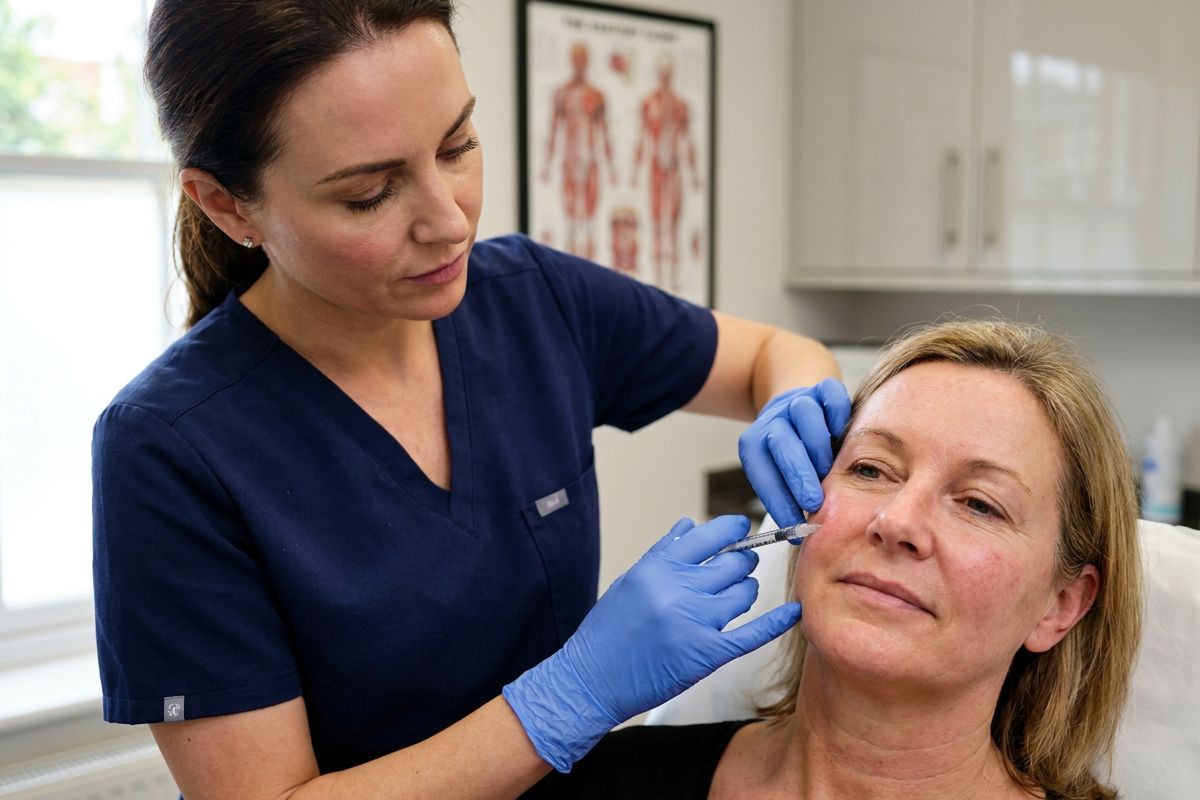
The modern aesthetic version involves a series of superficial injections, typically 1–4 mm depth, delivering a cocktail of ingredients into the papillary dermis or, for scalp applications, the subdermal layer above the galea. The needle gauge is fine (30–32G), and the volumes per injection point are tiny, usually 0.01–0.05 ml. A full-face session might involve 50–200 injection points depending on the protocol and the device used.
What separates mesotherapy from a simple skin booster like Profhilo or Juvederm Hydrate is the complexity of the cocktail. Where a dedicated PRP treatment delivers a single autologous product, a mesotherapy formulation may contain hyaluronic acid, glutathione, vitamin C, B-complex vitamins, coenzyme Q10, amino acids such as glycine and proline, and trace minerals. Each ingredient has a proposed mechanism; the question is whether the evidence supports the combined effect in vivo.
It is worth being honest here: the published literature on mesotherapy is thinner than for some comparable treatments. Many studies are small, uncontrolled, or funded by product manufacturers. That does not mean the treatment is ineffective, it means we interpret results carefully and set realistic expectations with every patient we see in Kensington.
The physiology: why injecting into the dermis might actually work
The skin barrier, the stratum corneum, is extraordinarily effective at blocking topical molecules above roughly 500 Daltons in molecular weight. Vitamin C (ascorbic acid, MW 176 Da) can penetrate to some degree in optimised formulations, but larger molecules such as hyaluronic acid (MW typically 1–2 million Da for standard topical products) do not cross intact skin in meaningful quantities. Injecting directly into the dermis sidesteps this entirely.
Once in the dermis, the rationale for individual ingredients is reasonable. Vitamin C is a cofactor for collagen synthesis, specifically for the hydroxylation of proline and lysine residues that stabilise the triple helix of type I collagen. Glutathione acts as a free-radical scavenger and may modulate melanogenesis by inhibiting tyrosinase, which is why it appears in protocols targeting pigmentation and uneven skin tone. B vitamins, particularly biotin and niacinamide, support keratinocyte metabolism. Amino acids provide the substrate pool for new collagen and elastin.
The hyaluronic acid component, when present in low-molecular-weight, non-cross-linked form, acts as a humectant and may stimulate fibroblast activity. This is distinct from the volumising effect of a filler; the goal is hydration and cellular signalling rather than structural support. Patients sometimes conflate the two, expecting lifted or plumped results from a mesotherapy session. That is not the mechanism, and we say so clearly at consultation.
For scalp applications, the logic shifts. Delivering vasodilators such as minoxidil or growth factors directly to the perifollicular tissue aims to improve microcirculation around the hair bulb. Some protocols combine mesotherapy with microneedling to create microchannels that enhance absorption of the cocktail and simultaneously trigger a wound-healing response. The evidence for this combined approach in androgenetic alopecia is more encouraging than for facial skin rejuvenation alone.
Mesotherapy for hair loss: what the evidence supports
Mesotherapy hair loss treatment has attracted more controlled research than its facial counterpart, partly because hair count and shaft diameter are objectively measurable endpoints. Several randomised trials have compared scalp mesotherapy, typically containing minoxidil, biotin, finasteride, or growth factor cocktails, against placebo injections or topical minoxidil alone. The general finding is that intradermal delivery can produce comparable or marginally superior hair density improvements to topical minoxidil in patients with early-to-moderate androgenetic alopecia, with some subjects showing better tolerability because the systemic absorption is lower.
That said, mesotherapy is not a substitute for a proper hair loss assessment. Alopecia has many causes, androgenetic, telogen effluvium, alopecia areata, nutritional deficiency, thyroid dysfunction, and injecting vitamins into a scalp with an undiagnosed autoimmune condition or severe hormonal disruption will not produce meaningful results. At our clinic, patients presenting with hair thinning are assessed thoroughly before any treatment is recommended. In many cases, mesotherapy works best as an adjunct: alongside oral supplementation, topical treatments, and where appropriate, a course of PRP.
For patients considering more definitive surgical options, it is worth noting that mesotherapy and scalp PRP are sometimes used in the months following a hair transplant to support graft survival and improve the condition of the surrounding native hair. This is a supportive role, not a replacement for the procedure itself.
Our colleague Dr Anna Peca assesses many of our patients presenting with hair and scalp concerns. She takes a detailed history including dietary patterns, hormonal history, and any recent physiological stressors before recommending whether mesotherapy has a place in the management plan. The honest answer is that it suits some patients well and adds little value for others.
Mesotherapy for facial skin: realistic outcomes and honest limits
For the face, vitamin skin injection protocols are most commonly used to address dullness, fine surface lines, uneven skin tone, and loss of radiance in patients who are not yet candidates for, or not interested in, more invasive treatments. The typical patient is in their late thirties to fifties, has good skin laxity but wants to improve texture and luminosity, and is looking for something more active than a facial but less committed than a laser resurfacing course.
What mesotherapy does well in this context is improve skin hydration, support fibroblast activity, and deliver antioxidant protection at the dermal level. Patients often describe their skin as looking more rested and even-toned after a course of four to six sessions. What it does not do is lift sagging tissue, significantly remodel deep wrinkles, or produce the kind of textural improvement you would expect from a course of CO2 laser resurfacing. Conflating these outcomes is one of the more common sources of patient disappointment in aesthetic medicine.
The treatment is also not a substitute for a well-structured topical skincare programme. We regard mesotherapy as an adjunct to, not a replacement for, daily SPF use, a retinoid where tolerated, and appropriate antioxidant serums. Injecting vitamin C into the dermis while the patient continues to smoke heavily or sleep four hours a night is not going to produce meaningful results.
Dr Hassan Soueid reviews patients where there is genuine uncertainty about whether mesotherapy is the right approach or whether a more structural treatment would serve them better. For patients with significant volume loss or laxity, a conversation about options such as fat transfer or a more comprehensive rejuvenation plan is often more appropriate than committing to a course of microinjections.
It is also worth reading our post on Profhilo as a skin booster if you are weighing up injectable hydration options, the two treatments have overlapping indications but different mechanisms and cost profiles, and understanding the distinction helps you make a better-informed choice.
Who mesotherapy is not right for
This section matters. Not every patient who enquires about mesotherapy in London is a suitable candidate, and we will say so directly at consultation rather than proceeding regardless.
- Active skin infections or inflammatory conditions, injecting through inflamed or infected skin risks spreading infection into the dermis. Patients with active acne, rosacea flares, or perioral dermatitis should have these stabilised first.
- Autoimmune conditions affecting the skin, patients with lupus, dermatomyositis, or active psoriasis in the treatment area are not suitable candidates without specialist medical review.
- Pregnancy and breastfeeding, the safety of most mesotherapy cocktail ingredients in pregnancy has not been established. We do not treat pregnant or breastfeeding patients with injectable skin treatments.
- Bleeding disorders or anticoagulant therapy, the multiple injection points create a meaningful bruising risk in patients on warfarin, direct oral anticoagulants, or with inherited coagulopathies. This requires careful discussion with the prescribing clinician.
- Patients with unrealistic expectations, if someone is seeking the equivalent of a surgical result from a non-surgical treatment, mesotherapy will disappoint. We would rather have that conversation early than deliver a course of treatment that fails to meet expectations that were never achievable.
- Known allergy to any cocktail ingredient, formulations vary between providers. A full ingredient review is part of our pre-treatment assessment.
Patients with significant skin laxity, deep static lines, or substantial volume loss are better served by a structural approach. Depending on the clinical picture, that might mean a consultation about facelift surgery or a non-surgical alternative. Our team will always direct you towards what is likely to produce a meaningful result for your specific anatomy rather than defaulting to the least invasive option regardless of suitability.
What a mesotherapy course looks like at our Kensington clinic
At Kensington Cosmetic Clinic in W8, we do not offer mesotherapy as a walk-in treatment. Every patient has a consultation first, either with one of our medical team or with a senior practitioner, to assess skin type, review medical history, agree on realistic goals, and select an appropriate formulation. We do not use a single off-the-shelf cocktail for every patient; the composition is chosen based on the clinical picture.
A standard facial course involves four to six sessions spaced two to four weeks apart. Each session takes approximately 30–45 minutes including preparation and post-treatment review. Topical anaesthetic cream is applied for 20–30 minutes beforehand, which makes the procedure comfortable for the majority of patients. Some redness and minor pin-point bruising are normal immediately afterwards and typically resolve within 24–48 hours. We advise patients to avoid heavy exercise, saunas, and active skincare ingredients such as retinoids and AHAs for 48 hours post-treatment.
For scalp mesotherapy, sessions are typically spaced slightly further apart, three to four weeks, and the number of injection points is higher. Some patients experience mild scalp tenderness for 24 hours after treatment. We monitor hair density using standardised photography at baseline and at the end of the course to give an objective assessment of response.
Our practitioner Dr Deniz Kanliada has particular experience with injectable skin treatments and works closely with patients on multi-modality skin health programmes. For patients who want a broader picture of their non-surgical options in the High Street Kensington area, our article on non-surgical facelift options in west London gives useful context for how mesotherapy fits alongside other treatments.
Maintenance sessions after the initial course are typically recommended every two to three months, though this varies with individual response and lifestyle factors. We do not push patients into indefinite treatment programmes; the goal is to achieve a stable improvement that the patient can maintain sensibly.
Comparing mesotherapy to adjacent treatments
Patients often arrive having read about several treatments simultaneously and wanting to know how mesotherapy compares. The honest answer is that it occupies a specific niche and the comparison depends on what you are trying to achieve.
Against Profhilo, a stabilised hyaluronic acid skin booster, mesotherapy offers a broader ingredient profile but typically less pronounced hydration and bioremodelling effect per session. Profhilo uses a higher concentration of HA in a patented slow-release formulation; mesotherapy cocktails are more dilute but more compositionally complex. Some patients benefit from both in sequence.
Against PRP, mesotherapy delivers exogenous actives whereas PRP uses the patient's own concentrated growth factors. PRP has a stronger evidence base for hair loss and wound healing; mesotherapy may be easier to standardise because the formulation is consistent between batches. We sometimes combine the two, particularly for scalp treatments, which our post on microneedling evidence touches on in the context of channel-assisted delivery.
Against laser and energy-based treatments such as Clear Lift, mesotherapy works through a completely different mechanism, biochemical delivery rather than photothermal or mechanical stimulation. They are not competitors; they are often complementary. A patient with dull, dehydrated skin and early fine lines might benefit from a mesotherapy course to improve baseline skin quality before undertaking a laser programme.
For patients who have read about polynucleotides as an alternative injectable option, our article on polynucleotides for the under-eye area explains how PDRN and PN-based injectables differ from vitamin cocktail mesotherapy, they work primarily through tissue repair signalling rather than nutritional supplementation.
The key point is that none of these treatments is universally superior. The right choice depends on your skin's specific needs, your timeline, your budget, and your tolerance for downtime. That is precisely what a proper consultation is for, and it is why we do not allow online booking for mesotherapy without a prior clinical assessment at our Kensington clinic.
Our colleague Sylwia Bozek works with patients on skin health programmes that often incorporate mesotherapy alongside topical regimens and in-clinic treatments, helping to build a coherent plan rather than a series of disconnected sessions. The approach matters as much as the individual treatment.
Booking your consultation
If you are considering mesotherapy in London and want an honest clinical assessment of whether it is appropriate for your skin or scalp, we would be glad to see you at Kensington Cosmetic Clinic, 49 Marloes Road, London W8 6LA, a short walk from High Street Kensington and easily accessible from the Earl's Court area. We do not run high-volume treatment days; consultations are unhurried and the recommendation you receive will be based on your clinical picture, not on what is easiest to sell.
You can book your consultation here. If you would like to read more about the injectable and energy-based treatments we use alongside mesotherapy, our PRP treatment page and microneedling page give a fuller picture of the non-surgical skin health options available at our clinic. We look forward to meeting you.
Frequently asked
Questions we get asked about EnerPeel®
- How many mesotherapy sessions will I need before I see a result?
- Most patients notice an improvement in skin hydration and radiance after the second or third session of a standard course of four to six treatments. Meaningful changes in skin texture or hair density typically become apparent at the end of the full course. We photograph patients at baseline and at course completion to give an objective comparison rather than relying on subjective impression alone.
- Is mesotherapy painful?
- With topical anaesthetic cream applied for 20–30 minutes beforehand, the majority of patients find the procedure comfortable. You will feel the injections, they are not invisible, but most describe them as a mild pricking sensation rather than significant pain. Scalp treatments can be slightly more uncomfortable than facial ones due to the density of sensory nerve endings in the scalp.
- Can mesotherapy be combined with Botox or fillers?
- Yes, in principle, though we typically space treatments to allow the skin to settle between sessions. Mesotherapy can complement botulinum toxin and hyaluronic acid filler treatments by improving baseline skin quality, but combining everything in a single session is not something we routinely recommend. Your clinician will advise on sequencing based on your treatment plan.
- What is the cost of mesotherapy in London?
- Pricing varies depending on the area treated, the formulation used, and the number of sessions in the course. We do not publish a single fixed price because the clinical assessment determines the appropriate protocol, and we will not quote a price before understanding what you actually need. Costs are discussed transparently at consultation with no obligation to proceed.
- Is mesotherapy regulated in the UK?
- Mesotherapy involves injectable procedures and should only be performed by or under the supervision of a qualified medical professional. In the UK, the regulatory landscape for non-surgical aesthetics is evolving, and from 2024 onwards, certain injectable treatments require a prescriber to be involved in the patient pathway. At Kensington Cosmetic Clinic, all injectable treatments are carried out by or under the direct oversight of our medical team, and full pre-treatment assessment is mandatory.